Read the latest science news and recent scientific discoveries on Live Science, where we've been reporting on groundbreaking advances for over 20 years. Our expert editors, writers and contributors are ready to guide you through today's most important breakthroughs in science with expert analysis, in-depth explainers and interesting articles, covering everything from space, technology, health, animals, planet Earth, and much more.


-
 New kind of AI audio chip transforms earbuds into always-on 'intelligent' devices that run without a smartphone. How does it work?
Explainer A new AI audio chip will give future headphones on-device apps and sensors that gather data about your daily movements to feed AI "agents" that will speak directly into your ear.
Explainer -
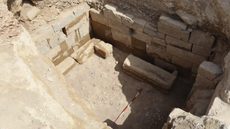 Archaeologists discover 'tomb of the very highest rank' in 2,700-year-old Etruscan cemetery
Archaeologists have discovered a massive Etruscan burial mound with a vast assortment of grave goods north of Rome.
archaeology -
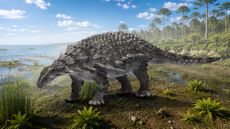 Rare armored dinosaur found in Japan may have ancestors that migrated across a land bridge 100 million years ago
The newly described dinosaur is only the third nodosaurid fossil found in Asia. Researchers say its ancestors may have migrated from North America.
dinosaurs -
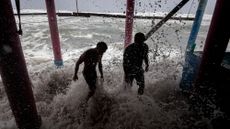 Hurricane Polo exploded in intensity in just 24 hours. Is the 'super' El Niño to blame?
Hurricane Polo exploded from a tropical storm into a powerful Category 5 hurricane in less than 24 hours and is one of the strongest Pacific hurricanes on record.
planet-earth -
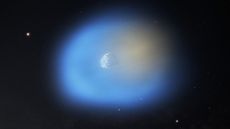 Could Comet 3I/ATLAS teach us about life beyond Earth? Scientists say the story's not over yet.
Analysis No evidence has been found linking 3I/ATLAS to aliens. But the interstellar object, just the third of its kind to be found, shows that life's molecular precursors are abundant in the Milky Way.
Analysis -
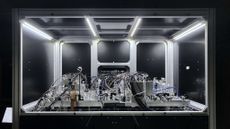 Japan switches on its first full-stack room-temperature quantum computer — and scientists plan to scale it up to 10,000 qubits
Japan's new quantum system, Shunkai, uses "optical tweezers" to trap and rearrange atoms, and will be available to researchers working on quantum error correction.
quantum -
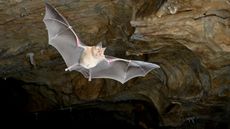 Earth's first bats didn't come from where we thought, landmark genetic study reveals
In the largest study of its kind to date, researchers compiled data from 103 bat genomes and 44 fossils to rewrite the bat family tree and determine where these animals first evolved.
land-mammals -
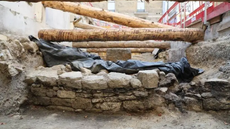 Missing Celtic fort annihilated by Julius Caesar finally found under Paris hospital
Archaeologists in Paris have discovered the remains of a missing Celtic fort sacked by Julius Caesar in 52 B.C.
romans -
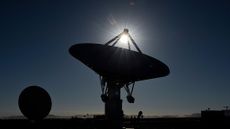 Astronomers detected radio signals coming from an exoplanet for the first time. Spoiler alert: It's not aliens.
Scientists have found the first convincing direct evidence of radio signals coming out of the exoplanet Beta Pictoris b. Even if it's not aliens, it could still teach us something big about life in space.
exoplanets -
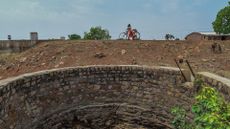 'It has become very dire in a lot of places': New map reveals exactly where humans are adding and removing precious fresh water on Earth
A new high-resolution map of global freshwater trends between 2002 and 2025 has sharpened scientists' understanding of how humans are using and displacing our most precious resource.
planet-earth -
 Google DeepMind's latest AI tool promises a new era for genetics research, but experts warn to take its predictions with caution
AlphaGenome Atlas could make it easier for geneticists to access powerful AI, but its predictions aren't always accurate.
artificial-intelligence -
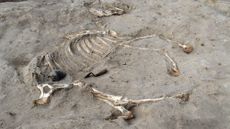 3,000-year-old burial of ancient Egyptian horse found — and a nearby stone carving depicts a captured prisoner
Archaeologists unearthed a horse burial dating back more than three millennia in an ancient Egyptian fortress.
2 Commentsancient-egyptians -
 Earth's crust is 'unzipping' beneath Italy — and that could explain most of the earthquakes in the region
The peeling away of Earth's crust beneath Italy may explain a lot of the seismic activity in the mountains that run along the spine of the country.
planet-earth -
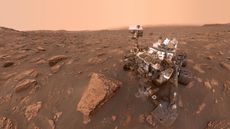 Curiosity's top 10 photos of Mars after 5,000 days of exploration
Curiosity has been photographing Mars in its search for evidence of water and life for over 5,000 Martian days. Here are 10 of the most surprising and weird photos the rover has sent back to Earth.
mars -
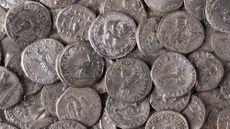 'There was something bigger in the ground here': Metal detectorist in Germany discovers giant Roman-era hoard from time of emperor Hadrian
More than 900 Roman silver coins from the time of the Emperor Hadrian were found in Germany by a metal detectorist.
2 Commentsromans -
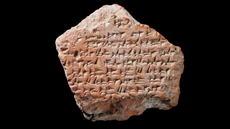 Fragment of world's oldest peace treaty unearthed in Turkey
Archaeologists excavating in the ancient Hittite capital of Hattusha have uncovered a fragment of the world's oldest peace treaty, signed around 1269 B.C.
4 Commentsancient-egyptians -
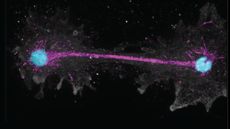 Newfound 'fire amoeba from the Cascades' sets record for the hottest temperature complex life can survive at
The newly-described amoeba Incendiamoeba cascadensis can survive at a sweltering 145 degrees Fahrenheit.
evolution -
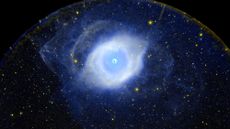 Vera C. Rubin Observatory detects one of the smallest and faintest satellite galaxies ever seen
Astronomers looking at Vera C. Rubin Observatory test data have discovered 'Aquarius IV', believed to be a brand new satellite galaxy of the Milky Way located 350,000 light-years away.
astronomy -
 US heading for unprecedented El Niño winter: Here's what to expect
A supercharged El Niño is underway in the Pacific, with wide reaching — and often surprising — effects across the United States.
9 Commentsclimate-change


