
-
 Our brains aren't wired to handle this much bad news. But 'looking away is not the fix,' expert says.
Around 40% of people around the world are avoiding the news. Here's why, according to a psychologist.
-
 Computer scientists are rushing to tame AI's voracious appetite for energy
Scientists are exploring new algorithms, hardware and computing methods to lower AI's power demands. Strategic siting of data centers and other steps to increase green energy use are also key.
-
 Climate change is driving capuchin monkey mothers to abandon their infants
Large groups have their pros and cons. But a changing climate may push them off balance.
-
 AI images are more convincing than ever — infiltrating journals and undermining trust in science
Thanks to AI, one of the key pillars of scientific evidence — stunning imagery that often defies belief — is crumbling.
-
 AI companies don't want to be legally responsible for their chatbots. US courts should make them.
Opinion AI-generated text and chatbots increasingly cause real-world harms. The companies that make them need to be held accountable for those harms.
Opinion -
 The US just approved bemotrizinol, a sunscreen ingredient long used in Asia and Europe. Here's how it works.
The U.S. Food and Drug Administration approved the first new sunscreen ingredient to be permitted for over-the-counter consumer use in the U.S. since 1999.
-
 Outdoor cats can be exposed to dangerous germs — here's how to protect you and your pets, according to more than 400 studies
Ecologists and a veterinarian looked at more than 400 studies to see how to stop cats from bringing home unwelcome pathogens.
-
 Bow-Wow, Ding-Dong, Pooh-Pooh: Expert explains early theories of how human language evolved — and their silly names
There are many theories as to how human language first evolved. But none completely explains why it happened.
-
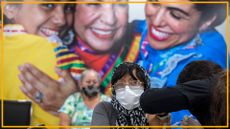 Doctors need to understand patients' lived experiences to treat them well — but medical schools may stop requiring that training
Opinion The board that accredits medical schools is poised to take away requirements that doctors learn about factors, such as income, neighborhood, and culture, that can affect medical treatment approaches. These requirements are necessary to ensure the highest quality of care.
Opinion


