








-
 Poll'Of course I am worried': Live Science readers react to US weapons in space
Are you worried about an arms race in space? Live Science readers shared their thoughts.
-
-
 OpinionWe're not about to awaken an evil digital god — AI is far more likely to end in a great disappointment
AI is unlikely to launch a Hollywood-style war against us. Rather, the biggest danger of AI is that it will disappoint us, says Andrew Rogoyski.
4 Comments -
 PollAre you worried about the US deploying weapons in space?
The U.S. has confirmed that it has weapons in orbit, raising new concerns about the future of military competition. Live Science asks our readers what they think about this latest development.
3 Comments -
 Poll'Maybe robots can maintain houseplants': Readers react to letting humanoid robots take over their housework
Would you let a humanoid robot do your chores? Live Science readers shared their thoughts in a recent poll.
-
 Poll'Maybe that is how Transformers started': Readers react to the possibility of AI becoming self-aware
Could AI become conscious? Live Science readers revealed their thoughts about this technological possibility.
8 Comments
-


-
-
 OpinionClimate change is driving capuchin monkey mothers to abandon their infants
Large groups have their pros and cons. But a changing climate may push them off balance.
-
 OpinionAI images are more convincing than ever — infiltrating journals and undermining trust in science
Thanks to AI, one of the key pillars of scientific evidence — stunning imagery that often defies belief — is crumbling.
-
 OpinionAI companies don't want to be legally responsible for their chatbots. US courts should make them.
AI-generated text and chatbots increasingly cause real-world harms. The companies that make them need to be held accountable for those harms.
-
 OpinionThe US just approved bemotrizinol, a sunscreen ingredient long used in Asia and Europe. Here's how it works.
The U.S. Food and Drug Administration approved the first new sunscreen ingredient to be permitted for over-the-counter consumer use in the U.S. since 1999.
-
 OpinionOutdoor cats can be exposed to dangerous germs — here's how to protect you and your pets, according to more than 400 studies
Ecologists and a veterinarian looked at more than 400 studies to see how to stop cats from bringing home unwelcome pathogens.
-
 OpinionBow-Wow, Ding-Dong, Pooh-Pooh: Expert explains early theories of how human language evolved — and their silly names
There are many theories as to how human language first evolved. But none completely explains why it happened.
-
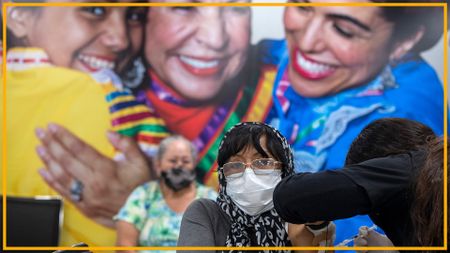 OpinionDoctors need to understand patients' lived experiences to treat them well — but medical schools may stop requiring that training
The board that accredits medical schools is poised to take away requirements that doctors learn about factors, such as income, neighborhood, and culture, that can affect medical treatment approaches. These requirements are necessary to ensure the highest quality of care.
-
 OpinionAI could consume up to 3% of world's electricity the UN warns
AI could soon use more water than we need to drink, UN report finds.
-
 OpinionAre some people wired to see ghosts? A psychologist explains what makes paranormal experiences more likely
Is my brain wired to never see a ghost? A psychologist on three factors that make a paranormal experience more likely
-


