

Scientists have been studying the moon for hundreds of years and have built up an incredible wealth of knowledge about our lunar companion. Live Science brings you the best moon facts and answers all of your lunar queries, from how did the moon form and whether the moon could ever be pushed from orbit to what is the "man in the moon" and why we can sometimes see the moon in the daytime. Our expert writers and editors also keep you updated on what's going on with our natural satellite, explain how you can see different lunar events, and provide coverage of new scientific discoveries, such as scientists confirming the moon has a solid iron "heart" just like Earth, and more with the latest moon news, features and articles.
Discover more about the moon

-
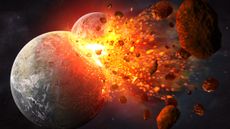 The moon may have formed in just 5 hours, new simulations suggest
Novel simulations that reassessed the ancient collision between Earth and the protoplanet Theia suggest that the moon could have emerged from the aftermath of this impact much more quickly than scientists previously thought.
the-moon -
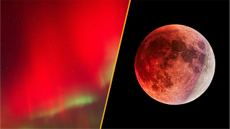 Rare red northern lights may be visible alongside red moon during tonight's partial lunar eclipse
Moderate G1 and G2 geomagnetic storms are forecast during the Aug. 27-28 partial lunar eclipse, with the northern lights potentially visible across several northern U.S. states and parts of Canada alongside the reddened full moon.
the-moon -
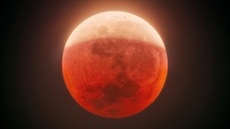 The moon is turning red tonight — here's why, and how to watch
The partial lunar eclipse on Aug. 27 will be the deepest lunar eclipse anywhere in the world until Dec. 31, 2028.
2 Commentsthe-moon -
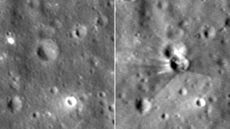 Out-of-control SpaceX rocket carved a 60-foot crater into the moon, NASA images reveal
NASA has finally revealed the enormous crater left on the moon after a SpaceX Falcon 9 upper stage smashed into its surface on Aug. 5.
the-moon -
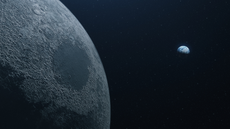 A SpaceX rocket will hit the moon at 5,000 mph tonight. Here's what to expect.
An upcoming collision of a Falcon 9 rocket part with the moon may be visible from Earth with telescopes, new research suggests. Here's what scientists and skywatchers are hoping to see.
the-moon -
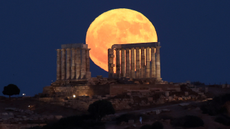 Catch an orange 'Buck Moon' rise tonight before a month of solar and lunar eclipses
July's full moon will be at its best on the night of July 29. It's the last regular full moon before a total solar eclipse and partial lunar eclipse in August.
the-moon -
 May's Flower 'micromoon' will look extra small tonight, with a rare Blue Moon following
May's full moon rises on May Day — May 1 — shortly after sunset, creating a dramatic spectacle for skywatchers.
2 Commentsthe-moon -
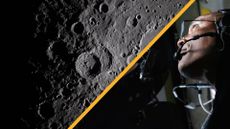 There were 'audible screams of delight': Why Artemis II sightings of meteor flashes on the moon have scientists giddy
Meteorite strikes spotted on the moon by the Artemis II crew will help scientists assess dangers to future moon bases, infrastructure, and astronauts.
the-moon -
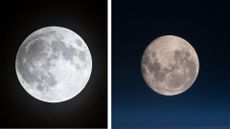 Does the moon look the same from everywhere on Earth?
The moon's orientation changes quite dramatically across time and between places, largely due to differences in perspective.
2 Commentsthe-moon


