


-
 A rare 'black moon' rises this weekend: What is it, and what can you see?
Saturday's new moon is a seasonal "black moon" — a rare phenomenon that occurs once every 33 months. Here's what that means and why it's a great night for stargazing.
the-moon -
 A blood moon is coming: Here's what you need to know about the total lunar eclipse on Sept. 7
Don't miss the Sept. 7 total lunar eclipse. Find out when and where to see the next blood moon.
-
 NASA aiming to build nuclear reactor on the moon by 2030
NASA is accelerating its plans for a nuclear reactor on the moon, aiming to establish such a power outpost by 2030, according to Politico.
-
 The full 'Sturgeon Moon' rises this weekend
In a rare skywatching treat, you can see August's full Sturgeon Moon rise soon after sunset on both Saturday, Aug. 9 and Sunday, Aug. 10.
the-moon -
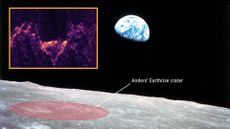 Scientists scan famous 'Earthrise' crater on mission to find alien life in our solar system
A large lunar crater featured in the iconic 'Earthrise' photo has just helped the European JUICE spacecraft hone its alien-hunting instruments during a once-in-a-lifetime flyby.
the-moon -
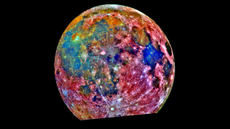 What color is moonlight?
What color is moonlight typically, and what other colors can moonlight look like from our perspective on Earth?
the-moon -
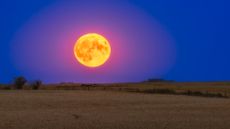 Full 'Buck Moon' rises next week: Why it's so special
July's full "Buck Moon" will be at its fullest on Thursday, July 10, and will be best seen at moonrise. It is the farthest full moon from the sun all year and one of the lowest in the sky.
the-moon -
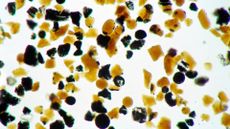 Apollo astronauts discovered the moon is covered in tiny orange glass beads. Now we finally know why.
Tiny, orange glass beads discovered on the moon during the Apollo era may reveal an untold history of lunar volcanism.
18 Commentsthe-moon -
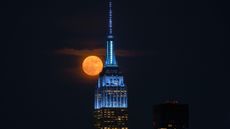 'Strawberry Moon' in pictures: Major lunar standstill sees June's full moon hang low in the sky
Last night's "Strawberry Moon" hovered lower in the night sky than it had done since 2006. Here are some stunning global snaps of June's full moon during the major lunar standstill.
the-moon


