 Live Science Plus





You are now subscribed
Your newsletter sign-up was successful
Want to add more newsletters?

Delivered Daily
Daily Newsletter
Sign up for the latest discoveries, groundbreaking research and fascinating breakthroughs that impact you and the wider world direct to your inbox.

Once a week
Life's Little Mysteries
Feed your curiosity with an exclusive mystery every week, solved with science and delivered direct to your inbox before it's seen anywhere else.

Once a week
How It Works
Sign up to our free science & technology newsletter for your weekly fix of fascinating articles, quick quizzes, amazing images, and more

Delivered daily
Space.com Newsletter
Breaking space news, the latest updates on rocket launches, skywatching events and more!

Once a month
Watch This Space
Sign up to our monthly entertainment newsletter to keep up with all our coverage of the latest sci-fi and space movies, tv shows, games and books.

Once a week
Night Sky This Week
Discover this week's must-see night sky events, moon phases, and stunning astrophotos. Sign up for our skywatching newsletter and explore the universe with us!
Join the club
Get full access to premium articles, exclusive features and a growing list of member rewards.
People who live in or travel to the Northeast or upper Midwest this summer should take precautions to avoid contracting babesiosis, a tick-born disease native to those areas, according to a new report from the Centers for Disease Control and Prevention.
In 2011, more than 1,100 cases of babesiosis from 15 states were reported to the CDC.
Ninety-seven percent of cases occurred in Connecticut, Massachusetts, Minnesota, New Jersey, New York, Rhode Island and Wisconsin. Most cases — 82 percent — occurred in the summer months (June through August). More than half of infected people were over age 60.
Babesiosis is caused by the parasite Babesia microti, which infects red blood cells. Symptoms can include fever, nausea and headache, although most people infected with the parasite feel fine, the CDC says.
In recent years, cases of babesiosis in the United States have increased, and the disease may be spreading into new regions. Last year was the first time health officials reported cases of the disease to the CDC using a standard definition of the illness. Surveillance for the disease occurred in 18 states.
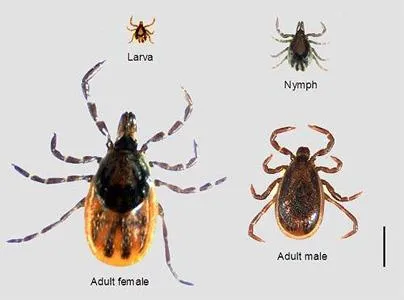
To prevent babesiosis infection, people who live in or travel to regions where the disease is found should take the following precautions: avoid tick-infested areas, apply repellents, wear long pants and long-sleeved shirts when outdoors, shower soon after being outdoors, and check their entire bodies for ticks, the CDC says.
Tick bites are the most common way babesiosis is transmitted, but people can also become infected through blood transfusions, and the disease can pass from mother to child during pregnancy.
In 2011, 10 people were suspected of contracting babesiosis through blood transfusions, and one case of congenital transmission of the disease was reported.
Treatments for babesiosis are effective, and usually involve a combination of anti-malarial drugs or antibiotics, such as quinine and clindamycin, according to the New York State Department of Health. But most people do not become sick enough to require treatment, and the CDC says people who do not have symptoms should not be treated with drugs.
Because there's no way to screen the blood supply for the babesiosis parasite, people known to have had the disease should refrain from donating blood indefinitely, the CDC says.
Ongoing surveillance for the disease will allow officials to develop effective prevention and control measures to reduce the burden of babesiosis, the report says.
The report will be published tomorrow (July 13) in the CDC journal Morbidity and Mortality Weekly Report.
Pass it on: Protect yourself from ticks this summer to avoid contracting babesiosis.
Follow MyHealthNewsDaily on Twitter @MyHealth_MHND. We're also on Facebook & Google+.

