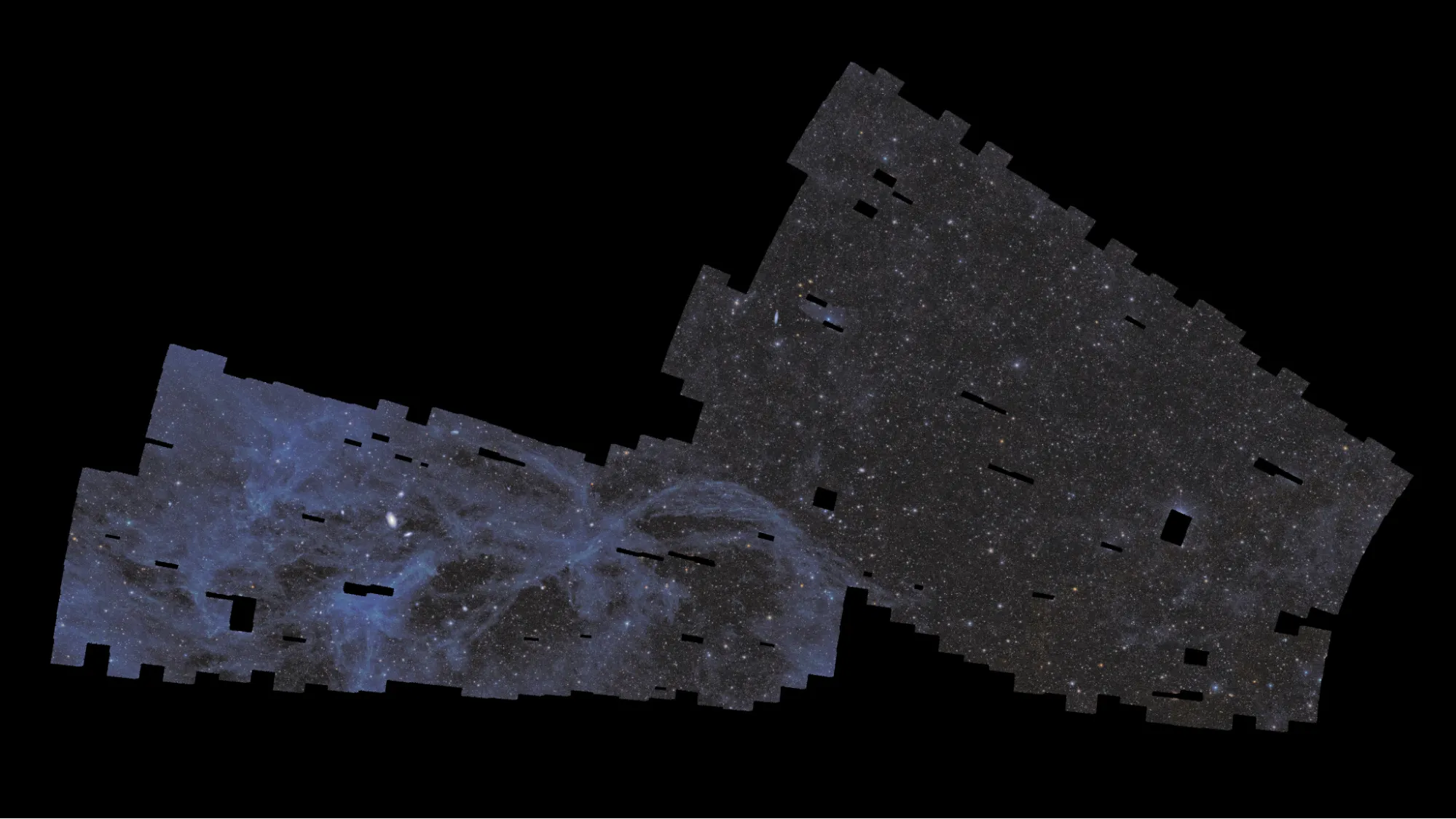
On Thursday (Nov. 12), the European Space Agency (ESA) shared the first major data release from its Euclid space telescope, including observations of more than 900 million galaxies and 60 million black-hole-powered light sources in the early universe.
"These are far more than beautiful pictures; today marks a scientific milestone in our study of the cosmos," Carole Mundell, ESA's director of science, said in a statement. "This major Euclid data release represents the largest space-based survey of its kind, laying the foundation of future discovery."
Captured over 13 months, this cornucopia of data covers a slice of sky about 9,500 bigger than the full moon — about 14% of the total sky area that Euclid will survey on its planned six-year mission. Each object in the survey is like a "puzzle piece," with its specific light signature, or spectrum), offering clues about its composition and distance from Earth, according to ESA.
Scientists can now start using the 1.7 million gigabytes of Euclid data to slot those objects into a 3D model of the universe and begin to map out the vast cosmic web that underlies all galaxies. But the data release also includes some stunning space images, which you can enjoy immediately. Here are some of the highlights.
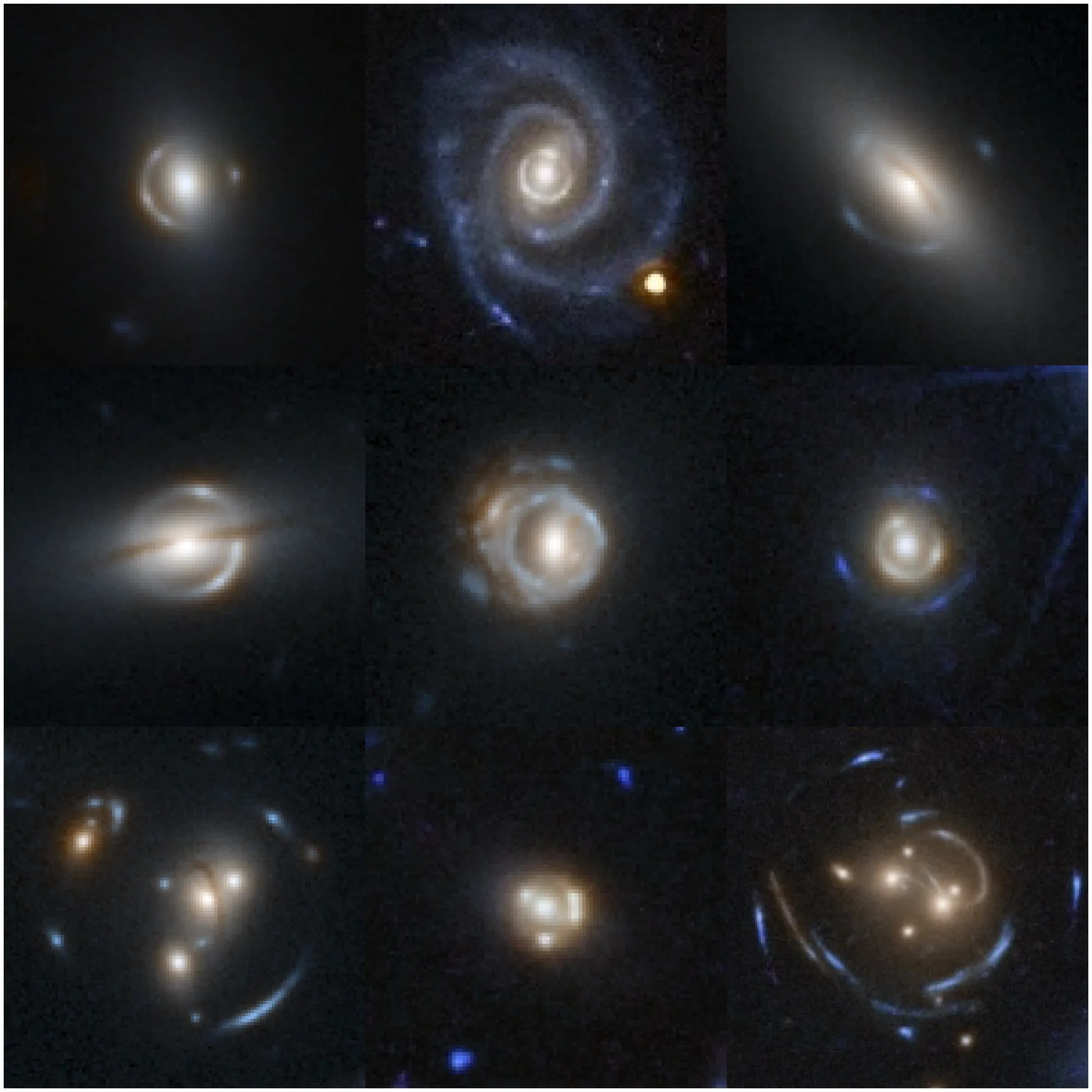
A record haul of "Einstein rings"
A mosaic of 9 gravitational lenses spotted by the Euclid telescope.
(Image credit: ESA/ Euclid Consortium)
Gravitational lenses are nature's biggest magnifying glasses. These "Einstein rings" — named after Albert Einstein, who predicted their existence — occur when exceptionally massive objects, like large galaxies, bend the fabric of space-time. This cosmic curvature causes the light emitted by objects behind them to appear magnified, distorted and sometimes duplicated.
In its first data release, Euclid has discovered more than 15,000 strong gravitational lensing candidates. These cosmic lenses enable astronomers to get much clearer views of the deep universe than any telescope could possibly see on its own.
Sign up for the Live Science daily newsletter now
Get the world’s most fascinating discoveries delivered straight to your inbox.
"Over 10 years ago, we forecast that Euclid would revolutionise the field of strong lens discovery," Natalie Lines, a Euclid Consortium member working at the University of Portsmouth in the UK, said in the statement. "That day is finally here."
Grand design
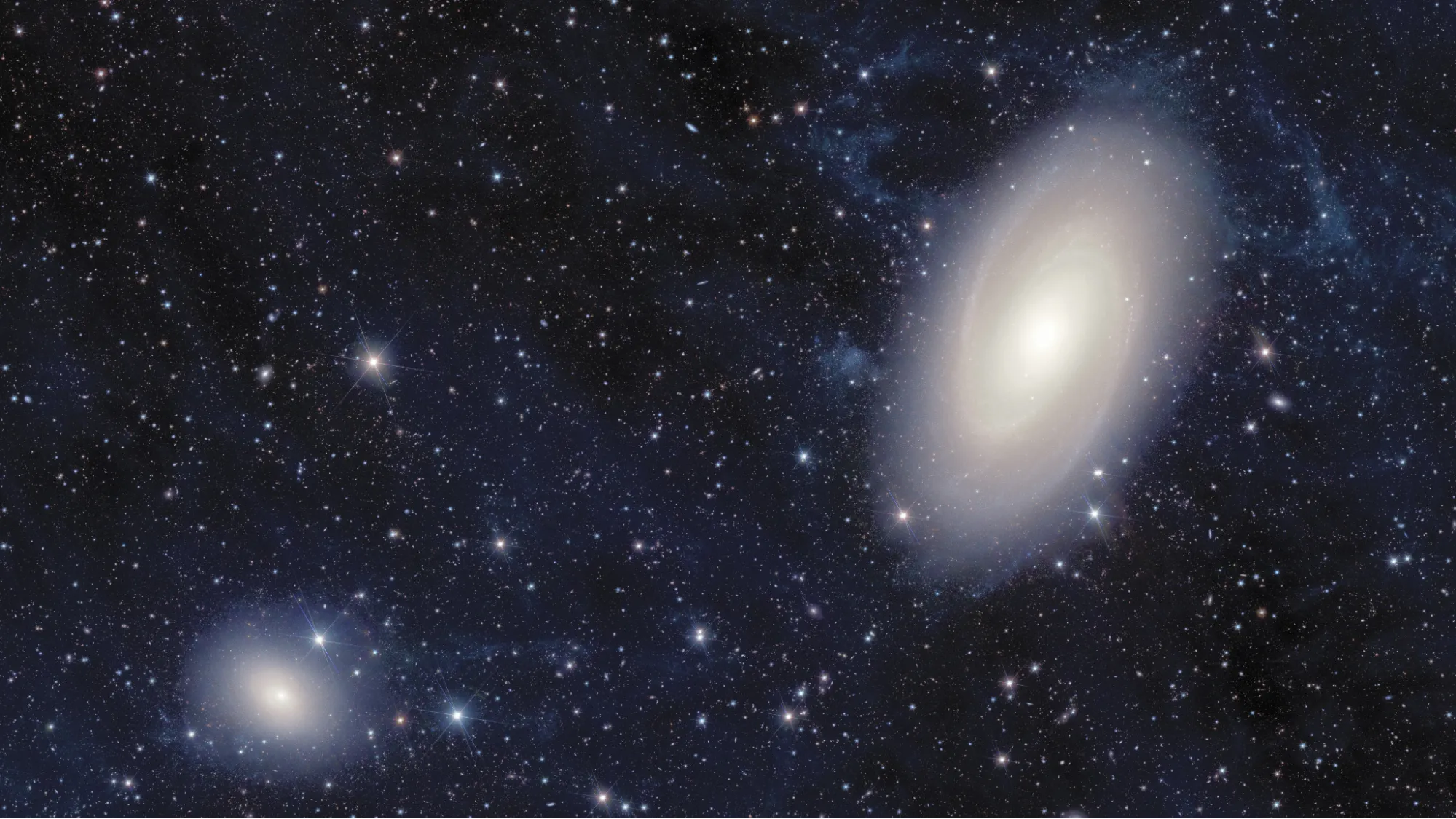
The "grand design" spiral galaxy M81, imaged by Euclid.
(Image credit: ESA/ Euclid Consortium)
The Messier 81 galaxy (seen on the right) is one of the brightest in the sky. With fully developed spiral arms stretching to its bright core, M81 is known as a "grand design spiral" galaxy.
While M81 is relatively close to Earth and can be seen with a good pair of binoculars, Euclid's field of view captures it alongside the elliptical galaxy NGC 3077 (bottom left) and crisp clouds of interstellar dust.
Golden Eye
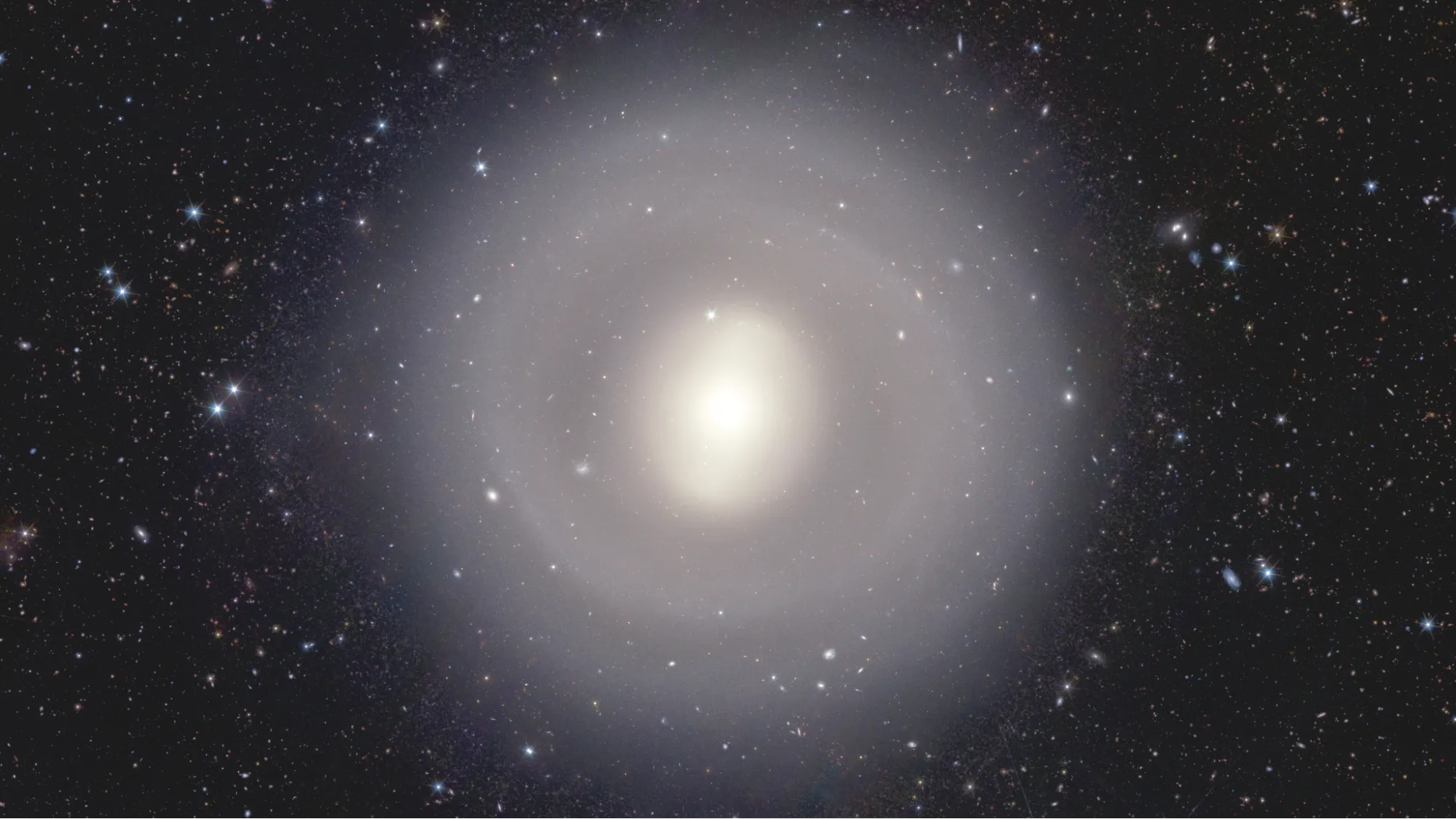
The ring galaxy NGC 1291, imaged close up at Euclid's highest resolution.
(Image credit: ESA/ Euclid Consortium)
Among the nearly 1 billion galaxies charted by Euclid is NGC 1291, also called the Golden Eye galaxy. The galaxy is located 33 million light-years from Earth, and Euclid shows a close-up view of it here at the telescope's highest resolution, according to ESA.
Ring galaxies like this contain a central bulge disconnected from a surrounding ring of stars; astronomers think these galaxies form when a smaller galaxy plunges through the middle of a larger one.
Filling the map
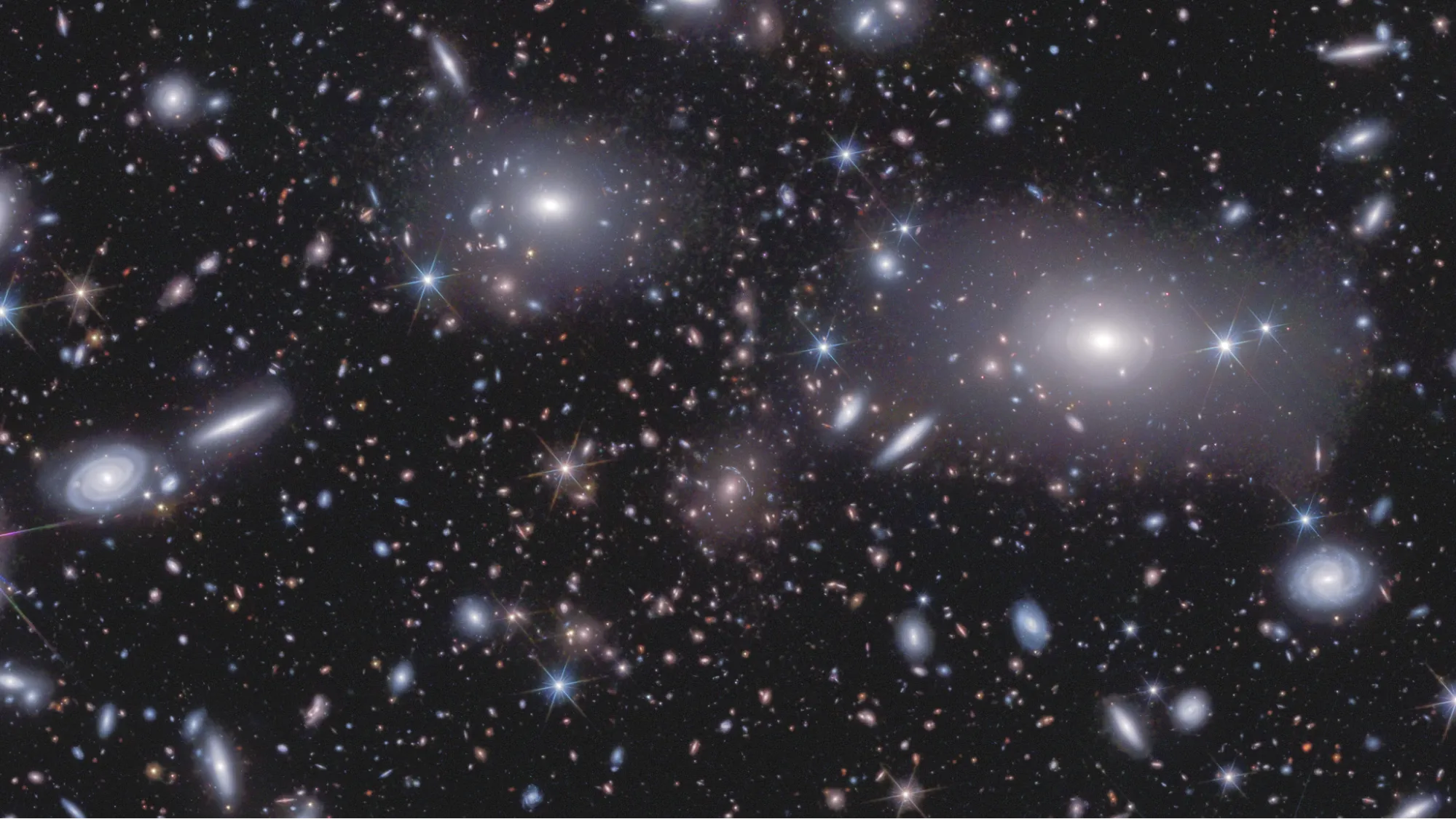
The first piece of the Euclid Wide Survey, covering about 14% of the total sky area that the telescope plans to survey.
(Image credit: ESA/ Euclid Consortium)
This image shows the entire sector of the Euclid Wide Survey, the telescope's mission to map vast swatches of the northern sky. The Wide Survey is accompanied by the Euclid Deep Survey, which will spend about 10% of the telescope's observing time taking repeated observations of three relatively small spots of sky, according to ESA.
With about 85% of its survey left to go, Euclid is on track to collect one of the most comprehensive datasets of the universe ever. Now, it'll be up to the scientific community to make good use of those observations and find something extraordinary.
Brandon is the space / physics editor at Live Science. With more than 20 years of editorial experience, his writing has appeared in The Washington Post, Reader's Digest, CBS.com, the Richard Dawkins Foundation website and other outlets. He holds a bachelor's degree in creative writing from the University of Arizona, with minors in journalism and media arts. His interests include black holes, asteroids and comets, and the search for extraterrestrial life.
You must confirm your public display name before commenting
Please logout and then login again, you will then be prompted to enter your display name.