
-
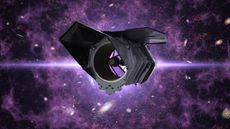 What are you most excited for NASA's Roman Space Telescope to find?
Poll NASA's Nancy Grace Roman Space Telescope has taken its first pictures of space as it heads toward its orbital location. From there, it will begin scanning deep space to uncover more about our universe.
3 CommentsPoll -
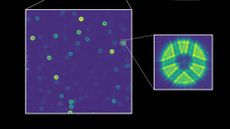 'On our way to groundbreaking science': Stars turn neon-green in first test image from NASA's Roman telescope
Space photo of the week This week, NASA turned on the Nancy Grace Roman Space Telescope's powerful 300-megapixel camera for the first time. The debut test image promises "groundbreaking science" to come with NASA already talking about doubling the mission's lifespan.
2 CommentsSpace photo of the week -
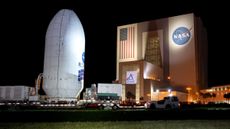 NASA's Nancy Grace Roman Space Telescope is set to launch this weekend. When will we see its first photos?
The Nancy Grace Roman Space Telescope is set to launch from Kennedy Space Center in Florida Sunday morning (Aug. 30). The state-of-the-art spacecraft will help astronomers study exoplanets, distant galaxies, dark matter and much more.
space-exploration -
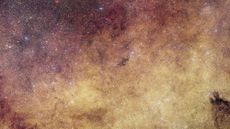 60 million stars: Euclid space telescope snaps the most detailed photo of the Milky Way ever taken
Planet hunters and stargazers will both benefit from the Euclid space telescope's newest image, which was released after 26 hours of deep-space observations.
astronomy -
 'A real revolution': The James Webb telescope is upending our understanding of the biggest, oldest black holes in the universe
For years, the James Webb Space Telescope has been spotting enormous black holes in the early universe that defy all expectations. Now, astronomers are finally deciphering the origins of these cosmic behemoths.
black-holes -
 NASA's powerful new Roman Space Telescope is complete — and will soon begin mission to find 100,000 alien worlds
New photos show off NASA's newly constructed Roman Space Telescope, which will soon help researchers unravel the mysteries of the cosmos. Experts have also revealed when the next-gen spacecraft is set to launch and begin collecting data.
space-exploration -
 It's official: Humans have found 6,000 planets beyond our solar system
Just two decades after astronomers discovered the first exoplanet, NASA has confirmed the existence of 6,000 alien worlds. The total will rise even quicker as next-generation telescopes take flight.
exoplanets -
 Astronomers discover most powerful cosmic explosions since the Big Bang
Astronomers have discovered a new class of bright, long-lasting cosmic explosions that offer a new probe into studying the universe's most distant black holes.
black-holes -
 Dark matter could be destroying itself inside the bellies of exoplanets
Researchers propose learning more about dark matter by looking for its effects inside exoplanets.
exoplanets


