Read the latest science news and recent scientific discoveries on Live Science, where we've been reporting on groundbreaking advances for over 20 years. Our expert editors, writers and contributors are ready to guide you through today's most important breakthroughs in science with expert analysis, in-depth explainers and interesting articles, covering everything from space, technology, health, animals, planet Earth, and much more.


-
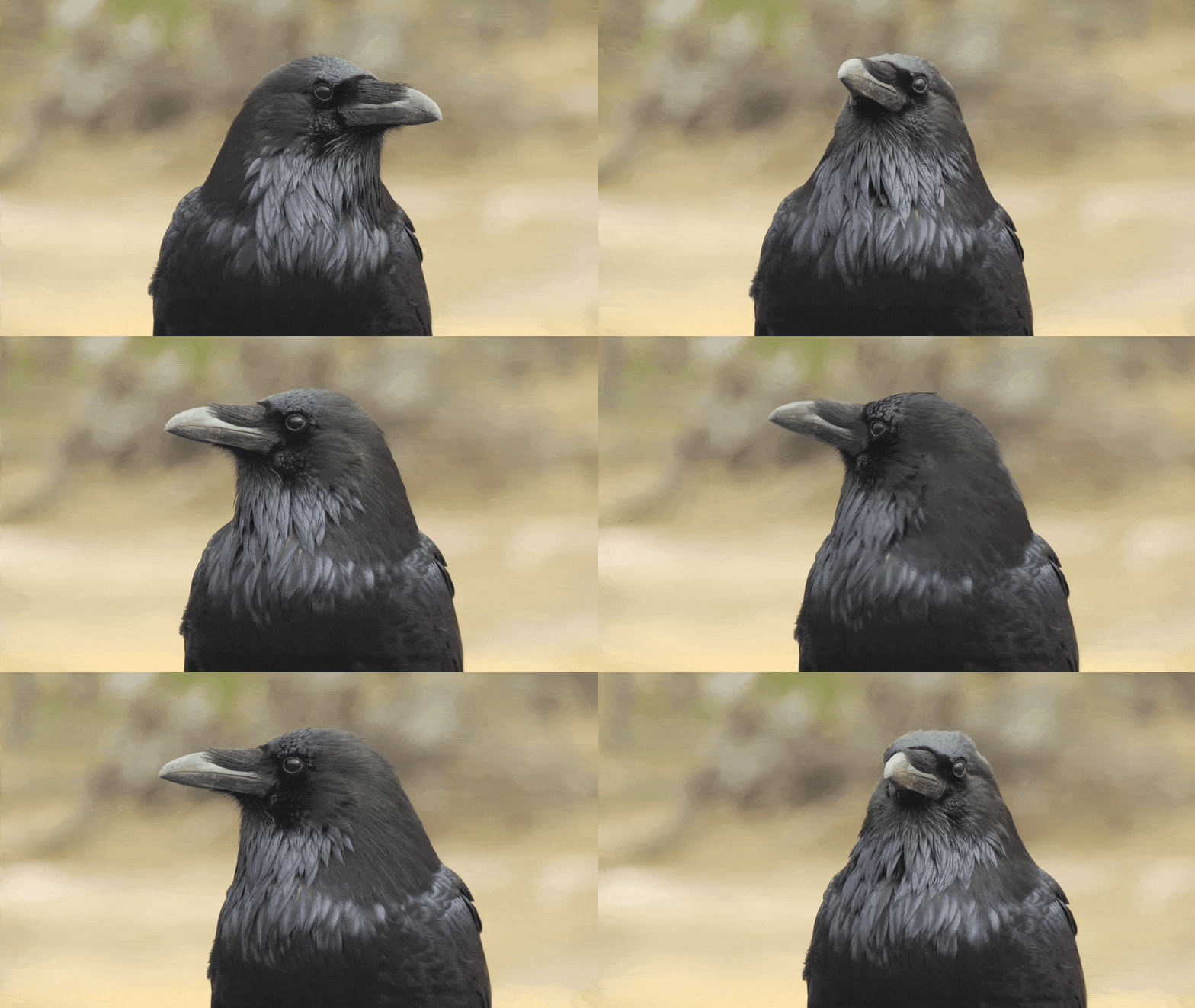 Crows may make lightning-fast decisions, sometimes twice as fast as humans, study hints
Carrion crows made decisions about their visual environments significantly faster than humans and primates tend to, according to a comparison in a new study.
birds -
 Brain scans reveal 'number line' that's used to mentally compare values
Although whole numbers and fractions are processed differently in the brain, when you compare their values, a single "mental map" akin to a number line lights up.
neuroscience -
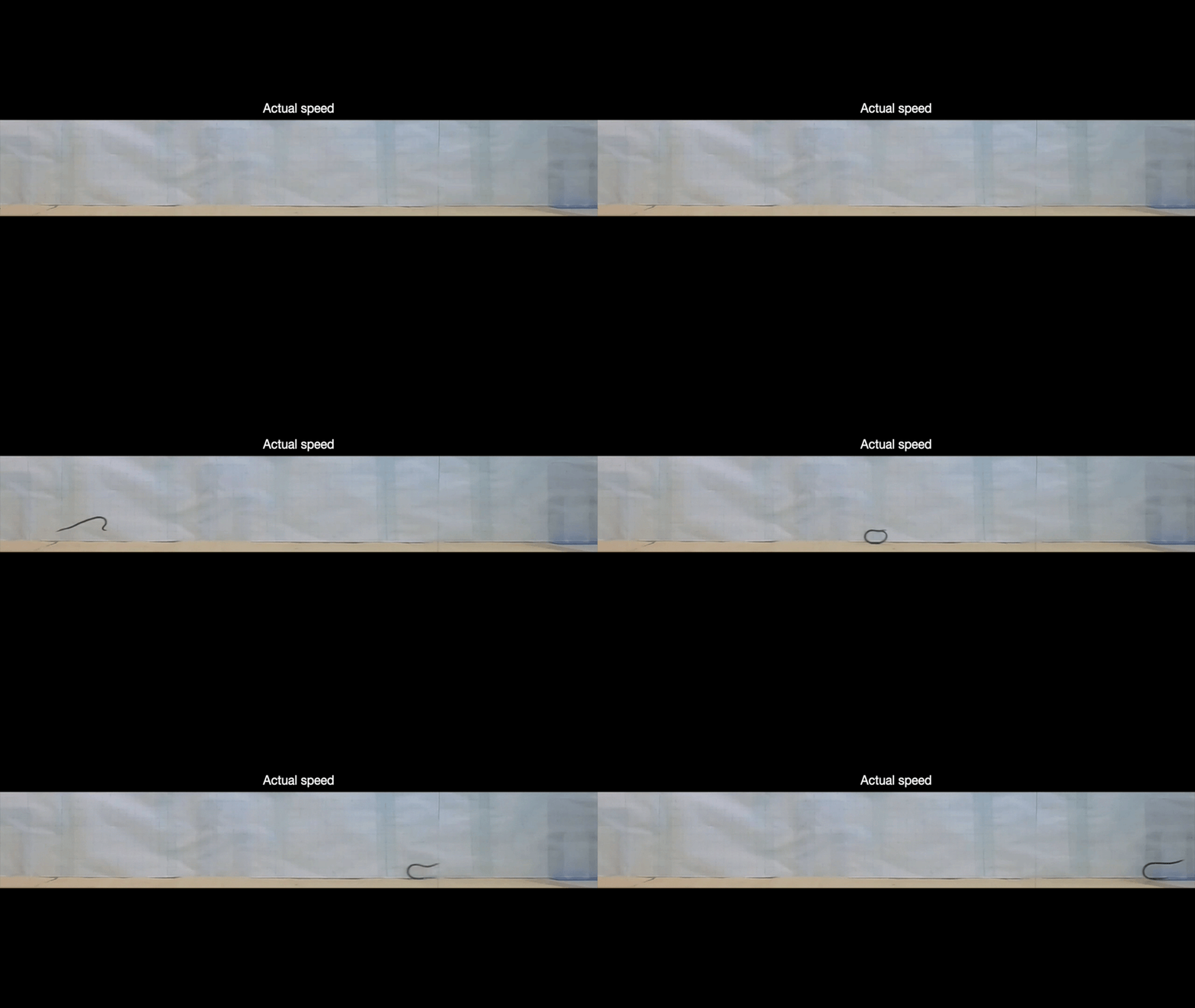 Watch bizarre snake 'cartwheel' away from danger at more than 12 feet per second
Researchers filmed dwarf reed snakes (Pseudorabdion) from different angles to better understand how the serpents pull off their remarkable rolling behavior.
snakes -
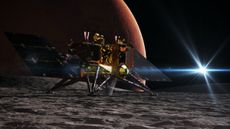 Japan launches world's first round-trip mission to Mars.
The Martian Moons Exploration (MMX) mission, which launched from Japan on Oct. 19, is on its way to Mars. When it arrives, the probe will attempt to land on one of the Red Planet's twin moons and scoop up rocks to bring back to Earth. Experts tell Live Science what these "transformative" samples could teach us.
space-exploration -
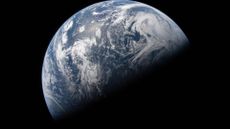 Climate change is literally altering the shape of our planet
The melting of the poles is increasingly shifting Earth's shape at a faster rate, with the planet becoming more and more round.
planet-earth -
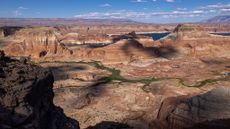 Surprising new pattern of groundwater loss may signal a turning point for the Colorado River Basin
During an intense drought from 2020 to 2022, the Upper Colorado River Basin lost far more groundwater than the Lower Basin did, despite having much higher natural recharge.
rivers-oceans -
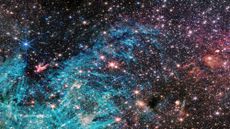 James Webb telescope discovers surprising trove of metals around the Milky Way's supermassive black hole
New observations from the James Webb Space Telescope reveal a concentration of heavy metals near the Milky Way's central black hole. The discovery deepens a mystery about why our black hole behaves the way it does.
astronomy -
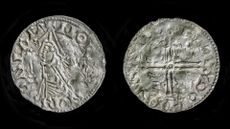 Extremely rare Viking Age coin from the reign of 'Olaf the Holy' may have been 'held in the king's own hand'
A massive Viking Age hoard that was discovered in Norway contains a rare silver coin featuring "Olaf the Holy," one of the country's first Christian kings.
vikings -
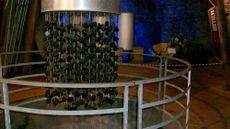 Uranium from World War II reveals how close the Nazis were to an atomic bomb
A new look at the uranium and heavy water used by the Nazis reveals whether they were close to making a reactor for an atomic bomb.
physics-mathematics -
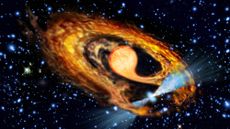 Lightest known pair of neutron stars proves Einstein right yet again
Einstein's theory of relativity just got put to the test by the lightest binary neutron star system ever discovered.
physics-mathematics -
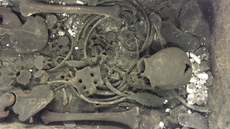 Case of mysterious medieval skeleton buried in Roman-era sarcophagus at Westminster Abbey finally solved
A sarcophagus in Westminster Abbey with Roman and Anglo-Saxon decorations baffled archaeologists, but now a 150-year-old mystery has finally been solved.
archaeology -
 Could 'body clocks' play a role in depression? Study proposes a new 'circadian' subtype
Researchers propose a new subtype of depression linked to body-clock patterns.
sleep -
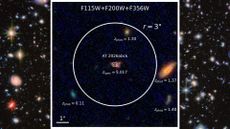 The James Webb telescope is watching one of the earliest supernovas in the universe unfold
Astronomers using the James Webb Space Telescope may have discovered a supernova erupting just 1.1 billion years after the Big Bang.
cosmology -
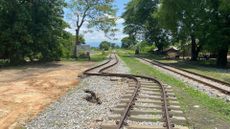 Devastating 2025 Myanmar earthquake sheds light on how the 'Big One' could play out in California
The fault that triggered a massive earthquake in Myanmar last year is tilted much like California's San Andreas, which can influence how much shaking takes place and where.
earthquakes -
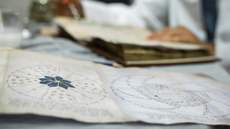 Undeciphered Voynich manuscript may have been bound out of order, study finds
Experts argue that the mysterious Voynich manuscript was incorrectly bound — a discovery that "moves the ball" in finally deciphering the 15th-century document.
archaeology -
 Ultrasound waves that jiggle deep brain structures may relieve delusions in schizophrenia, small trial hints
In a new pilot study, 10 minutes of transcranial ultrasound stimulation reduced patients' delusion severity, scientists report.
neuroscience -
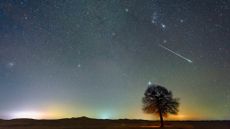 See pieces of Halley's Comet fall to Earth this week as the Orionid meteor shower peaks
The Orionid meteor shower peaks overnight on Oct. 21-22. Here's how to see "shooting stars" from Halley's Comet.
meteoroids -
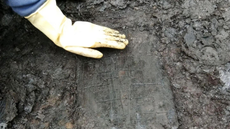 11th-century 'pizza peel' discovered in Russia doubled as a medieval game board
Archaeologists in Russia unearthed a flat wooden "pizza paddle" that had a board game carved into it.
3 Commentsarchaeology -
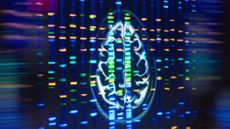 A gene variant triples the risk of getting Alzheimer's disease — fat buildup in brain cells may be to blame, study finds
A gene variant called APOE4 is the biggest genetic risk factor for Alzheimer's disease. Scientists are finally figuring out how it works.
alzheimers-dementia


