













See pieces of Halley's Comet fall to Earth this week as the Orionid meteor shower peaks
The Orionid meteor shower peaks overnight on Oct. 21-22. Here's how to see "shooting stars" from Halley's Comet.

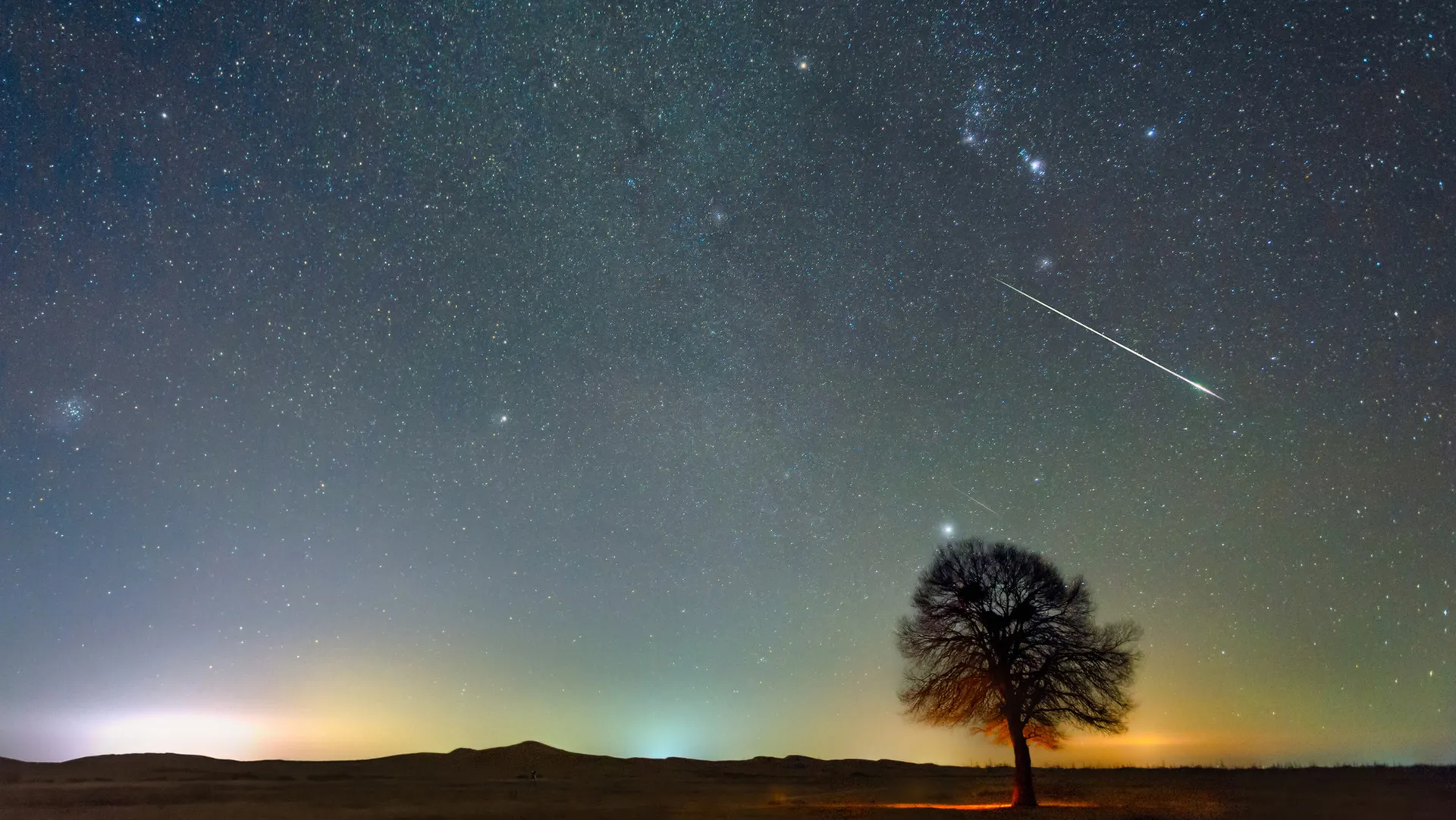
One of the best fall meteor showers peaks this week, when pieces of the famous Halley's Comet streak across Earth's atmosphere as fast-moving "shooting stars."
The Orionid meteor shower will peak overnight Wednesday (Oct. 21) through Thursday (Oct. 22), potentially producing around 20 meteors per hour under a dark sky, according to Time and Date. The Orionids are caused when Earth passes through the debris left by Halley's Comet, which last passed through the inner solar system in 1986 and will return in 2061.
Halley's Comet is presently beyond the orbit of Neptune, according to The Planets Today, but it doesn't need to be close to Earth to cause "shooting stars." Every time the comet travels through the inner solar system, heat from the sun causes it to shed dust and rocky particles along its orbital path. Earth's own orbit takes the comet through streams of that ancient debris several times a year, with the particles vaporizing as they slam into our planet's atmosphere.
The Orionids are particularly fast meteors, striking Earth's atmosphere at around 41 miles per second (66 kilometers per second). They can produce bright streaks, occasional fireballs (extremely bright, sometimes colorful meteors) and "persistent trains" — glowing trails that remain visible briefly after a meteor has disappeared. The best way to view them is with the naked eye, although a nice pair of stargazing binoculars or a small backyard telescope will help you enjoy more sights during peak skywatching season this fall.
Halley's Comet produces not one but two annual meteor showers. Its orbit comes close to Earth's at two different points, so our planet encounters the comet's debris twice each year — once during the Orionids in late October, and again during the Eta Aquariid meteor shower in early May.
There's a slight complication with the Orionids this year. A 71%-illuminated waxing gibbous moon will brighten much of the night, making it harder to spot meteors. However, the moon will set early Thursday morning, creating a valuable window of darkness before dawn. That's also when the constellation Orion will be high in the sky, making the predawn hours the best time to watch.
You can trace the paths of Orionid meteors back to their radiant: the famous red supergiant star system Betelgeuse in the constellation Orion. (That's why the shower is called the Orionids.) However, there's no need to look directly at Orion. Meteors seen farther from the radiant can produce longer streaks across the sky; each one comes from a tiny piece of Halley's Comet completing a journey that began many centuries ago.
Get the world’s most fascinating discoveries delivered straight to your inbox.

Jamie Carter is a Cardiff, U.K.-based freelance science journalist and a regular contributor to Live Science. He is the author of A Stargazing Program For Beginners and co-author of The Eclipse Effect, and leads international stargazing and eclipse-chasing tours. His work appears regularly in Space.com, Forbes, New Scientist, BBC Sky at Night, Sky & Telescope, and other major science and astronomy publications. He is also the editor of WhenIsTheNextEclipse.com.
You must confirm your public display name before commenting
Please logout and then login again, you will then be prompted to enter your display name.