













Chinese Officials Seal Off 'Plague' City, Puzzling US Experts

A city in China has reportedly been sealed off after one resident died from bubonic plague, but this way of trying to contain the disease is puzzling to infectious disease experts, who say the response seems extreme given the information released about the case.
According to news reports, Chinese officials have blocked off parts of Yumen, a city in northwest China, preventing about 30,000 of the city's people from leaving.
A man in the city became ill after he handled a dead marmot (a large wild rodent), and died last week from bubonic plague. No other cases of the plague have been reported, according to the Guardian. About 150 people who had contact with the plague victim have been placed under quarantine.
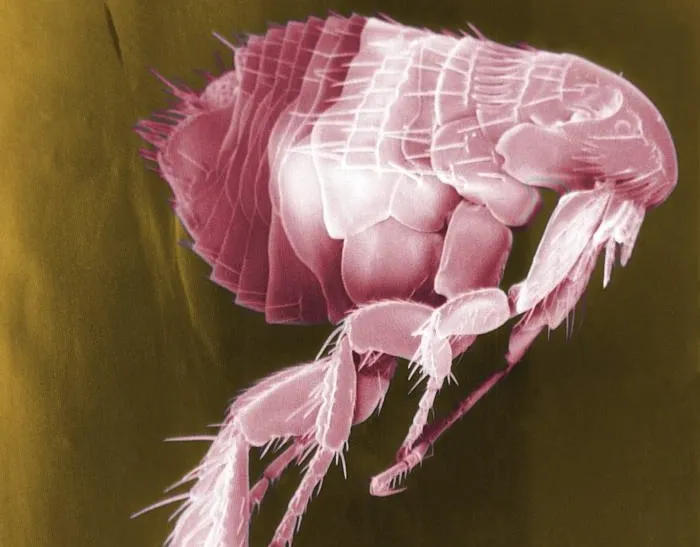
Plague is an infectious disease caused by the bacteria Yersinia pestis that is carried by rodents, and can be transmitted to people through flea bites or by direct contact with the tissues or fluids of an animal with plague, according to the Centers for Disease Control and Prevention. The disease is known for killing millions of people in Europe in the 1300s, in a pandemic called the Black Death.
Today the illness is treatable with antibiotics, the CDC says. Now there are fewer than 5,000 cases of plague per year worldwide, with most cases occurring in Africa, according to the Mayo Clinic. [Pictures of a Killer: A Plague Gallery]
There are several forms of plague. Bubonic plague, which the man in Yumen had, causes swelling of the lymph nodes, and it cannot be spread from person to person. However, if the disease spreads to the lungs, the person can develop pneumonic plague, which can be transmitted from person to person if a sick individual coughs droplets into the air, and another person inhales the droplets. But person-to-person transmission is rare, and usually requires close contact with the infected individual, the CDC says.
Dr. William Schaffner, a professor of preventive medicine and infectious diseases at Vanderbilt University Medical Center in Nashville, Tennessee, said that sealing off a city is a rather extreme set of precautions to take for a single case of bubonic plague. "I feel there's something here that we don't know, because this seems a very expansive response to just one case," Schaffner said.
Get the world’s most fascinating discoveries delivered straight to your inbox.
"We have cases of bubonic plague from time to time in the United States, and they don't require this kind of public health response," Schaffner said. In recent decades, there have been an average of seven cases of bubonic plague a year in the United States, the CDC says.
When bubonic plague cases occur in the U.S., the public health response is very local — the patient is treated, and officials try to determine the source of the infection and warn people to stay away from the source, Schaffner said.
In cases of pneumonic plague, U.S. officials would speak with people who had close contact with the plague patient, and make sure any further cases were diagnosed quickly. People with pneumonic plague are isolated from other patients during treatment, the CDC says. This response has been quite sufficient for dealing with plague cases, Schaffner said.
Schaffner wondered whether Chinese public health authorities had more information that they have not released, such as reason to suspect more cases. "I'm very puzzled at the circumstances here, and what the actual hazard is," Schaffner said.
Follow Rachael Rettner @RachaelRettner. Follow Live Science @livescience, Facebook & Google+. Original article on Live Science.

Rachael is a Live Science contributor, and was a former channel editor and senior writer for Live Science between 2010 and 2022. She has a master's degree in journalism from New York University's Science, Health and Environmental Reporting Program. She also holds a B.S. in molecular biology and an M.S. in biology from the University of California, San Diego. Her work has appeared in Scienceline, The Washington Post and Scientific American.