Read the latest science news and recent scientific discoveries on Live Science, where we've been reporting on groundbreaking advances for over 20 years. Our expert editors, writers and contributors are ready to guide you through today's most important breakthroughs in science with expert analysis, in-depth explainers and interesting articles, covering everything from space, technology, health, animals, planet Earth, and much more.


-
 A neglected particle from the dawn of time could explain why everything in the universe exists
A hypothetical particle could have briefly held more energy than everything else in the infant universe combined, which could help explain how matter won out over antimatter.
particle-physics -
 Daylight saving time 2026: It's time to change your clocks this Sunday
When does daylight saving time end in 2026? Here's when we change our clocks this fall, and why.
physics-mathematics -
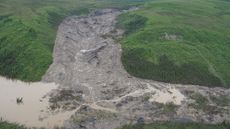 'A potential glimpse into the future': Climate change has triggered 'permafrost landslides' with house-size blocks of ice in Canada
For the first time, researchers have identified a new type of landslide of permafrost in Canada's Northwest Territories.
climate-change -
 Colorectal cancer cases in kids have risen sixfold over past 2 decades — researchers are racing to understand why
Analysis While rare, colorectal cancer is becoming more common in kids, teens and young adults, and the disease appears particularly aggressive in this age group.
Analysis -
 Rare burial of elite toddler from pre-Inca culture discovered in Peru
Archaeologists have uncovered the 1,500-year-old burial of an elite toddler from the Moche culture in Peru.
americas -
 10 minutes is all it takes for AI assistance to erode your motivation, study shows
In a set of problem-solving experiments, researchers found that people who used AI to get answers were more likely to give up and fail when that help was removed, compared with people who did not use AI.
artificial-intelligence -
 Watch the full 'Hunter's Moon' rise next to Saturn this weekend
You'll have two chances to see October's full Hunter's Moon rise dramatically this week. Here's when to get the best views.
the-moon -
 Christina Applegate misdiagnosis: Why can MS be difficult to diagnose?
Analysis MS advocate Christina Applegate recently announced that her MS diagnosis was incorrect, based on new test results. Why can the disease be difficult to identify?
Analysis -
 Scientists can now 'watermark' AI-generated proteins to deter bioweapon creation. But will it really work?
Analysis A new technology encodes an invisible mark into the structure of AI-generated proteins, but experts said the system's guardrails can still be bypassed.
Analysis -
 'We're never going to come home': Artemis II commander recalls the most terrifying moment of his 10-day trip around the moon
Artemis II Commander Reid Wiseman felt genuine fear when he saw the Orion spacecraft had gone farther from Earth than anticipated, the astronaut told an audience at the Starmus VIII festival this week.
4 Commentsspace-exploration -
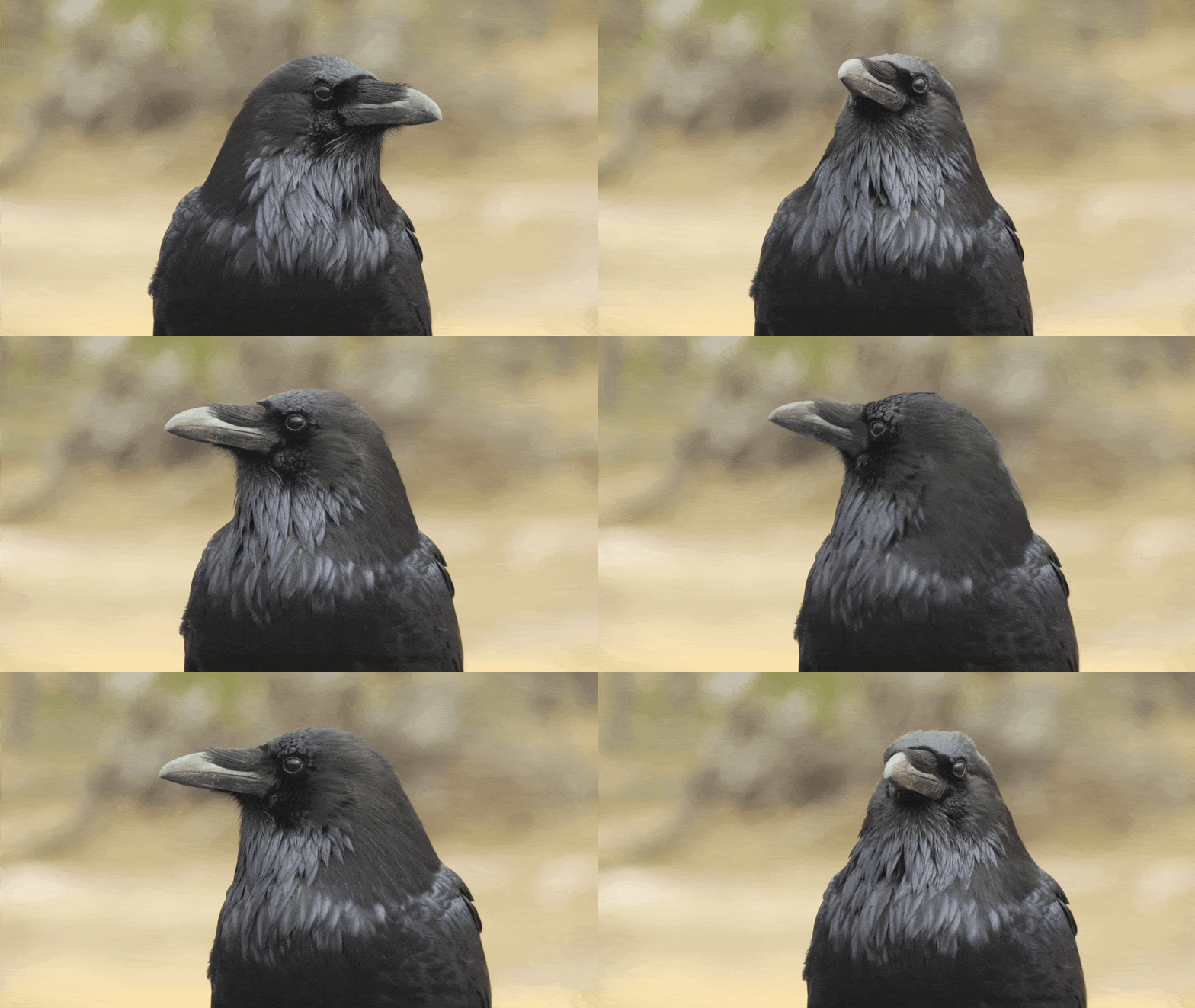 Crows may make lightning-fast decisions, sometimes twice as fast as humans, study hints
Carrion crows made decisions about their visual environments significantly faster than humans and primates tend to, according to a comparison in a new study.
birds -
 Brain scans reveal 'number line' that's used to mentally compare values
Although whole numbers and fractions are processed differently in the brain, when you compare their values, a single "mental map" akin to a number line lights up.
neuroscience -
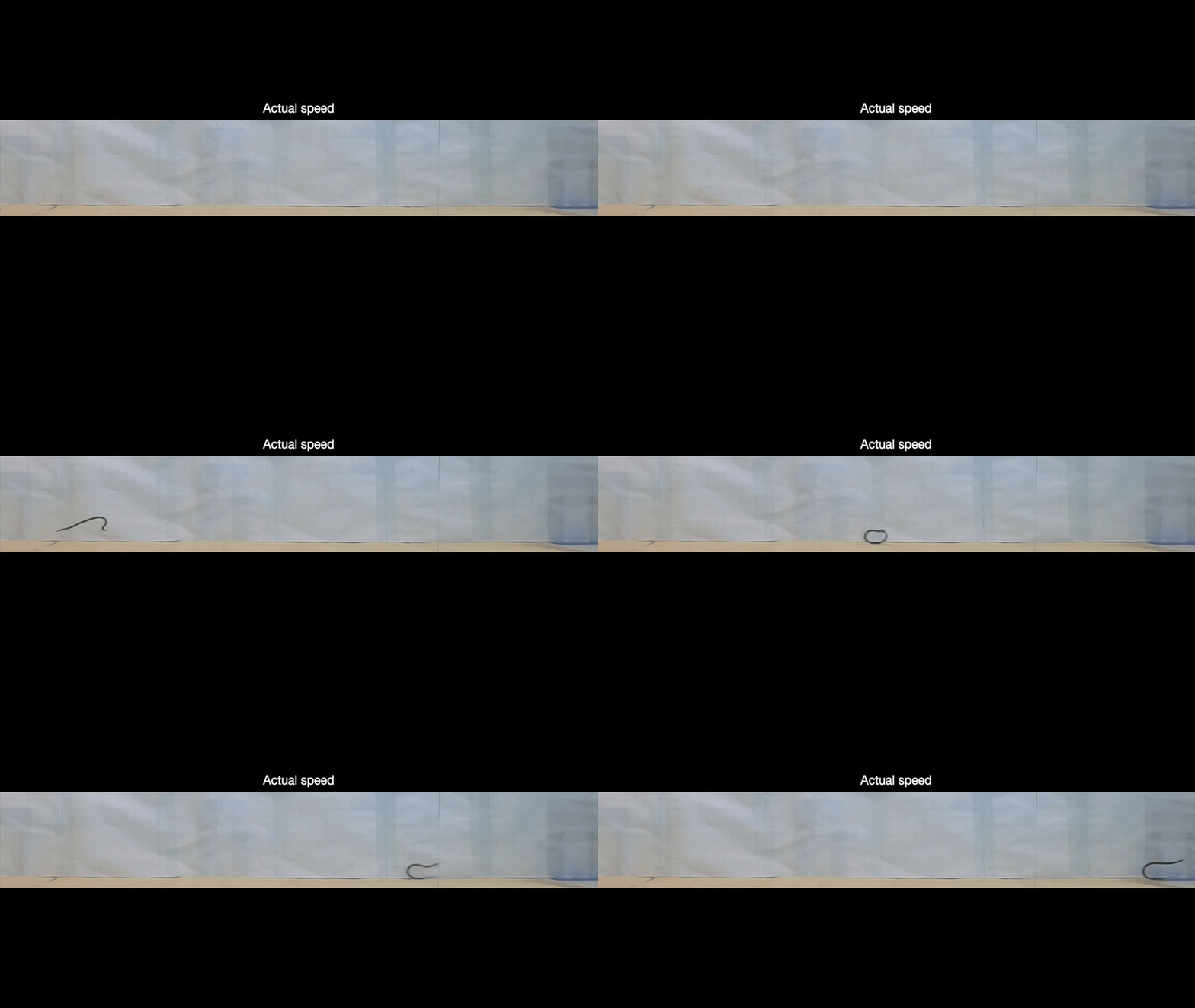 Watch bizarre snake 'cartwheel' away from danger at more than 12 feet per second
Researchers filmed dwarf reed snakes (Pseudorabdion) from different angles to better understand how the serpents pull off their remarkable rolling behavior.
snakes -
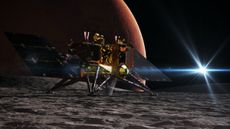 Japan launches world's first round-trip mission to Mars
The Martian Moons Exploration (MMX) mission, which launched from Japan on Oct. 19, is on its way to Mars. When it arrives, the probe will attempt to land on one of the Red Planet's twin moons and scoop up rocks to bring back to Earth. Experts tell Live Science what these "transformative" samples could teach us.
space-exploration -
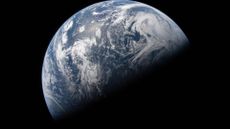 Climate change is literally altering the shape of our planet
The melting of the poles is increasingly shifting Earth's shape at a faster rate, with the planet becoming more and more round.
5 Commentsplanet-earth -
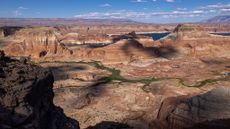 Surprising new pattern of groundwater loss may signal a turning point for the Colorado River Basin
During an intense drought from 2020 to 2022, the Upper Colorado River Basin lost far more groundwater than the Lower Basin did, despite having much higher natural recharge.
rivers-oceans -
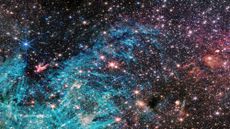 James Webb telescope discovers surprising trove of metals around the Milky Way's supermassive black hole
New observations from the James Webb Space Telescope reveal a concentration of heavy metals near the Milky Way's central black hole. The discovery deepens a mystery about why our galaxy's black hole behaves the way it does.
astronomy -
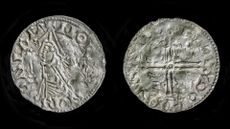 Extremely rare Viking Age coin from the reign of 'Olaf the Holy' may have been 'held in the king's own hand'
A massive Viking Age hoard that was discovered in Norway contains a rare silver coin featuring "Olaf the Holy," one of the country's first Christian kings.
vikings -
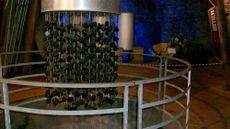 Uranium from World War II reveals how close the Nazis were to an atomic bomb
A new look at the uranium and heavy water used by the Nazis reveals whether they were close to making a reactor for an atomic bomb.
physics-mathematics


