Humans Trekked Out of Africa Via Egypt, Study Suggests

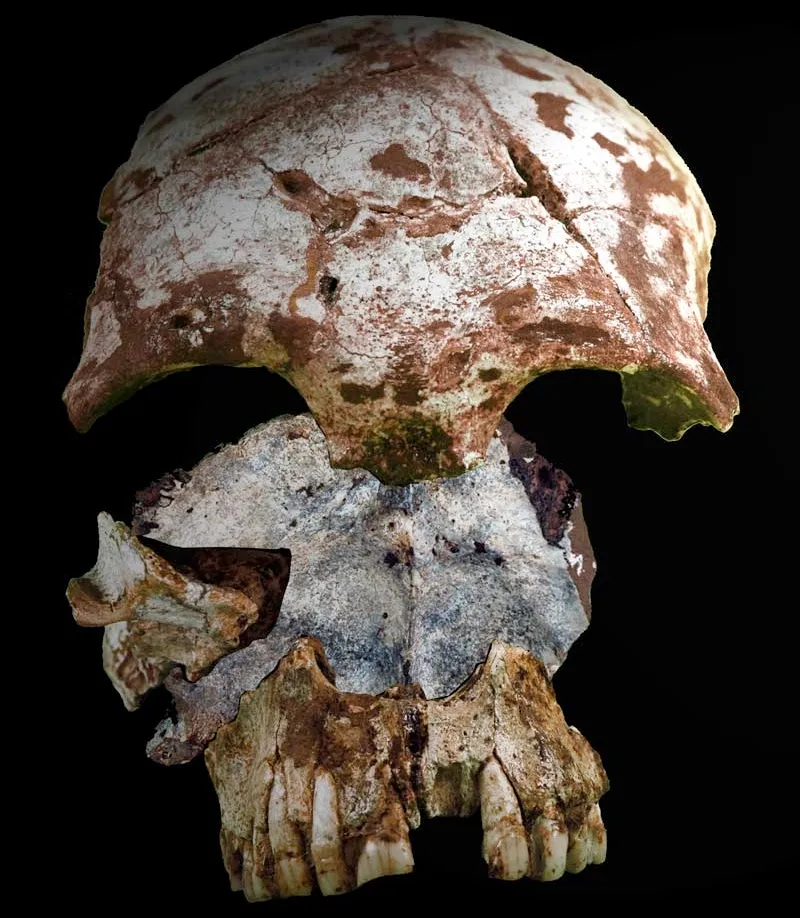
The major gateway for modern humans out of Africa may have been Egypt, a new genetic analysis suggests.
This finding may help scientists reconstruct how humans evolved as they wandered across the globe, the researchers added.
Modern humans first arose about 200,000 years ago in Africa south of the Sahara. When and how the modern human lineage crossed the Sahara and dispersed from Africa has long been controversial.
Previous research suggested the exodus from Africa started between 70,000 and 40,000 years ago. However, a recent study hinted that modern humans might have begun their march across the globe as early as 130,000 years ago, and continued their expansion out of Africa in multiple waves. [See Photos of Our Closest Human Ancestor]
Scientists had suggested two routes for the exodus from Africa. One, known as the northern route, has humans exiting through what is now Egypt and Sinai. The other, the southern route, brought humans through what is now Ethiopia and Arabia. The available evidence for either migratory path remains inconclusive.

To see which route the ancestors of all humans outside of Africa might have taken, the researchers sequenced the genomes of 225 people from northeast Africa — 100 Egyptians and 125 Ethiopians. They then compared this data with DNA from East Asians, South Asians and Europeans — specifically, Han Chinese, Gujarati Indians and Tuscan Italians, respectively. They also compared this data with DNA from modern West Africans from south of the Sahara, which should generally reflect the ancient sub-Saharan gene pool.
The scientists noted that both modern Egyptians and Ethiopians have recently experienced migrations from outside Africa, and the interbreeding that resulted might increase their genetic similarity with those migratory people. To account for this, the researchers removed any genetic sequences that might have come from these recent migrations.
Get the world’s most fascinating discoveries delivered straight to your inbox.
If the southern route was the main path out of Africa, Ethiopians should be more genetically similar to Eurasians. Instead, the researchers found that Egyptians were more genetically similar to Eurasians, suggesting the northern route was the predominant way out of Africa. The researchers estimated that Eurasians genetically diverged from Egyptians 55,000 years ago, Ethiopians 65,000 years ago and West Africans 75,000 years ago.
"The most exciting consequence of our results is to have unveiled an episode of the evolutionary past of all Eurasians, therefore potentially improving the knowledge of billions of people on their deep biological history,"study lead author Luca Pagani, a molecular anthropologist at the Wellcome Trust Sanger Institute and the University of Cambridge in England, told Live Science.
The northern route as the preferred way from Africa is supported by the fact that all non-Africans possess DNA from Neanderthals, who were present along the northern route in the eastern Mediterranean at the time. This new finding is also in agreement with the recent discovery of modern human fossils in Israel close to the northern route that date to about 55,000 years ago.
Although there is genetic and archaeological evidence that some people did take the southern route out of Africa, perhaps those people got no farther than Arabia, or left no genetic trace in modern Eurasians. In the future, scientists could investigate whether anyone who took the southern route left any genetic traces in modern Oceanians, Pagani said.
The scientists detailed their findings online today (May 28) in the American Journal of Human Genetics.
Follow Live Science@livescience, Facebook & Google+. Original article on Live Science.