














Neanderthal DNA still survives in our human family tree. What were our ancient relatives' relationships like?
Developing research suggests that ancient interbreeding wasn't random — it was socially patterned, directional and far more complicated than the headlines suggest.

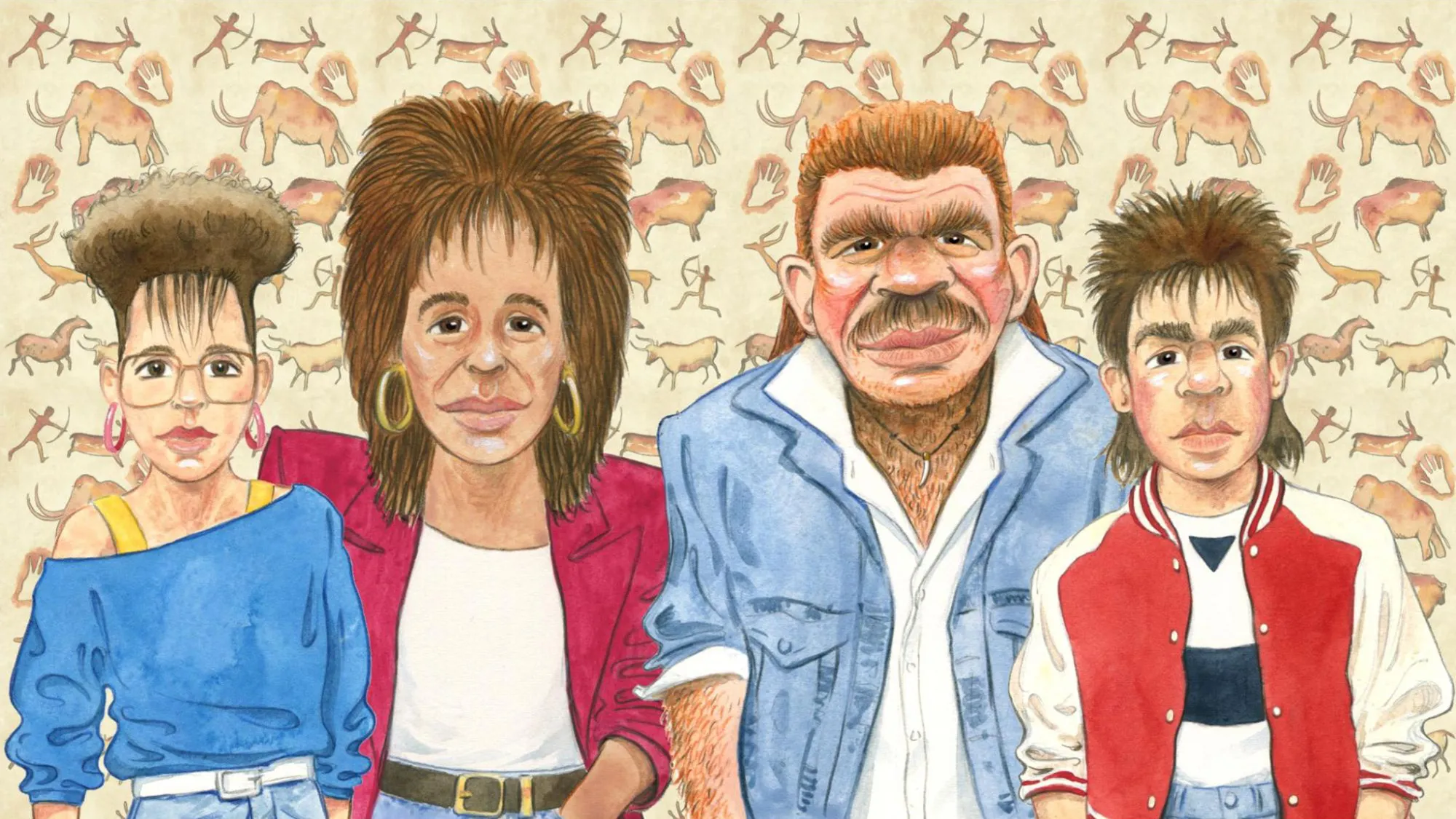
Deep in a limestone cave on Turkey's Mediterranean coast, two very different sets of humans left behind nearly identical traces of their lives — similar stone tools, the remains of the same prey animals, the same types of seashells pierced and strung into ornaments. They may have been separated by thousands of years and may not have directly interacted. Yet the overlap between them was striking enough that researchers studying the site had to look twice.
The site, Üçağızlı II, offers one of the clearest examples of a conundrum that scientists have long wrestled with: Neanderthals and modern humans (Homo sapiens) didn't just collide and go their separate ways. They inhabited the same areas, and, as dozens of genetic studies have confirmed, had sex, across tens of thousands of years and on multiple continents. The DNA of nearly every person alive outside Africa today carries the proof: Roughly 2% of the non-African genome is Neanderthal.
And yet, there is not a single archaeological site that shows them living together. Knowing that modern humans and Neanderthals mated is not the same as understanding how it happened. Who approached whom? Were these interactions consensual? Were they the result of violence or trade alliances? Who raised these hybrid babies? And what does the genetic record tell us about the social lives of two different kinds of humans navigating each other's existence for the first time?
Some of the answers, it turns out, are written on the X chromosome — and they are stranger than expected.
A puzzle on the X chromosome
The first high-coverage Neanderthal genome was sequenced in 2010, and for the next 15 years, researchers kept noticing something puzzling: Neanderthal DNA was less common from the X chromosomes in people alive today.
One of the two sex chromosomes in humans, the X chromosome represents about 5% of the DNA in cells. Most females carry a pair of X chromosomes in each cell, while most males have one X and one Y.
Everywhere else in our genome, traces of long-ago breeding between Neanderthals and modern humans showed up in roughly consistent proportions. But on the X chromosome, there was far less Neanderthal DNA.

In people today, the X chromosome (bottom right) has less Neanderthal DNA than the non-sex chromosomes do.
The leading explanation was negative selection — the idea that Neanderthal gene variants unique to the X chromosome were somehow incompatible with modern-human biology and had been gradually eliminated from the gene pool over thousands of generations. It was a reasonable hypothesis, given that incompatibilities elsewhere in the genome did lead to the weeding out of Neanderthal DNA on other chromosomes over time.
To understand why negative selection explanation didn't explain the X chromosome data, however, it helps to know what different parts of the genome actually do. Some stretches of DNA are protein-coding regions; they contain the instructions for building proteins, the molecular machinery that does most of the work inside cells. Others are regulatory sequences that don't build proteins themselves but help control when and how much of a protein gets produced. And then there are still other stretches of DNA that don’t appear to code for proteins or directly regulate gene expression, though researchers suspect at least some have functions we don’t yet fully understand.
Alexander Platt, an evolutionary biologist at the University of Pennsylvania's Perelman School of Medicine, hypothesized that if the problem was that Neanderthal gene variants on the X chromosome were inherently harmful, modern-human X gene variants would have been advantageous in Neanderthals. As a result, X chromosomal DNA extracted from Neanderthal skeletons should show an excess of modern-human DNA in stretches of the genome where they'd provide measurable benefit. They reasoned that this excess would likely appear in protein-coding genes or the regulatory regions that control their expression, not noncoding DNA.
But that's not what they found. Instead, Neanderthal X chromosomes carried more modern-human DNA in the noncoding regions of the genome than in coding regions. This pattern didn't reflect selection for better gene variants. It was a signature of reproduction — a record of who was passing chromosomes to whom.
In a typical pregnancy, the mother contributes an X chromosome via the egg, and the father contributes either an X or a Y via the sperm cell. So, while an individual is guaranteed to inherit their mother's X, they don't necessarily carry their father's — males exclusively inherit their mother's X. That pattern differs from the other 22 pairs of chromosomes, which mothers and fathers contribute to equally. Across a population, then, two-thirds of X chromosomes are inherited from mothers and one-third from fathers.
This fact makes the X chromosome a particularly sensitive recorder of who was reproducing with whom.
Long-standing sexual preference
Tracking the flow of X chromosomes can reveal trends in Neanderthal-human mating. If Neanderthal males paired with modern-human females more often than Neanderthal females paired with modern-human males, you'd see more modern-human X chromosomes flow into the Neanderthal gene pool.

X data suggests that when the two types of humans mated, the mother was usually a Homo sapiens.
When the team ran simulations to explore this idea, the data suggested what Platt described as a persistent, recurring mating preference: Males with more Neanderthal ancestry tended to reproduce with females with more modern-human ancestry. And this trend held across at least two distinct mating periods separated by around 200,000 years, said Platt.
This finding gave the researchers a new window into the timeline of mating between Neanderthals and modern humans. Platt's team identified at least two distinct pulses: one roughly 45,000 years ago, which produced the majority the Neanderthal DNA that lives on in non-African genomes today, and an earlier period over 200,000 years ago, whose genetic traces survived not in modern-human populations but in Neanderthals.
The pattern of Neanderthal males having offspring with H. sapiens females appears in both periods, separated by more than 150,000 years.
What the X chromosome data alone cannot say is why the pattern exists. It documents who reproduced with whom. It says nothing about who wanted whom.
Biological incompatibility
That distinction matters, because the same genetic signature can emerge from very different causes, and some have nothing to do with sexual preference.
Rajiv McCoy, a geneticist at Johns Hopkins University, pointed out that biology alone could produce a genetic signal like this one. When closely related species interbreed, the success of a pregnancy can depend not just on whose genes are inherited but on which parent belongs to which group.
Even if Neanderthal genes work fine in a modern-human genetic background, hybrid pregnancies may simply have been more likely to succeed when the Neanderthal was the father rather than the mother. That's not because of either parent's sexual preferences, but because of how their respective biologies interacted in the womb, McCoy told Live Science.
Researchers have recently proposed a few mechanisms that fit neatly with this theory. One study suggests that Neanderthal red blood cells restricted fetuses' growth in the womb. Another proposed that Neanderthal mothers carrying hybrid offspring may have been more prone to preeclampsia, a life-threatening pregnancy complication. Nothing in the existing data definitively rules such causes, McCoy said.

Neanderthal males were more likely to produce hybrid offspring that contributed to our gene pool than were Neanderthal females.
In practice, the two explanations are hard to separate. "Our models have no way of distinguishing mating from mating that produces a viable and fertile offspring," McCoy said. If hybrid pregnancies failed more often when the mother was Neanderthal, the genetic record would look similar to a world where Neanderthal females mated less often with H. sapiens males. Sexual encounters that didn't result in offspring left no genetic trace.
For now, the question of what drove that bias — social preference, or biology — remains open. Whatever barriers existed between the groups, they clearly weren't absolute. Multiple distinct episodes of interbreeding over thousands of years, McCoy noted, is itself evidence that the fertility of hybrid individuals was "sufficiently intact to leave a lasting mark."
How Neanderthal and human groups interacted
Bridget Alex, a researcher in human evolutionary biology at Harvard University who has spent her career reconstructing the timing and geography of Neanderthal-H. sapiens overlap, cautioned that all this is hampered by one fact: no direct archaeological evidence reveals how the two groups interacted.
"Despite a century and a half of Neanderthal research," she told Live Science, "no one's ever found a Neanderthal and Homo sapiens fossil in the same exact layer dated to the same exact period at the same exact site."
Instead, we have a regional and variable patchwork shaped by conditions that shifted over thousands of years and hundreds to thousands of miles.
Neanderthals inhabited a territory stretching from Siberia to Iberia to Southwest Asia between roughly 250,000 and 40,000 years ago. Modern humans were evolving in Africa during much of that span and came out repeatedly, in multiple waves, meeting Neanderthals in different times and places, with likely very different outcomes each time, Alex said.
"It's not like the Neanderthals living in what's now Spain could call up the ones in what's now Uzbekistan and be like, 'OK, what's our policy with modern humans? Do we kill them, have sex with them, ignore them?'" she said. "My assumption has always been that interactions would vary across time and space depending on the particular environmental conditions, social conditions, and just the whims of a particular group."

Grotte Mandrine contains artifacts from tens of thousands of years of Neanderthal occupation — and a single layer suggestive of Homo sapiens occupation.
At Grotte Mandrin, a cave in the Rhône Valley in southern France, archaeologists found one of the most illuminating records of what those encounters may have looked like. Ludovic Slimak, a paleoanthropologist at the University of Toulouse who has spent years excavating the site, described it as something genetics alone can't offer: "an extraordinarily precise archaeological sequence of Neanderthals and [Homo] sapiens occupying exactly the same place," he told Live Science in an email.
Neanderthal artifacts fill layer after layer of radiocarbon and luminescence dating up to about 57,000 years ago. And then, in one thin layer dated to between 56,800 and 51,700 years ago, there's a set of different stone tools and a single tooth that appear to belong to H. sapiens. Then, in layers immediately above, beginning around 51,700 years ago, Neanderthal artifacts appear again. That group of modern humans arrived, lived briefly in a continent otherwise inhabited entirely by Neanderthals, and then disappeared.
"What strikes me most is not mixture but proximity without fusion," Slimak told Live Science in an email. In other words, the two groups left no trace of cultural exchange or shared practice.There were "two human populations occupying the same landscape, probably encountering one another, while remaining culturally and biologically very different," Slimak said.
Genetics also paints a portrait of two very different social architectures. Two sites exemplify the trends: At Sunghir, a burial site in Russia dating to around 34,000 years ago, two H. sapiens adolescents were interred head to head beneath thousands of ivory beads and mammoth-bone spears. Ancient DNA analysis showed they were not immediate family members, yet they were buried together in an elaborate ceremony that implies a social world much wider than their immediate group.

Graves from more than 30,000 years ago in Sunghir in Russia show that two adolescents buried together were not closely related, suggesting Homo sapiens had wider and more flexible social networks than Neanderthals.
In contrast, at Chagyrskaya, a cave site in Siberia, Neanderthals buried in what appears to be a single community layer included a father and his teenage daughter, and a second pair of individuals who shared roughly a quarter of their DNA.
While these are just two sites, they reflect a broader trend that shows up repeatedly in genetic data: Human groups tended to operate through what Alex described as a nested structure: Tens of thousands of years ago, small groups of perhaps 20 or 30 individuals maintained broader ties through ceremonies, intermarriage between human groups and exchange with other groups.
In contrast, data from Neanderthal sites reveal that they tended to cluster in small, tightly knit groups that remained relatively separate from other Neanderthal populations.

Homozygosity, or DNA regions where a person inherited two copies of the same gene variant, is an inverse measure of genetic diversity. Adapted from Skov et al, 2022.
Unlike modern humans, Neanderthals didn't regularly mate with individuals in other communities, Alex said. The result, written in their genomes, is that individuals within a single Neanderthal group were often closely related. Their genomes show low genetic diversity across the board, — "kind of suggesting they're always a population on the verge," Alex said, "like an endangered species."
Still, there had to be some out-group mating. At sites where researchers have extracted genomes from several Neanderthal individuals, the pattern is consistent: Male Neanderthals were more closely related to each other than female Neanderthals were to each other. Females, by contrast, seemed more likely to have come from elsewhere. This is the signature of a "patrilocal" social structure in which males stay in their birth groups and females move between them.
Neanderthals' insularity sharpens a key question: If Neanderthal groups weren't regularly folding in Neanderthal females from distant communities, they would probably be even less likely to incorporate female H. sapiens. So how did modern-human women end up producing offspring with Neanderthal men at all?
A numbers problem
Fernando Villanea, a population geneticist at the University of Colorado Boulder, thinks the question may be framed backward. The image of Neanderthal males raising hybrid children with modern-human females within Neanderthal communities, he argues, probably inverts what actually happened.
Something the genomes of late Neanderthals — those living toward the end of their long history in Eurasia — make clear is that they were roughly 10 times more inbred than the modern human ancestors who were then expanding out of Africa in large numbers, he noted. That level of inbreeding isn't usually a choice; it reflects how small and fragmented Neanderthal populations likely were.
We need to imagine scenarios where a majority of modern human groups traveling into Eurasia are encountering a vanishing minority of Neanderthals.
Fernando Villanea, population geneticist at the University of Colorado Boulder
Archaeological and paleoclimatic data fill in the context: The ecosystems Neanderthals were best adapted to were shrinking as the planet entered a warmer, more humid period. Modern humans, who had evolved in hotter, wetter African environments, were simply better suited to Europe's new conditions, experts think.
The resulting numerical imbalance changes how scientists think about mating between Neanderthals and modern humans.
"We need to imagine scenarios where a majority of modern human groups traveling into Eurasia are encountering a vanishing minority of Neanderthals," Villanea told Live Science.
In the crucial period between roughly 50,000 and 44,000 years ago, when much of the interbreeding that left a trace in our DNA took place, Neanderthal DNA made up 5% of the modern human genome. Given how heavily humans outnumbered Neanderthals at the time, "that's a lot of matings occurring between the two." The most likely story, Villanea proposes, is "human groups absorbing surviving Neanderthal individuals and raising their children in a mostly human group."
His 2018 study in the journal Nature Ecology & Evolution established that this happened across multiple distinct episodes — and the later ones are particularly telling. Some ancient H. sapiens genomes from Europe around 40,000 years ago, according to the study, carry Neanderthal ancestry from individuals who lived just a few generations after archaeologists can no longer find any physical trace of Neanderthals in the region at all.
Even the very last Neanderthal survivors were still contributing to the H. sapiens gene pool. A 2024 study by Leonardo Iasi and colleagues similarly determined that almost 90% of total Neanderthal ancestry in humans today came from a main pulse roughly 50,000 to 45,000 years ago, likely in the Middle East, with the rest trickling in from more sporadic encounters scattered across Eurasia.
That paints a picture of meetings becoming rarer and rarer as Neanderthals disappeared, with hybridization continuing whenever they did meet up. "This, to me, says deliberate integration of Neanderthal individuals into human groups," Villanea said.
The cost of being hybrid
We know that some hybrid Neanderthal-H. sapiens survived because "we still carry the legacy of their existence," Alex said. However, we know they didn't thrive, because the Neanderthal ancestry our ancestral populations eroded quickly.

While some hybrids survived, they likely suffered from health problems.
Most genes work in concert with other genes across the genome. When Neanderthal-specific variants entered the modern-human genome, it was like trying to put gears from one machine into a slightly different one; the parts didn't quite fit together. As a result, natural selection removed the Neanderthal variants rapidly. Villanea's calculations, based on the rate at which chromosomes recombine during cell division, suggest the drop from the original approximately 5% Neanderthal DNA roughly 50,000 to 45,000 years ago to the roughly 2% carried today happened in around 10 human generations.
"That's very fast," he said. "In real-life terms, that means a lot of hybrids did not survive to reproduce, and the ones that did probably had to deal with life-long health problems."
Platt's team looked at genetic evidence from multiple sites across Eurasia and found that the genetic purge ran in the opposite direction, too. Modern-human DNA was also being selected out of Neanderthal genomes.
Neither had inherently superior genes, Platt concluded. The gene variants were simply optimized for the separate evolutionary histories of their respective lineages, hundreds of thousands of years of independent adaptation that made certain combinations disadvantageous, if not fatal.
Where the hybrids ended up
If Neanderthal males and modern-human females really were producing more surviving offspring than the reverse pairing, where did those children end up?
Villanea was cautious about reading too much into the X chromosome pattern on its own to answer that question. The imbalance Platt found is real, he said — not a statistical quirk. But "there is nothing in the X chromosome data that says it's based on human or Neanderthal mating preference," as Platt proposes.
The same pattern could, in theory, emerge from Neanderthal males leaving their birth groups to find mates, but as archaeological evidence suggests, this was not typical behavior. More likely, he argues, is something biological.

Hybrid children were likely raised in Homo sapiens groups.
In Peromyscus maniculatus and Peromyscus polionotus — two closely related species of North American deer mouse — a phenomenon called genomic imprinting causes hybrid offspring to develop differently in the womb depending on which species was the father and which was the mother. This pattern has nothing to do with behavior or preference. A similar process in early humans could have made Neanderthal father-H. sapiens mother pairings more likely to produce surviving offspring than the reverse, without either group consciously choosing anything.
"We simply don't know enough yet," Villanea said.
Distinguishing between these explanations — social behavior versus biological incompatibility — will require more Neanderthal genomes from the critical period of contact, ideally spanning multiple geographic regions, experts said.
There's another clue in genetic evidence from a 2026 study of 27 late Neanderthals who lived between 50,000 and 40,000 years ago in what is now Belgium and France. None of those individuals showed any sign of recent ancestry from modern humans, even as H. sapiens from the same era demonstrably carried Neanderthal DNA.
If hybrid children had been raised in Neanderthal groups and went on to reproduce there, those groups' genomes should retain traces of those events — but they don't.
As for whether modern-human groups were patrilocal — with males staying, females moving — the answer is considerably more variable than in Neanderthals. Modern-human communities across cultures show a range of patterns, with both sexes leaving their birth groups depending on circumstance, Alex said. That flexibility may have been part of what made human groups better able to absorb outside individuals.
What we still don't know
Neither genetics nor archaeology has yet been able to answer the question at the center of this story: whether these encounters were by choice, by circumstance, or by force. Platt's team set it aside deliberately, and Alex is careful about it, too.
"We still wouldn't know if it was consensual or coerced," she said.
It's worth being specific about what different scenarios would look like archaeologically. If Neanderthal and modern-human individuals mingled through peaceful alliances, we might expect to find toolmaking techniques or symbolic objects crossing between groups at contact sites — precisely the kind of evidence that is absent at Grotte Mandrin, where, as Slimak noted, the two groups' technical traditions remained entirely distinct.
Slimak, writing from Grotte Mandrin in the middle of his excavation season, urged even more restraint. The genetic data, he said, are "consistent with an asymmetry" — gene flow moved more successfully through Neanderthal males and H. sapiens females than the reverse — but that is where the certainty ends.
The data says nothing about culture, desire, attraction or intent. "That entire social world has been added afterwards," he said.
The same signal, he pointed out, could emerge from a variety of histories — female mobility, demographic imbalance, alliance, exchange, capture, differential survival among hybrids. And these factors could contribute alone or in combination. Even the categories available for describing female movement may be too blunt. A single instance of migration, in traditional societies, can involve marriage, family strategy, alliance, obligation and violence all at once, in combinations that leave no trace for archaeology to disentangle.
Exclusive to Live Science Pro
- 'More Neanderthal than human': How your health may depend on DNA from our long-lost ancestors
- Early Homo sapiens may have lived in rainforests, new clues suggest — and it could overturn our understanding of human evolution
- Scientists show that DNA can last for up to 50,000 years in Africa — much longer than previously thought
"We may identify that a woman came from elsewhere," Slimak said. "We cannot recover her consent."
However, the convergence of genetics, demography and archaeology does reveal a structural picture, if not a sociological one.
The interbreeding was directional and repeated, patterned in ways that map onto the social organization of both groups — and driven in large part, Villanea's model suggests, by the sheer demographic weight of a growing human population folding in what remained of a disappearing one. Neanderthal males, in dwindling and insular communities, appear to have been the ones whose genes crossed into the larger H. sapiens world. Their children, in all likelihood, were raised as humans.
"Genes do not preserve past loves," Slimak said. "They preserve what was transmitted. And between transmission and lived experience lies almost the whole of human society."
Help us improve Live Science Pro: We're always trying to make our content better. Leave us feedback about Pro here.

Olivia Maule is a science journalist whose beats include space, biotechnology and the environment. She holds a B.A. in biology and a B.S. in anthropology from the University of Florida and completed a master's degree in science communication at U.C. Santa Cruz. A 2025 AAAS Mass Media Fellow, she wrote stories and produced videos during a summer at El Nuevo Día, Puerto Rico's largest newspaper, and has written for Eos, Mongabay, Science magazine and Stanford Report. Olivia is a native Spanish and English speaker.
You must confirm your public display name before commenting
Please logout and then login again, you will then be prompted to enter your display name.