

-
 Why do cats have 'leg whiskers'?
Life's Little Mysteries Here's why 'leg whiskers' are useful to cats and other animals.
Life's Little Mysteries -
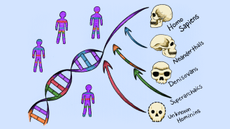 Scientists discover 2 new 'ghost' lineages that contributed DNA to modern humans
A new method of analyzing modern humans' DNA is revealing secrets about our extinct ancestors.
human-evolution -
 Are quasiparticles real?
Life's Little Mysteries Given the "quasi" in quasiparticles, do scientists consider them to be real particles?
Life's Little Mysteries -
 Some of the last surviving Neanderthals were remarkably diverse — suggesting inbreeding didn't doom them
Some Neanderthals living in northwestern Europe after 52,500 years ago were surprisingly diverse, suggesting that they didn't all go extinct due to inbreeding.
neanderthals -
 Why does it take our eyes so long to adjust to the dark?
Life's Little Mysteries Here's why it's so hard to see when we enter a dark room.
4 CommentsLife's Little Mysteries -
 Do you really have to wash rice before you cook it?
Life's Little Mysteries Rice is eaten by more than half of the world's population daily. Should everyone be washing it before it's cooked?
6 CommentsLife's Little Mysteries -
 'Major disruption in Neanderthal history': 65,000 years ago, all Neanderthals in Europe died out except for one lineage
The last Neanderthals to survive in Europe came from a single lineage that survived the worst period of the ice age, ancient DNA reveals.
13 Commentsneanderthals -
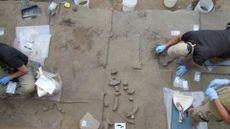 14,000-year-old ivory tools found in Alaska hint at how Clovis ancestors first arrived in the New World
Ancient artifacts unearthed in Alaska revealed migrants from Asia might have come to the Americas via an inland route, and not a coastal path.
6 Commentsamericas -
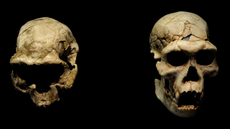 Homo erectus wasn't the first human species to leave Africa 1.8 million years ago, fossils suggest
A new analysis of enigmatic skulls from the Republic of Georgia suggest that Homo erectus wasn't the only human species to leave Africa 1.8 million years ago.
human-evolution -
 How common is it to have extra bones in your skeleton?
Adult human bodies typically have about 206 bones. But is it possible to have more?
health -
 Is the sun really a dwarf star?
Our sun is huge, at least compared to Earth and the other planets. So is it really a dwarf?
the-sun -
 The Bering Land Bridge has been submerged since the last ice age. Will scientists ever study it?
Humans likely left a lot of archaeological evidence along the Bering Land Bridge when they crossed from Asia to Alaska during the last ice age. But will we ever be able to dive down to examine it?
archaeology -
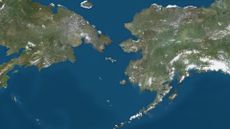 Bering Land Bridge emerged much later than we thought it did, new study finds
The Bering Land Bridge likely didn't emerge until around 35,000 years ago, much later than was previously thought. This narrows the window of when humans could have crossed over to North America.
4 Commentsarchaeology -
 What's the difference between a turtle and a tortoise?
Turtles and tortoises are both reptiles with shells, so what exactly are their differences?
2 Commentsturtles-tortoises -
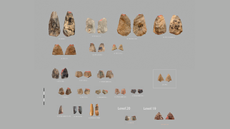 80,000-year-old stones in Uzbekistan may be the world's oldest arrowheads — and they might have been made by Neanderthals
Small stone points discovered in Uzbekistan may be the earliest evidence of arrowhead technology.
human-evolution -
 Gene that differs between humans and Neanderthals could shed light on the species' disappearance, mouse study suggests
A gene called ADSL, which helps synthesize DNA, differs between modern humans and our extinct human relatives. The findings could shed light on why Neanderthals vanished.
2 Commentsneanderthals -
 What's the difference between a llama and an alpaca?
Llamas are closely related to alpacas, so how can you tell these South American camelids apart?
4 Commentsland-mammals -
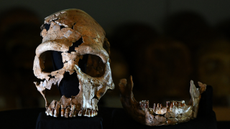 Neanderthal genes may explain disorder where brain bulges out of the skull
Neanderthal genes may explain why some people have Chiari malformation type I, a condition in which the brain bulges out of the back of the skull.
2 Commentsneanderthals -
 What's Earth's lowest point on land?
What's Earth's lowest spot on dry land — and how did it get to be that way?
18 Commentsgeology -
 Did light exist at the beginning of the universe?
Was it dark after the Big Bang, or did light shine immediately?
9 Commentscosmology -
 Who were the Denisovans, archaic humans who lived in Asia and went extinct around 30,000 years ago?
Who were the Denisovans, close human relatives who lived in Asia and mated with Homo sapiens?
neanderthals -
 'Huge surprise' reveals how some humans left Africa 50,000 years ago
How did Homo sapiens manage to leave Africa around 50,000 years ago, when earlier treks out of the continent had ended in failure?
human-evolution -
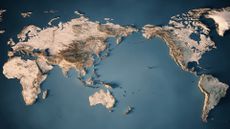 Why is the Pacific Ocean so big?
Look at any world map and you'll see that the Pacific is the largest ocean. But how did it get so big?
2 Commentsrivers-oceans -
 Ancient DNA from Papua New Guinea reveals centuries of genetic isolation
A new analysis of the ancient DNA of 42 people from Papua New Guinea reveals that some cultures were remarkably isolated for centuries.
3 Commentshuman-evolution


