

-
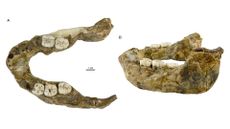 1.4 million-year-old jaw that was 'a bit weird for Homo' turns out to be from never-before-seen human relative
The newfound species belongs to the genus Paranthropus, whose nickname is "nutcracker man."
3 Commentshuman-evolution -
 How do Hula-Hoops work?
How do Hula-Hoops keep from falling down as we twirl them around?
physics-mathematics -
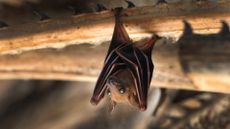 Why do bats hang upside down to sleep?
Bats often hang upside down when they sleep instead of sitting right side up or lying down — why?
animals -
 Why are my feet two different sizes?
Why is one foot sometimes larger than the other?
health -
 Do blind people 'see' images in their dreams?
For people who have been blind since birth, brain scans alone can't reveal if they dream in images.
sleep -
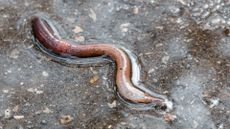 Why do worms come out in the rain?
Earthworms commonly come out when it's wet outside, but why?
animals -
 Why aren't we crushed by the weight of Earth's atmosphere?
Earth's atmosphere is heavy, so why doesn't it weigh us down more?
planet-earth -
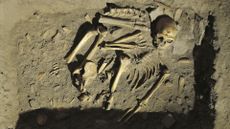 Neanderthals and early Homo sapiens buried their dead differently, study suggests
Neanderthals tended to bury their dead in caves, while early modern humans buried their dead in the fetal position, new research finds.
human-evolution -
 Why isn't the darkest time of the year also the coldest?
Why aren't the solstices the coldest and hottest days of the year?
weather -
 What is the largest known prime number?
There are infinitely many prime numbers, but the biggest one we know of goes by the name M82589933 and contains more than 24 million digits.
mathematics -
 A 'primordial' black hole may zoom through our solar system every decade
"If there are lots of black holes out there, some of them must surely pass through our backyard every now and then."
black-holes -
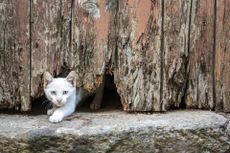 How do cats squeeze through small spaces?
Cats can squeeze through impossibly small holes, but how does their anatomy enable them to do this?
cats -
 Early galaxies weren't mystifyingly massive after all, James Webb Space Telescope finds
'The bottom line is, there is no crisis in terms of the standard model of cosmology.
cosmology -
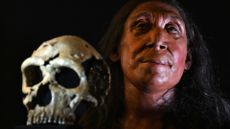 Neanderthals didn't truly go extinct, but were rather absorbed into the modern human population, DNA study suggests
Modern human DNA may have made up a surprisingly large amount of the Neanderthal genome, a new study finds.
neanderthals -
 When did humans start wearing shoes?
The oldest known sandals are from Oregon, but there may be older shoes out there.
archaeology -
 Why does the sun make people sneeze?
People who sneeze in bright lights, like the sun, may have autosomal dominant compelling helio-ophthalmic outburst syndrome, or ACHOO.
health -
 Neanderthals and humans interbred 47,000 years ago for nearly 7,000 years, research suggests
DNA from prehistoric and modern-day people suggests that humans interbred with Neanderthals 47,000 years ago for a period lasting 6,800 years.
neanderthals -
 What if the Carrington Event, the largest solar storm ever recorded, happened today?
If a solar storm as big as the Carrington Event struck today, it could lead to years long power outages.
the-sun -
 Study of 'twin' stars finds 1 in 12 have killed and eaten a planet
A study of 91 pairs of stars finds that about 8%, or one in 12, swallowed up a planet at some point in their lives.
cosmology -
 Have all 8 planets ever aligned?
The solar system's eight planets will never truly be in a straight line, but they can get close to it.
planets -
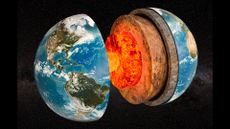 How much water is in Earth's crust?
Earth is covered with water, but how much is hiding in our planet's crust?
geology -
 Earliest known stone tools in Europe are 1.4 million years old. And they weren't made by modern humans.
Homo erectus may have crafted these stone tools 1.4 million years ago in what is now Ukraine.
archaeology -
 Can static electricity cause a fire?
It's commonplace to get a jolt from static electricity. But does it have enough electrical charge to start a fire?
chemistry -
 45,000-year-old bones unearthed in cave are oldest modern-human remains in Central Europe
The finding suggests that 'successive pulses of small groups' of humans replaced Neanderthals in Europe starting around 45,000 years ago.
neanderthals


