















14 coronavirus myths busted by science


As the novel coronavirus continues to infect people around the world, news articles and social media posts about the outbreak continue to spread online. Unfortunately, this relentless flood of information can make it difficult to separate fact from fiction — and during a viral outbreak, rumors and misinformation can be dangerous.
Here at Live Science, we've compiled a list of the most pervasive myths about the novel coronavirus SARS-CoV-2 and COVID-19, the disease it causes, and explained why these rumors are misleading, or just plain wrong.
Myth: The virus is just a mutated form of the common cold
No, it's not. Coronavirus is a large family of viruses that includes many different diseases. SARS-CoV-2 does share similarities with other coronaviruses, four of which can cause the common cold. All five viruses have spiky projections on their surfaces and utilize so-called spike proteins to infect host cells. However, the four cold coronaviruses — named 229E, NL63, OC43 and HKU1 — all utilize humans as their primary hosts. SARS-CoV-2 shares about 90% of its genetic material with coronaviruses that infect bats, which suggests that the virus originated in bats and later hopped to humans.
Evidence suggests that the virus passed through an intermediate animal before infecting humans. Similarly, the SARS virus jumped from bats to civets (small, nocturnal mammals) on its way into people, whereas MERS infected camels before spreading to humans.
Myth: The virus was probably made in a lab
No evidence suggests that the virus is man-made. SARS-CoV-2 closely resembles two other coronaviruses that have triggered outbreaks in recent decades, SARS-CoV and MERS-CoV, and all three viruses seem to have originated in bats. In short, the characteristics of SARS-CoV-2 fall in line with what we know about other naturally occurring coronaviruses that made the jump from animals to people.
A study published March 17 in the journal Nature Medicine also provided strong evidence against the "engineered in a lab" idea. The study found that a key part of SARS-CoV-2, known as the spike protein, would almost certainly have emerged in nature and not as a lab creation, Live Science previously reported. What's more, if scientists were trying to use computer models to engineer a deadly virus based on the original SARS virus, they likely would not have chosen the mutations that actually appear in SARS-CoV-2. That's because computer simulations show that mutations in SARS-CoV-2 don't seem to work very well at helping the virus bind to human cells, Live Science previously reported. But it turns out, nature is smarter than scientists, and the novel coronavirus found a way to mutate that was better — and completely different— from anything scientists could have predicted or created, the study found.
Myth: Pets can spread the new coronavirus
Although pets may contract COVID-19 in rare cases, there is no evidence they can spread it to people.
Get the world’s most fascinating discoveries delivered straight to your inbox.
There have been a few reports of cats and dogs that became infected with COVID-19 after contact with their sick owner. For example, in April, two pet cats in New York tested positive for COVID-19, and the owner of one of these cats was confirmed to have COVID-19 before the cat showed symptoms, Live Science previously reported.
Even if pets do occasionally become infected, the Centers for Disease Control and Prevention (CDC) says there is no evidence that they are playing a significant role in the spread of the virus. And so far, there have been no confirmed reports of people contracting the disease from pets.
Just in case, the CDC recommends that people with COVID-19 have someone else walk and care for their companion animals while they are sick. And people should always wash their hands after snuggling with animals anyway, as companion pets can spread other diseases to people, according to the CDC.
Myth: Kids can't catch the coronavirus
Children can definitely catch COVID-19, although reports of serious illness in children are rare.
A CDC study of more than 1.3 million cases of COVID-19 in the U.S. from January through May found that the rate of confirmed infections in children under age 9 was 52 cases per 100,000 people in that population of children; that’s compared with an average of 400 cases (of any age) per 100,000 people in the U.S. population as a whole.
Another CDC study found that among 52,000 reported COVID-19 deaths from February through May, just 16 deaths were reported in people under age 18.
Still, not all children are spared from COVID-19. In rare cases, children with a current or previous COVID-19 infection have developed so-called multisystem inflammatory syndrome (MIS-C). Symptoms of this syndrome can vary, but patients seem to have symptoms similar to those found in two rare conditions: toxic shock syndrome and Kawasaki disease, Live Science previously reported. Toxic shock syndrome is a life-threatening condition that's caused by toxins produced by certain types of bacteria; Kawasaki disease is a childhood illness that causes inflammation in blood vessel walls, and in serious cases can cause heart damage.
In a study published June 29 in The New England Journal of Medicine, researchers described 186 cases of MIS-C in 26 states. Of these, nearly 90% required hospitalization, 80% were admitted to the intensive care unit and 2% died, the authors reported.
Myth: If you have coronavirus, "you'll know"
No, you won't. COVID-19 causes a wide range of symptoms, many of which appear in other respiratory illnesses such as the flu and the common cold. Specifically, common symptoms of COVID-19 include fever, cough, headache, sore throat, muscle or body aches, difficulty breathing, nausea and vomiting. In severe cases, the disease can progress into a serious pneumonia-like illness — but early on, infected people may show no symptoms at all.
And some people never develop symptoms. Exactly how common asymptomatic cases are is still being determined, although the CDC estimates it may be around 40% of cases.
If you have underlying conditions and milder symptoms of the disease, you should seek medical attention at the nearest hospital, experts told Live Science.
Myth: The coronavirus is less deadly than the flu
Though the death rate for COVID-19 is unclear, almost all credible research suggests it is much higher than that of the seasonal flu, which has a death rate of around 0.1% in the U.S., Live Science previously reported.
Among reported COVID-19 cases in the U.S., about 4% have died, according to data from Johns Hopkins University. This is what's known as the case fatality rate, which is determined by dividing the number of deaths by the total number of confirmed cases. But the case fatality rate is limited for a few reasons. First, not everyone with COVID-19 is being diagnosed with the disease — this is in part due to testing limitations in the U.S. and the fact that people who experience mild or moderate symptoms may not seek out testing. As the number of confirmed cases goes up, the fatality rate may decrease.
Many studies estimate that around 0.5% to 1% of people infected with COVID-19 will die from the disease, according to Nature News. Even a death rate around 1% is still 10 times higher than that of the flu.
It's also important to note that estimates of flu illnesses and deaths from the CDC are just that — estimates (which make certain assumptions) rather than raw numbers. (The CDC does not know the exact number of people who become sick with or die from the flu each year in the U.S. Rather, this number is estimated based on data collected on flu hospitalizations through surveillance in 13 states.) Researchers emphasized this point in a recent paper published in the journal JAMA Internal Medicine, describing how they found that, in the U.S., there were 20 times more deaths per week from COVID-19 than from the flu in the deadliest week of an average influenza season, Live Science previously reported.
Myth: Vitamin C supplements will stop you from catching COVID-19
Researchers have yet to find any evidence that vitamin C supplements can render people immune to COVID-19 infection. In fact, for most people, taking extra vitamin C does not even ward off the common cold, though it may shorten the duration of a cold if you catch one.
That said, vitamin C serves essential roles in the human body and supports normal immune function. As an antioxidant, the vitamin neutralizes charged particles called free radicals that can damage tissues in the body. It also helps the body synthesize hormones, build collagen and seal off vulnerable connective tissue against pathogens.
So yes, vitamin C should absolutely be included in your daily diet if you want to maintain a healthy immune system. But megadosing on supplements is unlikely to lower your risk of catching COVID-19, and may at most give you a "modest" advantage against the virus, should you become infected. No evidence suggests that other so-called immune-boosting supplements — such as zinc, green tea or echinacea — help to prevent COVID-19, either.
Be wary of products being advertised as treatments or cures for the new coronavirus. Since the COVID-19 outbreak began in the United States, the U.S. Food and Drug Administration (FDA) and the Federal Trade Commission (FTC) have already issued warning letters to seven companies for selling fraudulent products that promise to cure, treat or prevent the viral infection.
Myth: It's not safe to receive a package from China
It is safe to receive letters or packages from China, according to the World Health Organization. Previous research has found that coronaviruses don't survive long on objects such as letters and packages. Based on what we know about similar coronaviruses such as MERS-CoV and SARS-CoV, experts think this new coronavirus likely survives poorly on surfaces.
A past study found that these related coronaviruses can stay on surfaces such as metal, glass or plastic for as long as nine days, according to a study published Feb. 6 in The Journal of Hospital Infection. But the surfaces present in packaging are not ideal for the virus to survive.
For a virus to remain viable, it needs a combination of specific environmental conditions such as temperature, lack of UV exposure and humidity — a combination you won't get in shipping packages, according to Dr. Amesh A. Adalja, Senior Scholar, Johns Hopkins Center for Health Security, who spoke with Live Science's sister site Tom's Hardware.
And so "there is likely very low risk of spread from products or packaging that are shipped over a period of days or weeks at ambient temperatures," according to the CDC. "Currently, there is no evidence to support transmission of COVID-19 associated with imported goods, and there have not been any cases of COVID-19 in the United States associated with imported goods." Rather, the coronavirus is thought to be most commonly spread through respiratory droplets.
Myth: You can get the coronavirus if you eat at Chinese restaurants in the US
No, you can't. By that logic, you'd also have to avoid Italian, Korean, Japanese and Iranian restaurants, given that those countries have also been facing an outbreak. The new coronavirus doesn't just affect people of Chinese descent.
Myth: Drinking bleach or other disinfectants can protect you from COVID-19
You absolutely should not drink bleach or other household disinfectants, and you should also not spray them on your body. These substances are poisonous if ingested, and they can also cause damage to the skin and eyes, according to the World Health Organization.
When ingested, sodium hypochlorite (household bleach) can cause what is called "liquefactive necrosis," or a process that results in the transformation of tissue into a liquid viscous mass, Live Science previously reported. The bleach can also damage cells as the sodium reacts with proteins and fats in a person's tissues in a process called saponification (soap), medical doctors reported in 2018 in a publication by the Emergency Medicine Residents' Association.
Alarmingly, nearly 4 in 10 American adults in a recent survey reported engaging in dangerous cleaning practices to prevent COVID-19, such as washing food with bleach, using household disinfecting products on their skin or intentionally inhaling vapors from cleaning products, Live Science previously reported.
Myth: Drinking alcohol and eating garlic can protect you from COVID-19
Consuming certain foods, such as alcohol or garlic, will not protect you from the new coronavirus. Although alcohol-based hand sanitizers work to disinfect your skin, alcohol does not have this effect on your body when it is ingested, according to WHO. Indeed, heavy use of alcohol can actually weaken your immune system and reduce your body's ability to cope with infectious diseases. And although garlic may have some antimicrobial properties, there is no evidence that it can protect against COVID-19, WHO says.
Myth: 5G networks can spread the new coronavirus

Viruses, including SARS-CoV-2, cannot travel on or transmit through radio waves or mobile networks such as 5G networks, according to WHO. The new coronavirus is spread mainly through respiratory droplets that are expelled when an infected person coughs, sneezes or speaks, as well as through contaminated surfaces. WHO also notes that COVID-19 has been spreading in countries that do not have 5G mobile networks.
Myth: Exposure to high temperatures prevents COVID-19
Exposing yourself to the sun or warm temperatures will not protect you against COVID-19, according to WHO. You can still catch the disease no matter how hot it is — indeed, the virus is spreading even in areas with very hot weather, such as Arizona. Taking a hot bath will also not prevent COVID-19, WHO says.
Myth: Wearing masks can cause CO2 poisoning
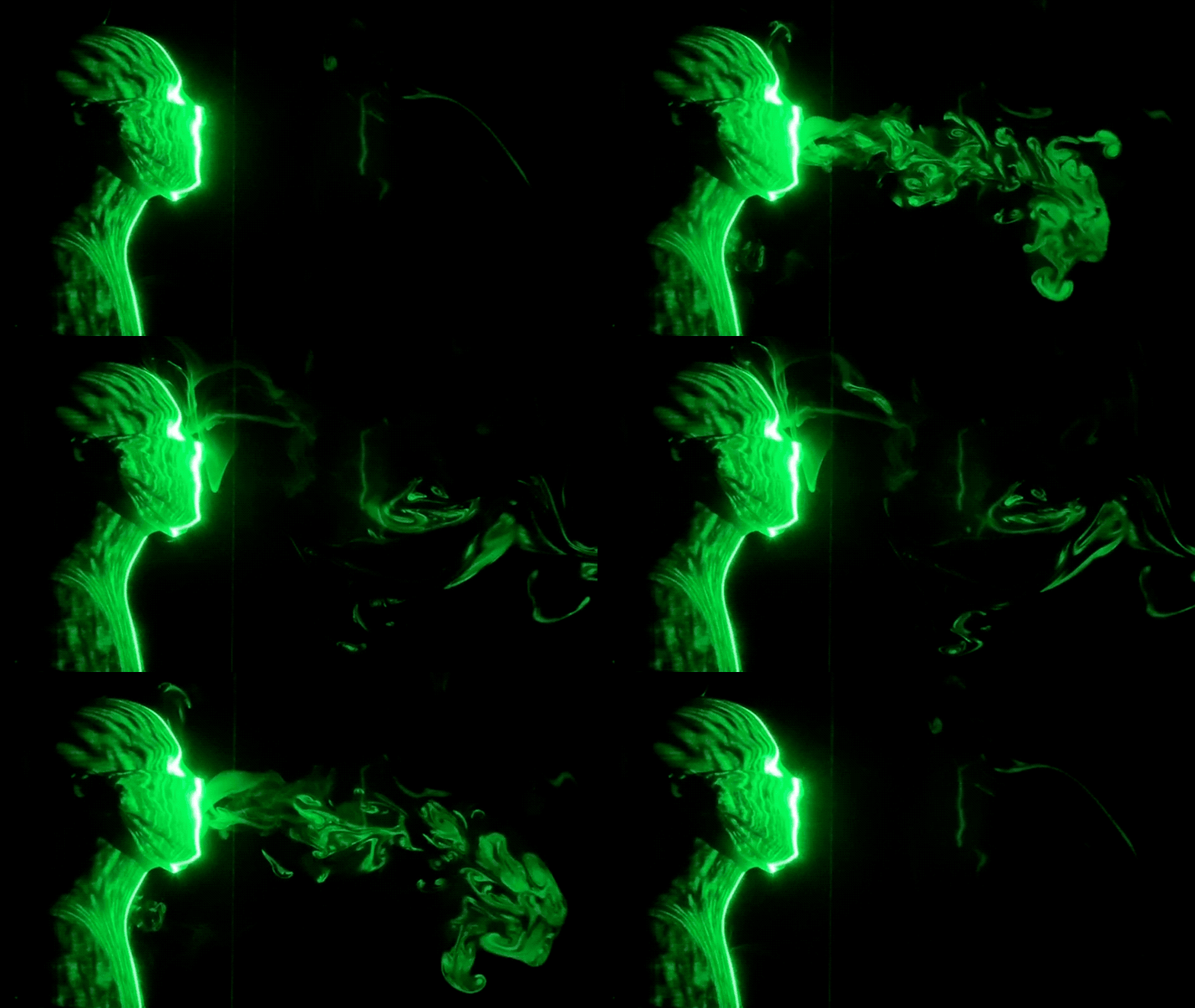
In a new visualization, researchers simulated a cough, which appears as a glowing green vapor flowing from a mannequin's mouth. The visualizations shows that face masks dramatically reduce the spread of cough droplet particles, from 12 feet without a mask to just a few inches with a mask.
Wearing medical masks for long periods may be uncomfortable for some, but it does not cause oxygen deficiency or carbon dioxide (CO2) intoxication (when too much CO2 builds up in the bloodstream), according to WHO. The same applies for N95 masks and cloth face coverings, according to Healthline.
"Rebreathing tiny amounts of CO2 from wearing either properly fitted N95 respirators or more loosely fitted cloth or surgical masks is of no concern for the vast, vast majority of people," Darrell Spurlock Jr., the director of the Leadership Center for Nursing Education Research at Widener University in Pennsylvania, told Healthline. "The 'dose' of CO2 we might rebreathe while masking is quickly and easily eliminated by both the respiratory and metabolic systems in the body."
When you wear a mask, you should make sure it has a snug fit but allows you to breathe normally, WHO says.
Editor's Note: This story has been updated to reflected updated knowledge on SARS-CoV-2 transmission in children.
Tia Ghose, Yasemin Saplakoglu, Nicoletta Lanese, Rachael Rettner and Jeanna Bryner contributed to this article.
Originally published on Live Science.

OFFER: Save at least 53% with our latest magazine deal!
With impressive cutaway illustrations that show how things function, and mindblowing photography of the world’s most inspiring spectacles, How It Works represents the pinnacle of engaging, factual fun for a mainstream audience keen to keep up with the latest tech and the most impressive phenomena on the planet and beyond. Written and presented in a style that makes even the most complex subjects interesting and easy to understand, How It Works is enjoyed by readers of all ages.

Rachael is a Live Science contributor, and was a former channel editor and senior writer for Live Science between 2010 and 2022. She has a master's degree in journalism from New York University's Science, Health and Environmental Reporting Program. She also holds a B.S. in molecular biology and an M.S. in biology from the University of California, San Diego. Her work has appeared in Scienceline, The Washington Post and Scientific American.