-
 Nepal Quake Could Have Been Much Deadlier, Scientists Say
The earthquake that struck Nepal in April shook in a way that spared many small buildings in the city but devastated those more than two stories high, a new study finds.
earthquakes -
 Simple Chemical Stops Prion Disease
A molecule used to track proteins could help stop such diseases as Mad Cow and Creutzfeld-Jakob.
viruses-infections-disease -
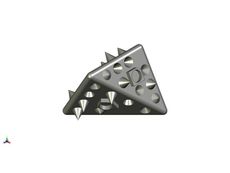 Shake, Rattle and Build: Colliding Bricks Self-Assemble Into Objects
Scientists shook "bricks" in a spinning chamber, and for the first time, showed that artificial building blocks can put themselves together just by banging around at random.
genetics -
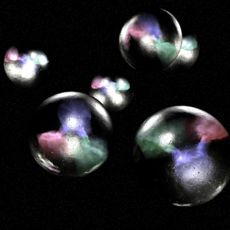 Dark Pion Particles May Explain Universe's Invisible Matterparticle-physics
 -
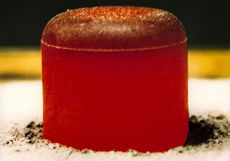 Weird Reason Plutonium Doesn't Act Like Other Metals
Plutonium is a metal, but it won't stick to a magnet, puzzling scientists for decades. Now researchers may have found this "missing magnetism."
chemistry -
 Does Science Back Samsung's 80% Battery Boost Claim?
A silicon nanoparticle battery may offer more juice, says Samsung, but problems remain on charge capacity.
electronics -
 Mark Zuckerberg's Vision of 'Facebook Telepathy': What Experts Saycommunications
 -
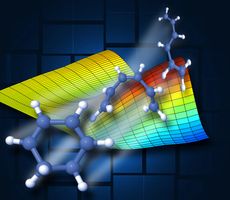 Watch Ring-Shaped Molecule Unravel in Record-Fast Moviechemistry
 -
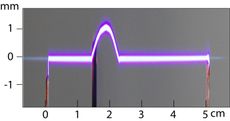 'Iron Man' Laser: Beams Can Shape Electrical Dischargesphysics-mathematics
 -
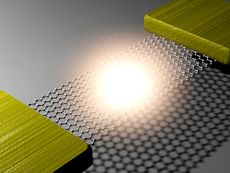 World's Thinnest Light Bulb Created from Graphenephysics-mathematics
 -
 How Dangerous Was 'High 5' With Great White Shark?sharks
 -
 Molecules Reach Coldest Temperature Ever
Physicists have chilled molecules of sodium potassium to just a smidgen above absolute zero — colder than the afterglow of the Big Bang.
physics-mathematics -
 Origin-of-Life Story May Have Found Its Missing Linkplanet-earth
 -
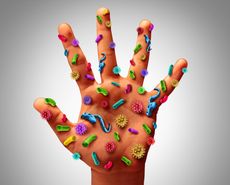 1 Pinprick Test Could Detect Hundreds of Viruses
A new test could use just a small amount of your blood to reveal a slew of the viruses that have ever infected you.
viruses-infections-disease -
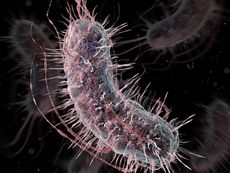 Urine Test Could Detect Cancer One Day, As New Method Shows Promise
Researchers are working to find ways to coax genetically engineered bacteria into detecting human diseases.
bacterial-fungal -
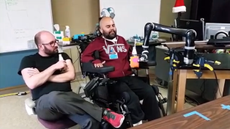 Bionic Arm Taps New Part of Brain for Natural Moves
A new prosthetic arm can be wired to tap into the part of a person's brain that plans out movements before the muscles do them, giving a person smoother control over the limb.
robotics -
 Tiny 'Crystal Cushion' Drives Earthquakesearthquakes
 -
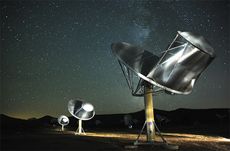 Aliens Will Be Bear-Size, According to Mathextraterrestrial-life
 -
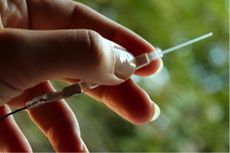 Pain-Fighting Implant Directly Targets Nerves
In the future, back pain might be treated with implants that deliver drugs right where it hurts, which would make taking pills a thing of the past.
health -
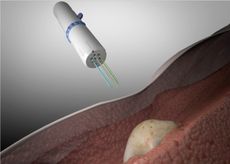 Cancer Tech: New Devices Could Speed Up Treatment
Two new medical innovations could improve cancer treatments by letting doctors deliver many drugs to a tumor at once, and observe each drug's effects.
cancer -
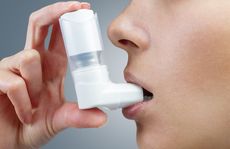 Breath of Fresh Air: How Smartphones Can Help Asthma Sufferers
People with asthma could benefit from new inhalers and apps that take advantage of smartphones' capabilities to track when and where users need to use their medication.
health -
 Proving Einstein Wrong with 'Spooky' Quantum Experimentquantum-physics
 -
 Sci-Fi Cloaking Device Could Protect Soldiers from Shock Wavestechnology
 -
 5 of the Most Precise Clocks Ever Made
Here are some of the most accurate clocks ever built, from one that relies on chilled cesium atoms to an optical lattice atomic clock that loses a second only every 4.4 billion years.
technology