













Poop-encrusted chamber pots from the Roman Empire reveal oldest known human cases of Crypto parasite
Chamber pots from the frontier of the Roman Empire have provided the world's earliest evidence of humans infected with the Cryptosporidium parasite.

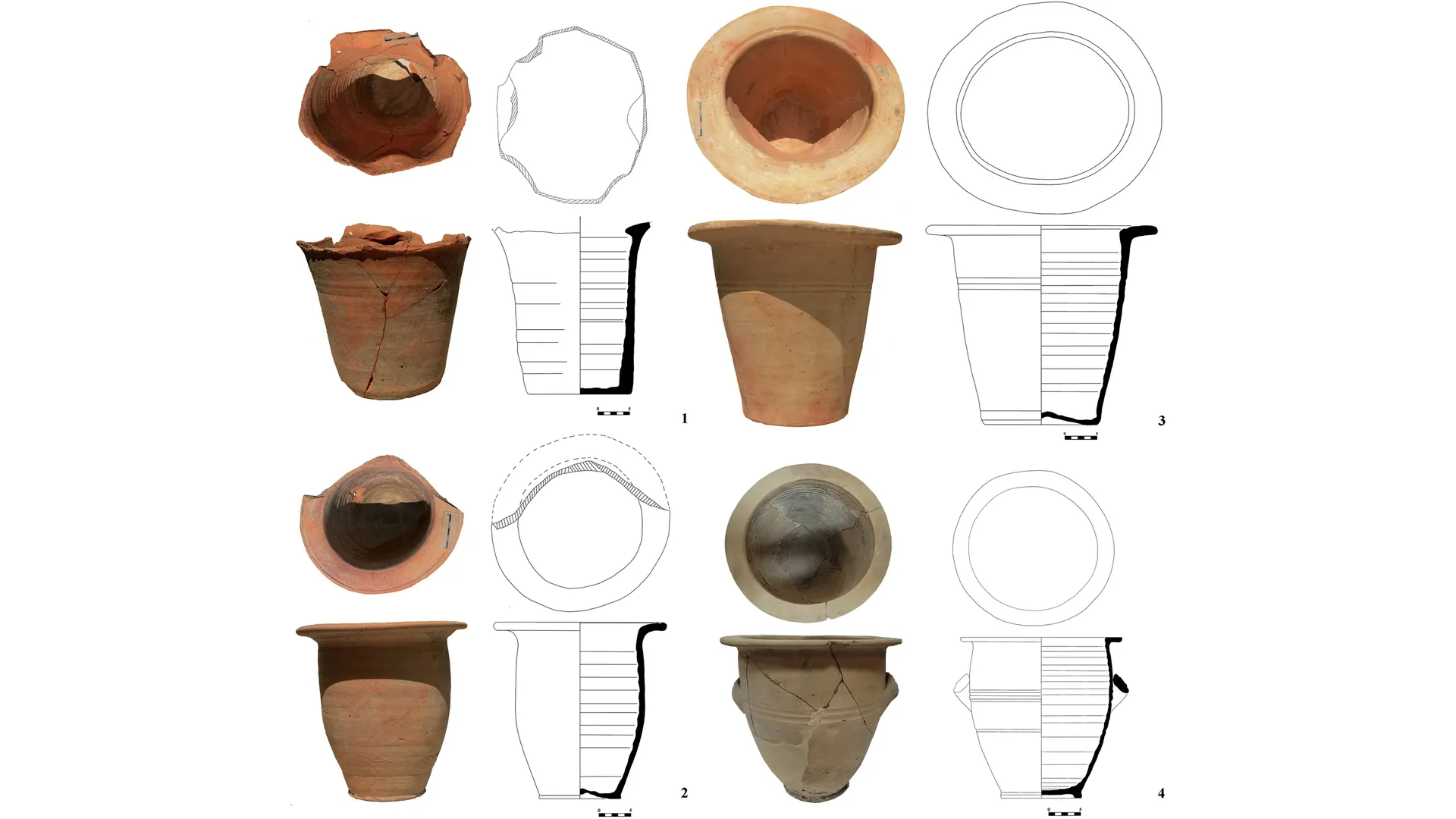
Urine and fecal residue encrusted on the inside of ancient Roman chamber pots unearthed in Bulgaria has revealed the world's oldest known evidence of humans infected with the Cryptosporidium parasite, which causes acute gastrointestinal distress.
In the first century, the Romans established a province called Moesia Inferior in the Balkan Peninsula, which includes the modern country of Bulgaria. Roman legions were tasked with defending the imperial border from the Goths, primarily from a fortress called Novae (near present-day Svishtov) and a town known as Marcianopolis (modern-day Devnya). While excavating at Novae and Marcianopolis in Bulgaria, archaeologists recovered four chamber pots, whose long-dried contents have revealed new information about health and disease in the Roman Empire.
In a study published April 3 in the journal npj Heritage Science, researchers detailed their analysis of the mineralized deposits of urine and feces that they scraped from the sides and bottoms of the ceramic pots.
Using ELISA (short for "enzyme-linked immunosorbent assay") — a laboratory test that can detect bacteria, parasites and viruses in a sample of bodily fluid — the researchers identified three pathogens in the chamber pot samples: the protozoan Entamoeba histolytica, the parasite Cryptosporidium parvum, and the tapeworm Taenia. All three pathogens infect the human gut and can cause gastrointestinal distress, including diarrhea and stomach pain.
Previous ancient-parasite studies have shown that Roman soldiers on the frontiers of the empire dealt with intestinal worms and the parasite Giardia, as did people living in the city of Rome. However, the new study has identified Cryptosporidium for the first time in an ancient Roman context, and it is the earliest known evidence of human Cryptosporidium infection in the world.
"The evidence of Cryptosporidium comes from two separate chamber pots from Novae," study first author Elena Klenina, a historian at Adam Mickiewicz University in Poland, told Live Science in an email. "The parasite's presence across distinct contexts suggests the infection may have been relatively widespread within that community."
C. parvum (often dubbed Crypto, for short) is a parasite that infects dozens of species of domesticated and wild animals, the researchers wrote in the study. When those infected animals contaminate soil or water, the infection can spread to humans. But because Crypto generally causes mild symptoms, the first human cases of the disease were not identified until 1976. Since then, researchers have been investigating the origin of this organism.
Get the world’s most fascinating discoveries delivered straight to your inbox.
Archaeologists in Mexico found Crypto in preserved human feces dated to around A.D. 700, which led some experts to propose that the parasite originated in the Americas. But because the remains of a 5,000-year-old goat (Myotragus balearicus) from the western Mediterranean tested positive for Crypto, Klenina and colleagues suspect that it may have first started infecting humans in Europe rather than in the Americas.
RELATED STORIES
It's unclear how the Romans living at Novae picked up the parasite, but the researchers think the infected individuals might have been drinking contaminated water supplied by an aqueduct in the rural countryside. When infected with any of the three pathogens the researchers identified, the ancient Romans may have dealt with severe diarrhea and thus had to use chamber pots in the middle of the night rather than the more sanitary public latrines and bathhouses that were open during the day.
Analyzing ancient bodily fluids is important for understanding health and disease in the Roman Empire, the researchers noted in the study, and chamber pots present a wealth of information on these topics.
"This type of research poses no significant health risk to archaeologists," Klenina said. "The biological material we analyze is extremely old and typically no longer viable or infectious."
Klenina, E., Biernacki, A.B., Welc-Falęciak, R., Pawełczyk, A., Bednarska, M. (2026). Analysis of Roman chamber pots to understand the health of the lower Danube inhabitants. npj Heritage Science. https://doi.org/10.1038/s40494-026-02475-x
From Augustus to Nero, see how much you know about ancient Rome's famous leaders with our Roman emperor quiz!

Kristina Killgrove is a staff writer at Live Science with a focus on archaeology and paleoanthropology news. Her articles have also appeared in venues such as Forbes, Smithsonian, and Mental Floss. Kristina holds a Ph.D. in biological anthropology and an M.A. in classical archaeology from the University of North Carolina, as well as a B.A. in Latin from the University of Virginia, and she was formerly a university professor and researcher. She has received awards from the Society for American Archaeology and the American Anthropological Association for her science writing.
You must confirm your public display name before commenting
Please logout and then login again, you will then be prompted to enter your display name.