














Could bacteria or viruses lurking in ancient Egyptian mummies unleash a plague today?
Do mummies contain pathogens that could be transferred to humans today, and should we be worried?
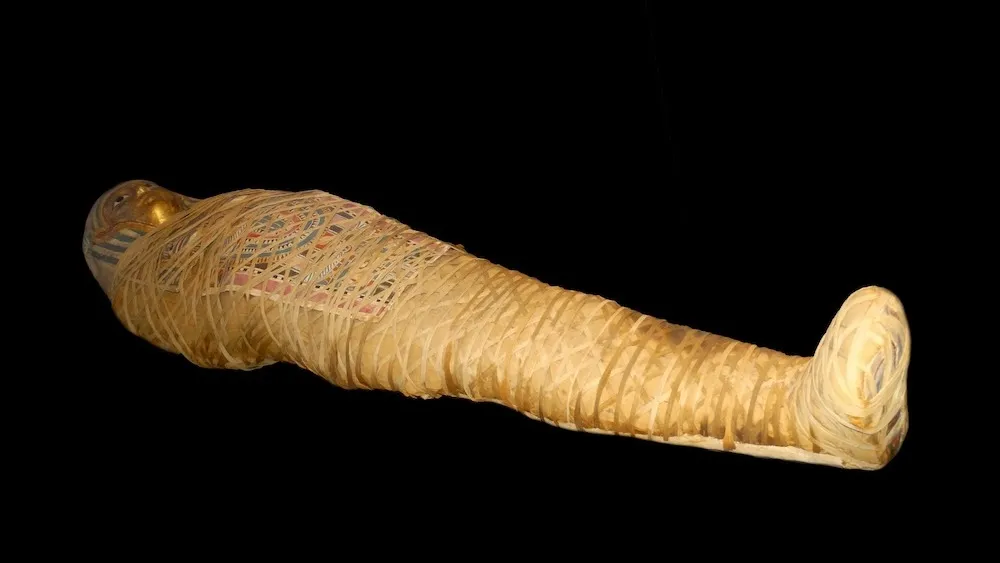
The ancient Egyptians were no strangers to illness, with research showing that they were affected by a host of infectious diseases, including smallpox, tuberculosis and leprosy.
For instance, Ramesses V, the fourth pharaoh of Egypt's 20th dynasty, contracted smallpox, which is evidenced by telltale smallpox scars pockmarking his mummified body.
Even though the World Health Organization (WHO) officially declared smallpox eradicated worldwide in 1980, is it possible that, thousands of years later, newly unearthed mummies could unleash smallpox or any other illnesses from their bodies?
Piers Mitchell, director of the University of Cambridge's Ancient Parasites Laboratory and a senior research associate in its Department of Archaeology, said it's extremely unlikely.
"Most species of parasites are dead within a year or two" without a living host to latch onto, Mitchell told Live Science. "If you wait more than 10 years, everything is dead."
Related: 7 famous mummies and secrets they've revealed about the ancient world
For example, poxviruses like smallpox can only reproduce within the cells of a living host, according to the National Library of Medicine’s National Center for Biotechnology Information at the National Institutes of Health (NIH). The bacteria that causes tuberculosis and leprosy also require living hosts to survive, according to the NIH.
Feed your curiosity with an exclusive mystery every week, solved with science and delivered direct to your inbox before it's seen anywhere else.
However, smallpox is spread by touch from person-to-person contact, whereas tuberculosis and leprosy usually travel through droplets from the nose and mouth, typically passing via a sneeze or a cough, according to the NIH.
In the case of leprosy, it takes extended exposure with someone who is ill for it to spread. This is because the two species of bacteria that cause the disease, known as Mycobacterium leprae and Mycobacterium lepromatosis, replicate slowly, according to the Centers for Disease Control and Prevention.
Another factor that decreases the likelihood of someone contracting an illness from a mummy is the degradation of DNA over time.
"With analysis, you can find that all the bits of DNA of these parasites are rather short," Mitchell said. "Instead of being nice, long, healthy DNA chains, they are only about 50 to 100 base pairs. It's like everything has been chopped up, and that's because [the DNA] is degrading and breaking down. There's no way for anything to be viable once the DNA has fallen apart — nothing is waking up."
RELATED MYSTERIES
However, some parasitic intestinal worms, which are distributed through feces, live longer than other organisms, and not all need a living host to survive.
Still, they aren't a big worry either.
"Those can be a lot tougher and can last a number of months, or sometimes a few years, but none of them are going to last thousands of years," Mitchell said. "The vast majority of parasites die when the host dies because they have no way of surviving."
And even on the off chance that one of these ancient organisms were still alive and kicking, the masks, gloves and other protective gear researchers wear to prevent them contaminating the mummies would also prevent them from contracting or spreading pathogens.
Jennifer Nalewicki is former Live Science staff writer and Salt Lake City-based journalist whose work has been featured in The New York Times, Smithsonian Magazine, Scientific American, Popular Mechanics and more. She covers several science topics from planet Earth to paleontology and archaeology to health and culture. Prior to freelancing, Jennifer held an Editor role at Time Inc. Jennifer has a bachelor's degree in Journalism from The University of Texas at Austin.