
A solar eclipse is one of the most dazzling celestial phenomena that you can experience from Earth. It occurs when Earth, the moon and sun are aligned on the same plane, with the moon passing in front of the sun to cast a shadow on the planet below.
During a total solar eclipse, the moon completely covers the sun, which results in a period of "totality," when the moon completely blocks the light from the sun. This causes evening-like darkness during the daytime, as the center of the moon's dark shadow falls over Earth. Viewers do not experience totality during a partial solar eclipse, when the moon only blocks a portion of the sun's disk.

-
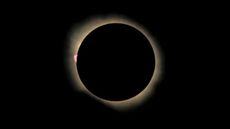 Totality! See incredible photos of the Aug. 12 total solar eclipse from across Europe
From Baily's Beads, a bright-pink prominence to awe-struck eclipse-watchers from across the European continent, check out these stunning images from yesterday's total solar eclipse.
the-sun -
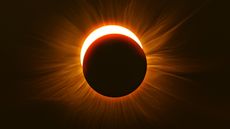 Watch now! The Aug. 12 total solar eclipse has begun (live stream)
Today (Aug. 12), a total solar eclipse will swoop across a narrow path of totality, while millions of people in North America and Europe will be treated to a partial eclipse. Watch it live right here.
the-sun -
 'They'll surf into the eclipse': Readers share their plans for today’s epic solar eclipse and meteor shower mash-up
Poll Are you watching the solar eclipse and Perseid meteor shower tonight? Live Science readers reveal their thoughts about tonight's stargazing phenomena
Poll -
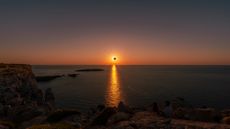 'No longer will anything seem impossible or marvellous': How an 'immoral, foul-mouthed and violent man' wrote the first eyewitness account of a total solar eclipse
Book excerpt In this excerpt from the book "Solar Eclipses" by William Sheehan, we learn of how an ancient Greek poet, who wrote a series of scurrilous songs and deserted the field of battle, became a hero among eclipse-watchers today.
Book excerpt -
 Will you be looking up on Aug. 12, the best skywatching day and night of the year?
Poll Two big skywatching events are happening on Aug. 12. Will you have your eyes turned skyward? Let us know in our latest poll.
2 CommentsPoll -
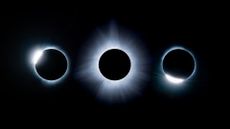 Where and when to see the Aug. 12 solar eclipse — exact times for North America and Europe
Here's exactly when and where to watch the Aug. 12, 2026 solar eclipse in Europe, North America and North Africa.
the-sun -
 Where to buy last-minute solar eclipse glasses and viewing gear before August 12
A partial eclipse is still worth seeing, but only with the right protection. Here's where you can still find eclipse glasses, solar binoculars and filters before eclipse day.
optics -
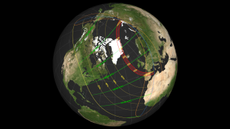 Why the Aug. 12 total solar eclipse appears to move backward
While eclipse paths always move from west to east, this one seems to reverse direction on maps as it crosses the Arctic. Here's the geometry behind the illusion.
the-sun -
 How to make a solar eclipse viewer to safely watch the solar eclipse on August 12
Don't have a pair of eclipse glasses to view the August 12 solar eclipse? No sweat; you can make a safe and simple DIY eclipse viewer with a box, some tinfoil, and a few household craft supplies.
the-sun


