-
 Upcoming Solar Eclipse Is a Chance to Prove Einstein Right (Again)
For some skywatchers, the upcoming total solar eclipse is an opportunity to duplicate one of the most famous experiments of the 20th century.
astronomy -
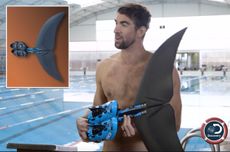 The Monofin: Will High-Tech Tail Help Phelps Beat a Great White Shark?
During a race with a great white shark, decorated athlete Michael Phelps will sport a special monofin that should mimic a shark's tail. But how much will it help?
technology -
 Chinese Scientists Just Set the Record for the Farthest Quantum Teleportationquantum
 -
 I Know Your Next Move: Game Reveals How the Brain Strategizes
In a new study, brain scans taken during a strategy game reveal how people strategize about what they think their opponent will do.
neuroscience -
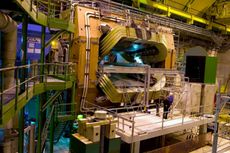 'Charming' Heavy Particle Discovered at World's Largest Atom Smasher
The world's largest atom smasher, the large hadron collider, has uncovered a long-predicted type of heavy particle, known as the Xi-cc, which is made up of two charm quarks.
particle-physics -
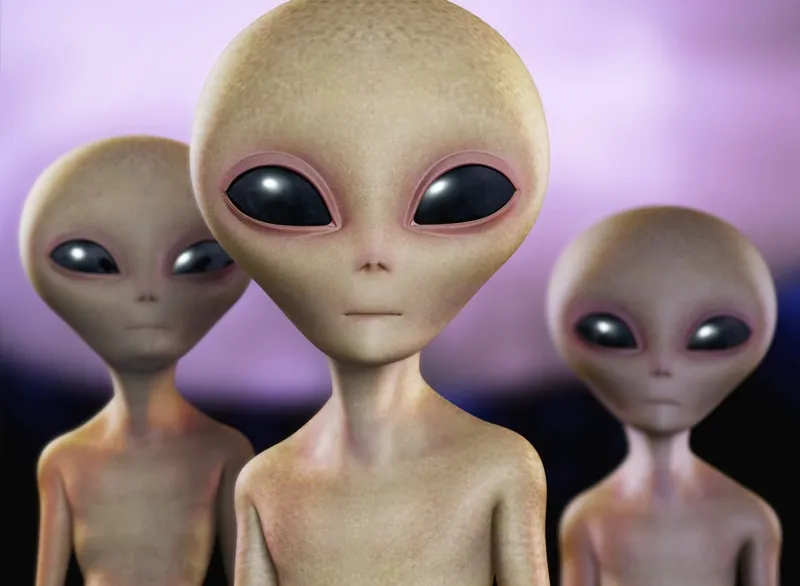
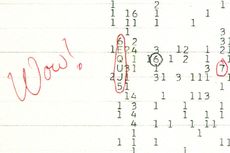 Comet Likely Didn't Cause Bizarre 'Wow!' Signal (But Aliens Might Have)
A source of mysterious radio signals could be from a passing comet, but astronomers are skeptical.
comets -
 5 Times 'Aliens' Fooled Usextraterrestrial-life
 -
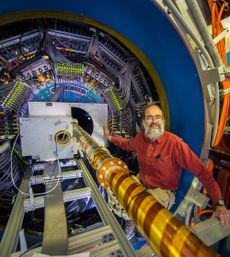 Charmed Existence: Mysterious Particles Could Reveal Mysteries of the Big Bangparticle-physics
 -
 Dark Energy May Lurk in the Nothingness of Space
The vacuum of empty space may be roiling with energy that drives the expansion of space itself, a new hypothesis proposes.
cosmology -
 Could Humans Ever Regenerate a Limb?
If you cut the leg off a salamander, it grows back. Humans, however, can't manage the trick. The reasons are far from simple, and to some extent are still a bit of a mystery.
human-behavior -
 In Year 1 Million, What Will Humanity Look Like?
In the year 1 million, humans might still exist — but they won't be like humans today.
tech -
 What Is Intelligence? 20 Years After Deep Blue, AI Still Can't Think Like Humans
Twenty years ago, IBM computer Deep Blue beat the world's greatest chess player in a first for machines. How far has artificial intelligence come since then?
artificial-intelligence -
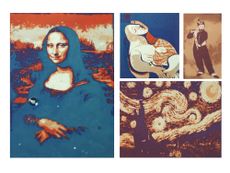 Laser-Printed Nanotech Makes Colors That Never Fade
Laser printers that "sculpt" images at miniscule scales could one day make color photos that don't fade over time the way ink does, according to a new study.
engineering -
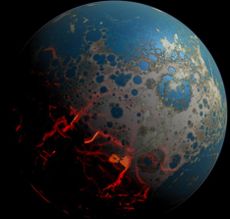 Odd New Theory Explains How Early Earth Got Its Oxygen
One of the still-unsolved mysteries about Earth's history is how the planet became breathable. Now, scientists say the culprit may have been the giant rock slabs that make up Earth's outer shell.
geology -
 Hunt for Why We Exist Turns to Weird Atomic Decay
Physicists try to catch atoms in the elusive double-beta decay, which could tell us why there's anything here at all.
particle-physics -
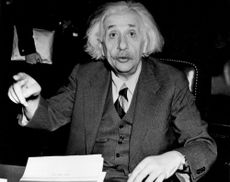 Relatively Pricey: Einstein Letter Fetches $54K at Auction
An Einstein letter shows a generous spirit and a little criticism.
physics-mathematics -
 Reshaping the Universe: VR Landscapes Explore Mind-Bending Geometry
In this wonky, non-Euclidean universe, the floor can fall away from your feet as you walk forward and distances aren't what they seem.
mixed-reality -
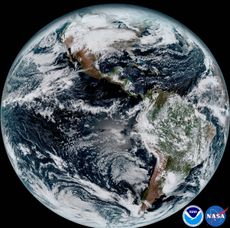 Trump's NASA Budget Would Cancel These 4 Earth Science Missionsspace-exploration
 -
 Trump's Eavesdropping Allegations: How Do Wiretaps Work?
Though Trump's claims are unsubstantiated, they have raised questions about how such technology really works.
human-behavior -
 Meet Dr. Watson: 'Jeopardy!' Champ Takes on Cancer and Land Use
IBM's Watson may be most famous for winning at the game show "Jeopardy!" but from an office here in Manhattan, the celebrated computer's brains are being used to tackle even bigger challenges.
artificial-intelligence -
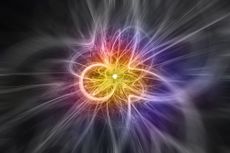 First Solid Sign that Matter Doesn't Behave Like Antimatter
Matter and antimatter should look the same. For the first time, physicists have experimental evidence that they don't.
physics-mathematics -
 The 18 biggest unsolved mysteries in physics
The more we learn about the universe, the more questions seem to arise. Our picks for the biggest open questions remaining in physics.
physics-mathematics -
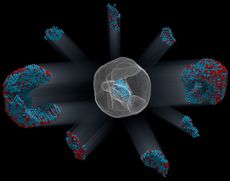 Physicists 'See' Location of 23,000 Single Atoms for First Time
For the first time, scientists have seen the exact locations of more than 23,000 atoms in a particle that's small enough to fit inside the wall of a single cell.
physics-mathematics -
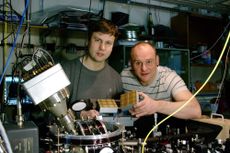 New Quantum-Computer Design Could Lead to Practical Hardware
Scientists have proposed a new way to build a quantum computer using microwaves to control individual atoms, and they say the new method offers a blueprint for a more useful computing machine.
quantum