
 Live Science Plus


What Is Environmental Engineering?

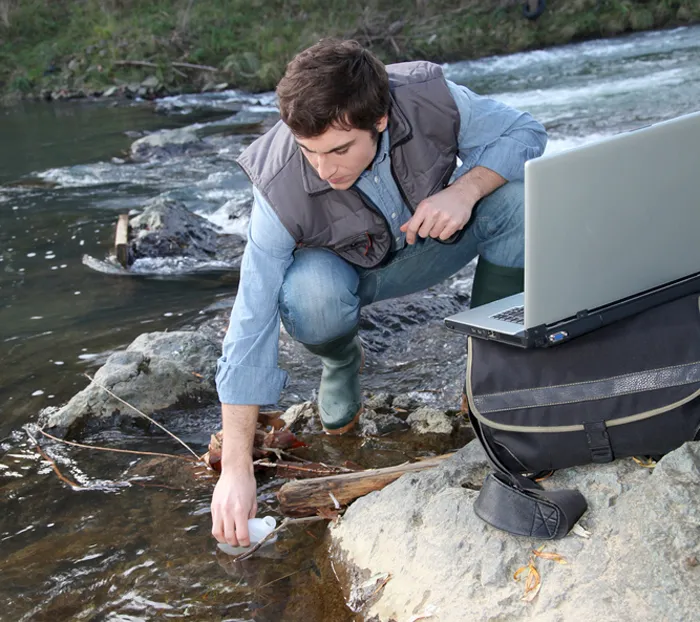
Environmental engineering is the branch of engineering that is concerned with protecting people from the effects of adverse environmental effects, such as pollution, as well as improving environmental quality. Environmental engineers work to improve recycling, waste disposal, public health, and water and air pollution control, according to the U.S. Bureau of Labor Statistics.
The practice of environmental engineering dates back to the dawn of civilization. Ever since groups of people began living in semi-permanent settlements, they have had to deal with the challenges of providing clean water and disposing of solid waste and sewage. With the growth of cities and the advent of large-scale farming and manufacturing, people have also had to worry about air quality and soil contamination.
The first environmental engineer is said to have been Joseph Bazalgette. According to an article in the Postgraduate Medical Journal, Bazalgette oversaw the construction of the first large-scale municipal sanitary sewer system in London in the mid-19th century. This was prompted by a series of cholera epidemics, as well as a persistent unbearable stench, that were attributed to the discharge of raw sewage into the Thames River, which was also the main source of drinking water for the city. This "great stink," which was so noxious that it caused Parliament to evacuate Westminster, gave then-Prime Minister Benjamin Disraeli grounds to ask for 3.5 million pounds to improve the city's sewage disposal system.

Some notable names in the field of environmental engineering include:
- Ellen Henrietta Swallow Richards: a pioneer 19th-century industrial and environmental chemist. She was the first woman admitted to the Massachusetts Institute of Technology (MIT) and later, an instructor in sanitary chemistry there. She worked with many local and national groups dealing with water supplies and public health problems.
- G.D. Agrawal: a respected environmental engineer in India. He has worked to clean up the Ganges River and fasted to protest the damming of the Bhagirathi River.
- Marc Edwards: a professor of civil and environmental engineering at Virginia Polytechnic Institute and State University. He is a pioneer in detecting and reducing lead in drinking water. [Video: How to Improve U.S. Water Quality]
- Joseph Lstiburek, a leading authority on building science and indoor air quality.
- George F. Pinder, a professor of civil and environmental engineering, mathematics and statistics at the University of Vermont. He is known for his expert testimony in the legal cases regarding environmental contamination at Love Canal, New York, and Woburn, Massachusetts.
What do environmental engineers do?
Environmental engineers use the principles of engineering, soil science, biology and chemistry to develop solutions to environmental problems, according to the BLS. Some projects involving environmental engineers include:
- Roman Stocker of MIT studied the interactions between tiny marine organisms, their environment and their food sources, which led to a better understanding of how algae blooms occur. (Stocker also was the scientist behind recent research — and popular high-speed video — into how cats lap milk.)
- Michael Nassry, who, as a Ph.D. student in biological systems engineering at Virginia Tech, studied how nutrients flow through glaciers in Alaska.
- Glenn Morrison, an associate professor of environmental engineering at Missouri University of Science and Technology, is studying how methamphetamine accumulates in building materials, furniture and common household items during production.
One of the most important responsibilities of environmental engineering is to prevent the release of harmful chemical and biological contaminants into the air, water and soil, the BLS says. This requires extensive knowledge of the chemistry and biology of the potential contaminants as well as the industrial or agricultural processes that might lead to their release. With this knowledge, new processes can be designed, or existing processes can be modified, to reduce or eliminate the release of pollutants.
Another important function performed by environmental engineers is detecting the presence of pollutants and tracking them back to their source, the BLS says. In some cases, this can present a significant challenge. For instance, the source of contamination in a lake could be anywhere within several thousands of acres of land surrounding the lake and its tributaries. Contamination of oceans can present even greater challenges in identifying the source.
Get the world’s most fascinating discoveries delivered straight to your inbox.
Once the environmental engineer identifies a source of contamination, it must be stopped or significantly reduced. Simply shutting down a business is not always a viable option, because of the potential for severe economic consequences. Environmental engineers often work with businesses to determine ways to avoid or reduce the production of pollutants or to separate them so they can be disposed of in a safe manner.
Critical skills needed by environmental engineers include a working knowledge of chemical engineering, fluid dynamics, geography, geology and hydrology. Also, because of the numerous legal issues involved and the prevalence of litigation in environmental issues, environmental engineers must be familiar with applicable laws, and many of them are also practicing attorneys.
Environmental engineering salary
Most environmental engineering jobs require at least a bachelor's degree in engineering, and many employers, particularly those that offer engineering consulting services, also require certification as a professional engineer (PE). A master's degree is often required for promotion to management, and ongoing education and training are needed to keep up with advances in technology; extensive knowledge of current government regulations is essential. Additionally, many environmental engineers belong to the AAEES.
According to Salary.com, as of July 2014, the salary range for a newly graduated environmental engineer with a bachelor's degree was $44,722 to $69,808. The range for a midlevel engineer with a master's degree and five to 10 years of experience was $65,890 to $106,126, and the range for a senior engineer with a master's or doctorate and more than 15 years of experience was $82,193 to $133,930. Many experienced engineers with advanced degrees are promoted to management positions or start their own consulting businesses, where they can earn even more. Additionally, many engineers go on to law school and specialize in environmental law and litigation.
What is the future of environmental engineering?
The BLS predicts employment of environmental engineers to grow by 15 percent from 2012 to 2022, which is faster than the average for all occupations. "State and local government concerns regarding water should lead to efforts to increase the efficiency of water use," the BLS says. Having good grades from a highly rated institution should give a job seeker an advantage over the competition.
Jim Lucas is a freelance writer and editor specializing in physics, astronomy and engineering. He is general manager of Lucas Technologies.
Additional resources
- Look for top-rated environmental engineering programs at TopUniversities.com.
- A comprehensive list of necessary skills and abilities for environmental engineers can be found at MyMajors.com.
- For more information on environmental engineering, see the free e-book "Concise Environmental Engineering," by Dawei Han.
