













Thank you for visiting Live Science at HJ26!


Below, you can find tips for pitching articles to our health desk, overseen by Health Channel Editor Nicoletta Lanese. This guidance will be more specific to health than the general pitching guidelines you can find on our website.
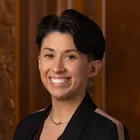
Nicoletta Lanese is the health channel editor at Live Science.
If submitting a pitch, please refer to the above linked guidelines regarding how long the pitch should be, what information it should generally include, and the email to send it to. Supplying a short resume and/or published clips is helpful if you haven't written for us before.
Below, we'll explain which topics we cover most frequently, our overarching philosophy with health coverage, and the types of articles we commission from freelancers. Rates vary depending on the story type and your level of experience with us; starting rates are listed next to their article types below. They can be paid in USD, GBP or euros.
We've also included a brief description of our annual summer internship, if you're interested in applying in the future. (The application for this year's internship has closed.)
Health topics we cover (and those we don't)
If you're wondering if Live Science covers a given topic, I'd recommend running a site-specific search to see if we've covered it recently (say, within the last year). You can also look at our recent features and news analyses; if we've highlighted a topic within either of those verticals, it's likely an area of focus for us.
Here's a non-exhaustive list of health topics we cover frequently. Note these run the gamut from early-stage, lab-bench research to drug discovery, clinical trials, and population health studies. When it comes to basic research, we prioritize work that has a clear throughline to clinical application or a relevance to human biology. If it's too early-stage or too incremental a finding, we'll likely pass.
Frequently covered topics:
- Infectious diseases (Outbreaks, vaccines, pandemic preparedness)
- Reproductive health (fertility, pregnancy, menopause, disorders, treatments)
- Cardiovascular health (risk factors, population-level trends, treatments)
- Diabetes (treatments, underlying causes)
- Sleep (why we sleep, disorders of sleep, health impacts of sleep issues)
- Aging (mechanisms driving aging, treatments to reverse or slow aging)
- Cancer (disease mechanisms, population-level trends, treatments)
- Genetics (gene therapies, polygenic risk scores/population-level analyses)
- Epigenetics (disease mechanisms, "aging clocks," heritability)
- Neuroscience (memory, sex differences, organoids)
- Neurology / neuropsychiatry (brain-computer interfaces, chronic pain, dementia, psychedelics, brain mechanisms behind neuropsych conditions)
We very rarely cover topics that might fall under the category of "wellness," such as exercise or nutrition. The occasional exception might be large cohort studies that convincingly link a certain dietary pattern or degree of exercise to an important outcome, such as reduced cardiovascular disease or longer lifespan. If we cover a trendy new supplement, it's likely that we're taking the wind out of overhyped marketing claims surrounding it.
We do not provide health advice; we provide science-backed information that helps readers better understand their bodies, medicine, healthcare and the process by which biomedical innovations are made.
We also have a "human behavior" vertical where we'll occasionally cover psychology. Oftentimes, though, our psychology-related stories end up falling under the neuroscience vertical, due to our focus on the biological mechanisms driving a given disorder or its treatment course, for instance.
Article types
NOTE! Our story selection, interviews, writing, editing, image selection, and story layout are done by humans on the Live Science team — never by AI. AI-generated transcripts of interviews may be used, but writers must check their accuracy. We make sure freelancers adhere to these standards, as well, and we will not work with a writer again if they are found to be using AI to create their stories. Review our editorial standards for more information.
Daily news: This is the type of story we commission from freelancers most often. They run about 500 to 600 words and typically cover a single study or new research finding. They include two interviewed sources, including a study author and an unaffiliated expert who can comment on the findings. Alternatively, some include two outside comments. (Rates start at $250)
News analyses: These stories run about 800 words, and at most, 1,000 words. They center around a single question — ie, is this new FDA policy safe? In what ways could AI actually be helpful to doctors? Is our understanding of inherited disease totally wrong? Will new blood tests for cancer diagnosis ultimately improve patients' survival?
Rather than focusing on a single study, they pull in additional context from the literature, often highlighting emerging trends. They include 3+ sources, showcasing a range of perspectives. (Rates start at $350)
News explainers: We don't commission news explainers very often, but we sometimes use them to address trending topics (such as unfolding disease outbreaks) or evergreen topics that we cover frequently and readers could use some quick background on. These are FAQ-style articles with a brief introduction followed by a handful of questions on the topic at hand. They include 1-3 interviewed sources, depending on the complexity of the topic. (Rates start at $350)
Diagnostic dilemmas: This series publishes weekly on Wednesday mornings (ET) and highlights interesting medical case reports. You can find the archive of published diagnostic dilemmas here. Note that they follow a formula, in terms of their structure, and they don't generally require any interviews. (There are rare exceptions.)
We're interested in case reports highlighting rare conditions, unusual symptoms or treatment courses, creepy parasites, mysterious pathophysiology… etc. We keep the tone of the writing clinical, keeping in mind that the case reports feature real people. That said, these stories do typically have a "wow" factor — something that might make you remark, "Wow, I had no idea that could happen!" (Rates start at $150)
Features (Science Spotlight): We occasionally commission features (which we call "Science Spotlights") from freelancers. Most often, these assignments go to freelancers who we've worked with repeatedly and who have developed a sense of Live Science's in-house style and voice. Our Editor-in-Chief of premium content, Tia Ghose, oversees the Science Spotlight section, and Nicoletta weighs in with edits for health-focused features. (Rates start at $1,200)
Life's Little Mysteries: Life's Little Mysteries is a column run by our Managing Editor Laura Geggel. It runs across all the site's verticals, including health. Each article tackles an intriguing, evergreen question and addresses it within about 600 to 800 words. They include two interviewed sources. Nicoletta weighs in occasionally with edits on health-focused LLMs. (The rate is $300)
Other story types (such as Q&As) aren't generally assigned to freelancers. Additionally, most of our Opinion pieces are written by scientists and researchers, rather than reporters. That said, if you have an idea for an op-ed, you can find guidance for those pitches in our general pitch guidelines. Just keep in mind that your op-ed idea might be better suited to our news analysis format.
Sourcing
The sources most often quoted in our health stories include scientists, clinicians and health researchers who can speak to a given topic because they've personally worked in the field. Particularly if they're commenting on a new study, a source's expertise should closely reflect the story's main topic. (e.g., Not every person who studies infectious diseases, in general, is necessarily an expert in mpox transmission dynamics.)
Generally speaking, quotes from leaders of nonprofit organizations or CEOs of pharma companies are less relevant to our stories, due to our science-led approach. There are some exceptions, but as a rule of thumb, we're looking for sources who can lend scientific expertise on a subject rather than deliver a sales pitch or push a fairly narrow agenda.
Patient sources can sometimes be relevant to pull into stories about a given condition, particularly if it's a longer story, like an analysis or feature. So for example, if a new diagnostic approach promises to help patients get diagnosed sooner, you could speak with a person whose condition was caught only in its late stages due to existing, subpar diagnostics.
Across all the verticals at Live Science, we are committed to showcasing the diverse range of people who work in the sciences and are affected by scientific advancements. To make sure we're upholding that commitment, we keep track of the demographics of people interviewed for our stories. We ask that freelancers keep the diversity of their sourcing top of mind when reporting for us. A person who's already quoted in a lot of news coverage could be swapped for a researcher with similar expertise but less visibility, for instance.
Summer internship
Live Science has a competitive and rewarding 10-week internship for early-career science writers. It pays $17/hour and the intern must work on Eastern Time. Interns must be based in the U.S. and have the ability to work in one of the 37 states approved by Future, Live Science's parent company. It's 29.5 hours a week, which means a three-day weekend. It's remote, but if you're based in New York City, you're welcome to work from our midtown office.
We treat our interns like new staffers but with extra mentoring. We provide on-the-job training as you learn how to do different types of stories, including reported stories, quickhits (which are like rewriting press releases, but in Live Science style), embargoed news, Life's Little Mysteries, quizzes and news briefs. You'll also pitch and write a 1,500-word feature across the whole 10 weeks.
We have different channels at Live Science — space & physics, health, technology, archaeology, animals and planet earth. To give interns the full LS experience, they will spend a week at each channel. This includes the trending desk, which is when writers cover news that's trending online, and the social media and video desk. Interns get a company-owned computer over the summer. We communicate on slack and Google Meet. Interns also learn how to use our CMS and edit images.
Interns usually stay on to freelance and we've even hired interns in the past, when we have job openings.
The deadline for the 2026 internship application has passed, you can expect the 2027 application window to open early next year.
Nicoletta Lanese is the health channel editor at Live Science and was previously a news editor and staff writer at the site. She is a recipient of the 2026 AHCJ International Health Study Fellowship, with a project focused on antibiotic stewardship practices in Japan and the U.S. They hold a graduate certificate in science communication from UC Santa Cruz and degrees in neuroscience and dance from the University of Florida. Beyond Live Science, Lanese's work has appeared in The Scientist, Science News, the Mercury News, Mongabay and Stanford Medicine Magazine, among other outlets. Based in NYC, she also remains involved in dance and performs in local choreographers' work.
You must confirm your public display name before commenting
Please logout and then login again, you will then be prompted to enter your display name.