













Why Painful Memories Linger

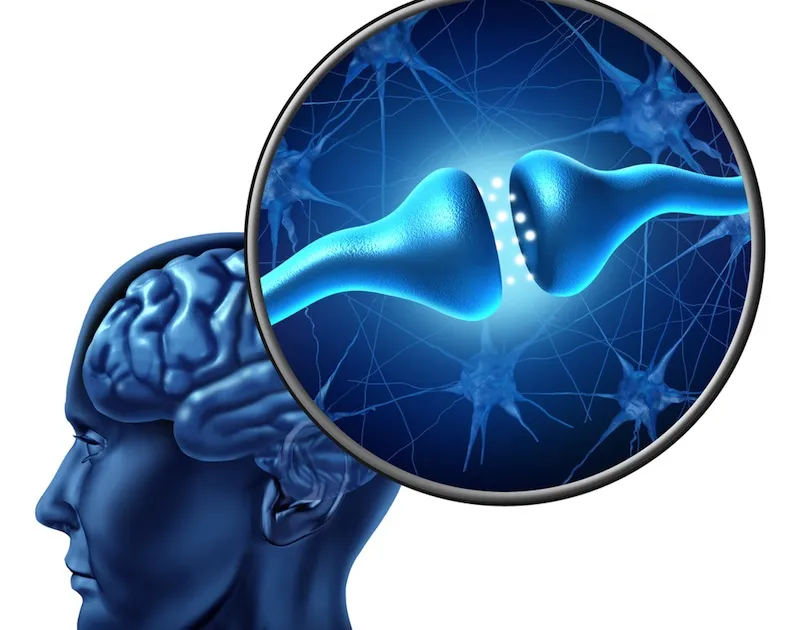
Memories of traumatic events can be hard to shake, and now scientists say they understand why. Studies on laboratory rats have revealed, for the first time, the brain mechanism that translates unpleasant experiences into long-lasting memories.
The findings support a 65-year-old hypothesis called Hebbian plasticity. This idea states that in the face of trauma, such as watching a dog sink its teeth into your leg, more neurons in the brain fire electrical impulses in unison and make stronger connections to each other than under normal situations. Stronger connections make stronger memories.
The new findings are not only an important advance in researchers' understanding of how Hebbian plasticity works, but they also may lead to treatments to help patients forget horrible memories, such as those associated with post-traumatic stress disorder (PTSD).
The study, by researchers at New York University and Japan's RIKEN Brain Science Institute, appears today (Dec. 8) in the Proceedings of the National Academy of Sciences. [Why You Forget: 5 Strange Facts About Memory]
Hebbian plasticity, the thinking goes, works when a brain region called the amygdala allows sensory stimuli to become associated with either rewarding or aversive outcomes, thus producing emotional memories. The saying in the field is that "neurons that fire together, wire together," forming strong connections.
"These processes for triggering aversive memory storage may represent a general mechanism controlling memory formation that is shared across other learning systems in the brain," said Joshua Johansen of RIKEN, one of the lead authors on the study.
Previously, the researchers, led by Joseph LeDoux, director of NYU's Emotional Brain Institute, found evidence for Hebbian plasticity using brain cells that had been removed from animals. The new study represents the first time the process was seen in a working brain with real memories.
Get the world’s most fascinating discoveries delivered straight to your inbox.
In the study, the researchers worked with rats that were conditioned to associate an auditory tone with a mild electrical shock to their feet. Using a new technique called optogenetics, the researchers could both control and track the path of electrical impulses in the rats' amygdalas.
When the researchers weakened or blocked the signaling among neurons, the memory that linked the sound with shock failed to form, supporting the idea of Hebbian plasticity, the researchers said.
Yet the researchers also found that Hebbian plasticity cannot completely explain the process. The scientists used lasers to directly stimulate neurons in the amygdala without actually delivering the shock, and found that the negative memory wasn't formed, despite the strong neural activity. This implies that Hebbian mechanisms are important but not sufficient by themselves to form a memory, and that tiny molecules called neuromodulators seem to be required as well, the researchers wrote.
"Our results not only show that we are able to artificially manipulate memory, but also that this manipulation is correlated with long-lasting changes in the brain," said Lorenzo Diaz-Mataix, a postdoctoral fellow at NYU and also lead author on the report. "Basic findings like this one will potentially help to understand and treat many psychiatric conditions that share aberrant memory processing," he told Live Science.
Remembering scary events, such as an animal attack, clearly has advantages from an evolutionary perspective. But sometimes memories can be too painful. For people who have such memories, the new findings offer hope, Johansen said.
"Because of the importance of forgetting aversive memories for PTSD, many labs, including my own, are trying to understand how these types of memories can be forgotten," Johansen told Live Science. "One possibility is that instead of tapping into 'forgetting' mechanisms, we try to reverse what happened during memory formation. Our findings in this paper are important in this regard and may enable novel approaches to enhance the forgetting or reversal of learning of aversive experiences."
Follow Christopher Wanjek @wanjek for daily tweets on health and science with a humorous edge. Wanjek is the author of "Food at Work" and "Bad Medicine." His column, Bad Medicine, appears regularly on Live Science.

Christopher Wanjek is a Live Science contributor and a health and science writer. He is the author of three science books: Spacefarers (2020), Food at Work (2005) and Bad Medicine (2003). His "Food at Work" book and project, concerning workers' health, safety and productivity, was commissioned by the U.N.'s International Labor Organization. For Live Science, Christopher covers public health, nutrition and biology, and he has written extensively for The Washington Post and Sky & Telescope among others, as well as for the NASA Goddard Space Flight Center, where he was a senior writer. Christopher holds a Master of Health degree from Harvard School of Public Health and a degree in journalism from Temple University.