













'It's kind of the holy grail of what is memory': Neuroscientist Steve Ramirez studies the physical basis of memory in a quest to manipulate it
Steve Ramirez, a neuroscientist and author of "How to Change a Memory," tells editor Hannah Osborne about the science and ethics of memory manipulation, and the incredible power of our brains to recall our past.


In 2013, MIT neuroscientists Steve Ramirez and Xu Liu published a paper detailing how they had created false memories in mice. They'd used optogenetics — where cells' activity is manipulated using light — to plant a fearful memory in the brain and then reactivate this memory with these pulses of light. The breakthrough helped to propel research in the field by showing that memories can be artificially constructed.
The initial experiments involved using a protein to tag brain cells in the hippocampus (a key memory center in the brain) that were active during the formation of a fearful memory. They then reactivated these "fear memory-bearing cells" while the mice were perfectly safe. The first four mice showed no response, but the fifth froze in fear. After analyzing the fifth mouse's brain, it turned out they had placed the protein in a slightly different location of the hippocampus to the others by accident — and inadvertently found the exact spot where the memory was stored — and that it could be manipulated and controlled.
In his book "How to Change a Memory: One Neuroscientist's Quest to Alter the Past" (Princeton University Press, 2025), Ramirez, now an associate professor at Boston University's Center for Memory and Brain,explores fundamental questions about memory: What is it, and can we manipulate it? He uses his personal experiences — including with loss, PTSD and addiction — to probe these ideas, asking whether this line of research could open new paths to treatments. He conceptualizes a world where memories could be manipulated to help ease a person's PTSD, or guard against dementia.
Live Science spoke with Ramirez about the book, the future of memory research, the ethics and implications for treating disease, and our brains' extraordinary power to recall our past. "How to Change a Memory" has been short-listed for the 2026 Royal Society Trivedi Science Book Prize.
"How to Change a Memory" excerpt: 'As if a shudder ran from its brain to its body': The neuroscientists that learned to control memories in rodents

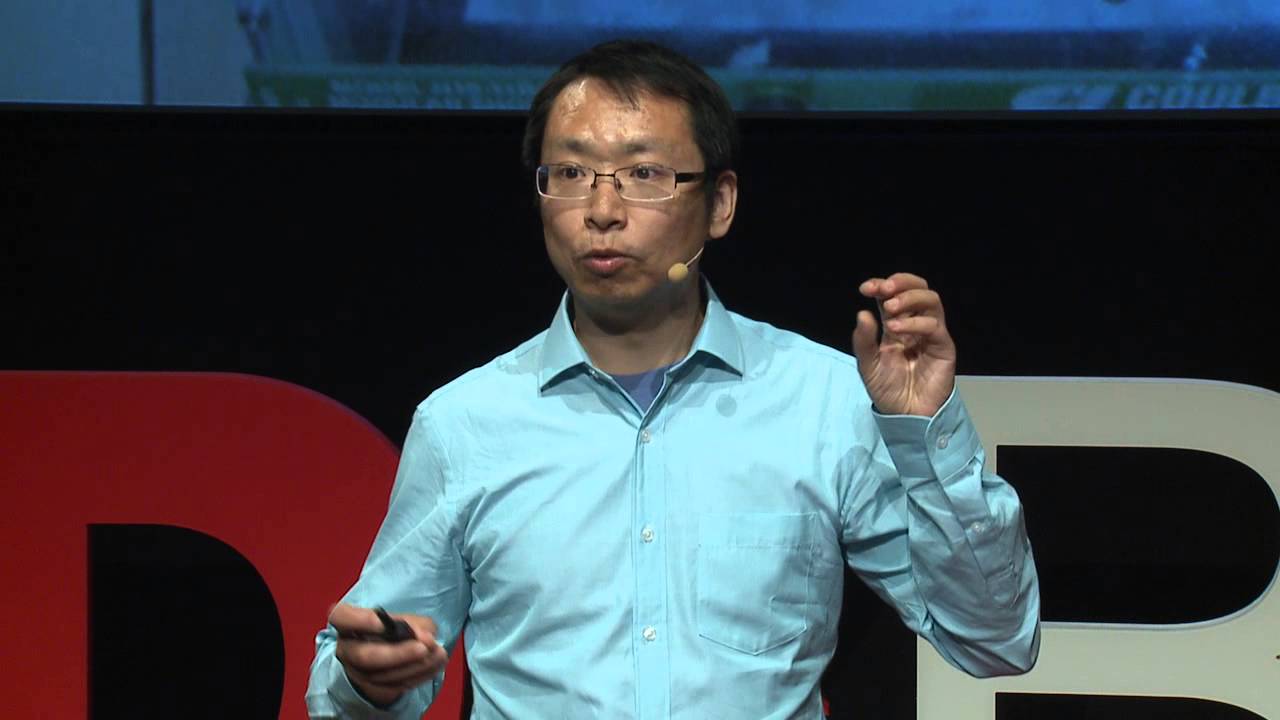
Steve Ramirez has been featured on CNN, NPR, and the BBC and in leading publications such as The New York Times, National Geographic, Wired, Forbes, The Guardian, The Economist, and Nature. An award-winning neuroscientist who has given TED talks on his groundbreaking work on memory manipulation, he is associate professor of psychological and brain sciences at Boston University. His first book, "How to Change a Memory: One Neuroscientist's Quest to Alter the Past" is available now.
Hannah Osborne: In the book, you reflect on your and Xu's major 2013 paper, noting that it was initially the result of a botched surgery in a single mouse. What if that little mistake hadn't happened?
Steve Ramirez: If we hadn't accidentally botched the surgery, I'd like to think we still would have gotten there, because what would have happened was that we would have done all the surgeries correctly, we would have hit the wrong spot, and everything would have been a negative result. And then, we would have said, "Maybe this is the wrong area to try to activate a memory." Now, where we would go next, I don't know.
I'd like to think that we would stay within the hippocampus and we would say, "Why not this other part or this other part?" Or maybe we would have moved to another brain area. But I think it would have delayed the inevitable by maybe six months or less.
Having hit the area, I think we realized that these mistakes — I shouldn't say mistakes; these unintended outcomes of an experiment — are certainly something that I think are pretty common. We just don't look for them often. A lot of times, we'll see a negative result and say, "OK, there's a million reasons why this experiment may not have worked as predicted," because it's very hard to touch base with reality and test the hypothesis. But I think it taught us to look a little bit more deeply when we see results that are either confusing or head-scratching.
The more I talk to people in science, I think everyone has this version of this one hiccup in an experiment [that] led us down a completely different rabbit hole that ended up being the basis of a paper or a series of papers — or, in mine and Xu's case, a career and then some.
I wouldn't say that they're universally common in every experiment, but I think that biology is so squishy, we're going to get things that kind of zig when we think that they're going to zag.
HO: Throughout the book, you talk about engrams. What are they, and why are they so important to memory research?
SR: An engram is a theoretical construct. It's a theoretical topic that certainly elicits every possible opinion out of memory researchers because it's kind of the holy grail of "what is memory." We think of an engram as whatever the physical basis of memory is.
It's almost like, what are the cellular building blocks of a memory in the brain? Whatever those building blocks are, that's what we consider an engram. And the reason I say that it's theoretical is because we don't really have a clean-cut "This is where an engram begins and ends in the brain."
We're not at the point where we have a Google Maps for an engram and we can zoom in to "This is the emotional part, and this is the smell associated with the memory." We have more of a zoomed-out satellite view of what an engram looks like. But we'll get there, and it's important, because if we have a full understanding of the physical manifestation of memory in the brain, then we have a way better chance of predicting what's going to happen when those building blocks break down and give rise to certain kinds of amnesia or cognitive impairments or memory loss.
By analogy, we have a pretty good understanding of how the heart works down to the physics of how a pump works, for example. Now that, thankfully, has enabled us over the past 200-plus years of cardiology, to have heart valves that we could 3D print or grow in pigs or things like that. With the brain, there's no law of physics saying that we can't get there to turn the brain into how we view the heart, where we can 3D print pieces to replace what was broken, or we understand a bit of clogging in this artery will lead to all of these different impairments.
We're only beginning to understand what those [metaphorical] clogged arteries look like in the brain, especially when it comes to memory. So if we have an understanding of the detailed physical picture of what an engram is, then we'll have a better shot of being able to predict what happens to ideally even prevent its breakdown, for example.
The goal is to understand the physical basis of memory and to use that understanding to try to enable well-being to an individual.

Ramirez says we need a wide discussion about the ethics of memory of manipulation to understand the potential risks of misuse before we have the technology.
HO: In your experiments, you've used optogenetics to manipulate memories in mice, but that technique isn't widely used in human medicine yet. If you wanted to apply it in humans as a therapy, are there hurdles we'd need to get over? How are we going to be thinking about changing memories in 10 years?
SR: I'm so glad you asked, because I think it can go in two directions. Optogenetics is not really used in humans at all, except for maybe like eye retinal therapy, because you can flash light into the eyes and it's noninvasive and pretty straightforward. [Editor's note: Optogenetic retinal therapies are currently in clinical trials.]
There are groups working on some pretty remarkable technologies on being able to deliver [genetic] payloads into the brain, such as an optogenetic tool, but in a way that doesn't even require putting a virus in the brain [as is often done in gene therapies] or the optic fiber. There's groups working on giving even injections peripherally — like in the arm or in the rodent tail — and have that make its way into the brain, so it's way less invasive.
I'd like to think that technologically, we [researchers in the field] are working on trying to get optogenetic tools as noninvasively in humans as possible. But maybe the question becomes, do we want to do optogenetics in humans? And I just think that we may not have to, because there's so many other ways of doing what optogenetics does in rodents in humans, but especially with regards to memory.
In rodents, we have to go in and find those cells that hold on to a particular memory, that part of an engram, and activate those cells to get the animals to recall the memory. In humans, I can just ask you, "How was your night last night? How was your dinner? Did you have anything particularly savory or sweet?" Then, just through noninvasive verbal communication, a world of memory can come back in your mind.
I'd like to think of what we're doing in rodents as setting a blueprint for the kind of work that we could do in humans and that we can be clever about how to access things like memories in humans, where invasiveness like deep brain stimulation or transcranial magnetic stimulation is probably a last line of defense, whereas maybe the first lines of defense would be more cognitive behavioral [therapy, or CBT] because it requires no invasiveness into the brain at all.
HO: You look at the ethics around memory research a lot in the book. Where do you think the line is for whether we can apply memory manipulation, versus whether we should?
SR: I think there's two things happening simultaneously here. I don't think we should ever, for example, remove personal agency from the decision-making process here unless our personal agency has been removed by a particular disorder or something that can be medically considered [as having] robbed us of our ability to do the things that we want to do.
For instance, a patient living with depression, we may not just be able to tell them, "Think positive memories." Well, no, that's the very thing that we can't do, right? It's like asking someone with a broken leg to walk it off. So I think of it this way, where this kind of work can go with humans: we have to have some morally or ethically bounded goal of why we're doing what we're doing.
The goal of our research is truly to understand memory and to use that understanding to restore health and well-being to an individual. Now that's pretty arbitrary. That's human-made. We've made that up. We're the ones that made up this ethical boundary that this has to be used as a force for good — but by having that either ethically, or morally, or even medically bound goal, it can prevent us from derailing because we have a goal in sight that considers the overall well-being of people.
This is kind of like a sinister example, because people have compared this to the Manhattan Project. The goal was to build the bomb — it was to build or use nuclear fission; create it so that we can create a bomb. Now that's not necessarily an ethically bounded goal. The goal there is "win a war," and it's kind of the opposite of how I think about our research. The goal of our research is to prevent misuse by anticipating it first.
So what are the seat belts and what are the guardrails here? If we start by considering memory manipulation as part of our tool kit to help tackle disorders of the brain, then we have to use that inherently into some sense of good or medical good.
If we keep memory manipulation in the province of medicine, and in the clinic, then we can at least start in a way that takes the person into consideration first and foremost. We can study it to see, what are the side effects? Just like with any other drug, long-term use, is there desensitization? Are there clinics popping up everywhere that's doing this underground? We can anticipate all of this, right? Begin with it in the clinic, because we can have a kind of social infrastructure that can prevent its misuse and really hit the accelerator on using it for good.
The second part — and where I take my academic hat off and just become part of the public like everyone else — is, it's on us, society as a whole, to at least engage with some semblance of science literacy in a way that I think science can really be conveyed and used for good, whether it's storytelling or as a tool. Right now, it's so easy to fall under the traps of misinformation.
When we think of memory manipulation, everyone thinks Hollywood: "Eternal Sunshine [of the Spotless Mind]," "Total Recall." That's good for getting the conversation started and saying, what did "Total Recall" get right and wrong? What did "Eternal Sunshine" get right and wrong? But let's look at Hollywood, and let's use it as a case study of, where did memory manipulation go wrong here? Let's avoid that, or let's try to come up with some infrastructure that can avoid it. Where did memory manipulation go right? Let's try to do more of that and build some infrastructure around that.

Optogenetics could be used as a blueprint to develop treatments for conditions affecting memory, such as PTSD and dementia, Ramirez says.
HO: In the book, you note neuroscience is a relatively young discipline compared to things like astronomy. What do you think is the weirdest and most mind-blowing thing about memory that we still don't understand?
SR: The first thing that comes to mind is — I don't know how many memories we have, but let's just say we have a million memories or 10 million memories — that it's amazing to me that if I had 10 million memories, they all exist in my brain right now. They're all there. I can randomly think of the last time I ate steak, and my steak memories come up. Or I can randomly think of the last time I played a song on the piano, or me and Maple [his dog] going out for a walk, and then all of those memories come back.
So, 9,999,999 memories are quiet right now in my brain, except for one, which is me going out for a walk with Maple yesterday. But presumably, the other memories are still shaping me and sculpting my brain and influencing very much my biology, my sense of self, my personality, my identity, because they are me. They're just not bubbling into consciousness at the moment.
I think it's amazing that I can recall one memory and on the basis of what that memory is, I can either be moved to euphoria because I'm thinking of some of the happiest days of my life or be moved to tears because I'm thinking of more somber days of my life. And both of those can happen within like five seconds or less, depending on which memory I chose. I can experience the peaks of happiness or the valleys of sadness within five seconds or less. It's crazy that we can do that without really breaking a sweat.
What is everything else [the other memories] doing simultaneously? They might be helping to sculpt things like our imagination or our dreaming or our sense of self, which is an aggregate of all the sum of all of our experiences. I think that the fact that memories can move us through the entire landscape of emotion within seconds and that we have so many more memories that just fly under the radar of consciousness that are probably doing that and more is pretty remarkable. It's kind of scary, but it's kind of remarkable to think about it that way.
The other memories are still shaping me and sculpting my brain and influencing very much my biology, my sense of self, my personality, my identity, because they are me.
HO: On a related note, why do we wake at 3 a.m. and think of something stupid we did 20 years ago?
SR: As someone that wakes up like every other night at 3 a.m., I totally resonate here. There's a couple of theories. The first is less of a theory and more of a point. In terms of like the previous question about how remarkable memory can be, it's amazing that we have dormant memories that are decades old that, up until right now, we have every reason to believe we'd forgotten them. They don't exist anymore — out of sight, out of mind — and they're off into the ether now. But the fact that we can wake up at 3 a.m. and randomly remember something from 20 years ago is beautiful evidence that memories might go into dormancy for decades, but they may not actually be gone or erased or forgotten.
It's kind of wild, because I think that we have more possible connections in our brain than we do seconds of life. I don't think we would ever run out of space in our brain. I don't think that would ever happen.
But in terms of like waking up and the kinds of memory or waking up and recalling memories from the distant past, one theory is that whatever was happening when we formed that memory, there were particular sights and sounds and smells happening around us, and presumably we also felt a particular way during the formation of that memory, like our inner state was something when we were making that memory. Probably through random chance, when we wake up …our inner state happens to match the state that we were in when we made that memory, plus maybe a couple of more cues — a random song in the background that was playing that reminds us of it, or a particular odor, or maybe even something subtle like we saw a commercial an hour ago that just primed that.
I think it's evidence that some memories may truly live on in the brain for the entire life of a person, even though we don't recall them for decades, meaning we have access to an insane amount of memories in the brain that we don't always actually intentionally access.
We don't have an answer for it yet, but it gives me hope that some memories that are thought to be gone are not and actually way more restorable.
Hannah Osborne: It's a very personal and moving book, which you dedicated to Xu Liu, who passed away in 2015. What made you want to write it, and was it a difficult process?
Steve Ramirez: There's two things that made me want to write this book. The long-term reason was because I've always wanted to write a book since I was a kid. I do think that there's this inner 5-year-old core of me that thinks that if you're on a bookshelf, you matter somehow, like you did something that was important that all of humanity can read and presumably benefit from or learn from in some way, and I always found that cool as a kid.
More personally, in 2015, a book agent had reached out, asking if I was interested in writing a book. And I said, "Absolutely — but I have no idea about what." It wasn't until Xu passed away that all of the puzzle pieces clicked, [and] I was like, "I know what I want to write about" because I now have a real passion project. I knew that I always wanted to intertwine a bit of myself in this project because that's the way that I teach. In the classroom, I often bring my lived experiences.
More than anything, it was a way of honoring my friend, and that really felt like the purpose of the book — to honor my friend and, along the way, teach neuroscience, because that was kind of the basis of our friendship to begin with. I realized it's not so much that I want to as much as I have to write this book. That turned into very much benefiting from it in all of the weird ways that writing a book can change a person.
Related stories
HO: Could you tell me about how you and Xu met and when your friendship clicked?
SR: Our friendship really did click on the first day that we met. We met in the lab, so we knew that science was going to be the common denominator of conversation, but it just so happened that there was a social that day for our building, which just meant free food and drinks for everybody. When we started chatting, we said, "Let's go; let's not miss the free drinks and food. Let's go to the social, and we'll continue our conversation there."
Then we spent the next couple of hours talking about all of these ideas of trying to artificially reactivate memories and why we thought they were important. It was such an easy conversation to have because I felt like I could let my academic guard down around him because, at least in the first year of grad school for me, it felt very stuffy and everyone at MIT was like an insane hotshot in some way and very intimidating. But Xu was just someone that I could level with; I could ask my quote unquote dumb questions, and I could just have a regular conversation about science.
When we were in the elevator ride back up to the lab, he mentioned just in passing that since it looks like we might be working together, we should just be co-first authors on everything that we do. It was just so perfectly emblematic of how our friendship would evolve, where all of our talks, all of our presentations, even awards, we were very like down the middle because there was no one without the other when it came to how we did our projects together. The combination of the scientific and the interpersonal made it easy. We were quite different people but very complementary, and I think that's what made it work.
This interview has been condensed and edited lightly for clarity.

A disarmingly personal account of the new science of memory manipulation by one of today’s leading pioneers in the field.

Hannah Osborne is the planet Earth and animals editor at Live Science. Prior to Live Science, she worked for several years at Newsweek as the science editor. Before this she was science editor at International Business Times U.K. Hannah holds a master's in journalism from Goldsmith's, University of London.
You must confirm your public display name before commenting
Please logout and then login again, you will then be prompted to enter your display name.