













Neuroscientists are searching for the 'cellular substrate of loneliness'
Neuroscientists are discovering that spending time with others may be a basic biological necessity, like need for food or water.

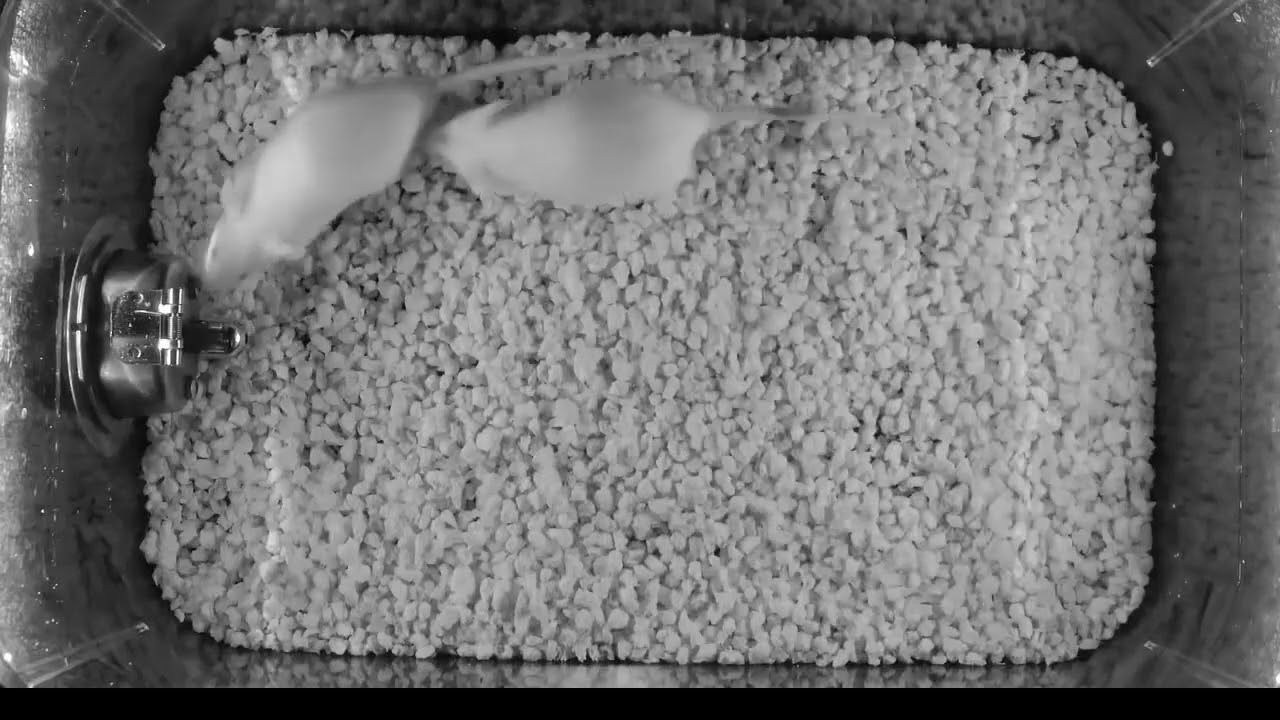
To our human eyes, a mouse's furred face doesn't betray much emotion. But if you watch the body language of a mouse who's reunited with one of her sisters after five days in a cage alone, you might suspect you know what she’s feeling.
The formerly isolated mouse chatters in squeaks too high for a human to hear. She follows her sister, crawling beneath the other mouse's body as if trying to get a hug. She looks like she's feeling what you or I feel when meeting a long-lost friend or a family member — maybe with more sniffing.
She looks like she's been lonely.
Loneliness isn't just for humans, and neither are its harms. Over the past decade or so, some researchers have come to believe that an animal's craving for the company of others isn't just a preference, but a basic, deeply held need. When we don't socialize enough, we feel the lack like hunger or thirst, they say. When we've had our fill of togetherness, we feel satisfied or quenched.
The amount of socializing a creature needs may be particular to that species, and even to that individual. Scientists have found within-species social differences in birds, monkeys, fish and even cockroaches.
Among humans, "you can feel lonely at a party, or you can feel fine alone in your office," says Kay Tye, a neuroscientist at the Salk Institute for Biological Studies in California. Whatever the ideal degree of togetherness, Tye and others think that an animal’s need to balance time alone and time with others represents a kind of homeostasis: an equilibrium that's critical for survival. Today, they are on a hunt to find where, in the brain, this equilibrium is controlled — and hoping their work will hold dividends for lonely humans.
A range of socializing
Beavers live with their immediate families. Starlings flock in huge murmurations. Adult male orangutans roam solo until it’s time to find a mate. What determines an animal's ideal amount of socializing?
Get the world’s most fascinating discoveries delivered straight to your inbox.
Tim Clutton-Brock, an evolutionary biologist retired from the University of Cambridge, says several factors can push species to become more or less social as they evolve. One is the need to keep warm. Another is foraging: Does searching for food in a group make it easier for that animal to eat, or harder? What about predation — is there safety in numbers, or is it better to be alone and inconspicuous? Do females need help from others to raise their young?

Different species, and even individuals within species, have different social needs. Orangutans, for example, are the most solitary of the great apes.
"Dealing with the neighbors" is also important, Clutton-Brock says. For example, the meerkats he studies in the Kalahari Desert live in territorial groups, and constant conflict means it’s better to live in packs. A wild meerkat who's separated from the group is visibly distressed and looks around constantly. "They very clearly get extremely worried," he says.
Within each species, Clutton-Brock says evolution has probably allowed for a range of personality types around a certain species average. "There are costs to too much anxiety" about being alone, he says, "and costs to too little anxiety." A species may do best with a mix of social styles.
Whatever an animal's right amount of social activity, research suggests there can be dire consequences to mental and physical health when it's not met. People who are socially isolated, or feel lonely, die sooner. Poor social connections are linked to heart disease and stroke. Certain female rats, when housed alone, are more likely to develop cancer.
Tye started investigating loneliness well before the pandemic brought the subject to the forefront. In 2016, she showed that certain neurons in the brainstem — the deepest, oldest part of the brain — are active in male mice who are isolated for a day and then meet another mouse. When scientists inhibited those neurons, the formerly isolated mice were more standoffish; when scientists activated the neurons, the mice were more eager to seek out company.
The researchers realized they might be getting a glimpse, Tye says, of "the cellular substrate of loneliness."
In 2019, Tye and coauthor Gillian Matthews proposed that those brainstem neurons are part of a system of social homeostasis. Like a thermostat, they theorized, a mouse's brain senses how much company the animal has been getting, and measures that against an ideal. This ideal can also be called a set point. In the human body, for instance, the set point for temperature is around 37 degrees Celsius (98.6 degrees Fahrenheit); when we deviate from that we'll shiver or sweat. Likewise, the researchers suggested, the mouse's brain drives its behaviors to maintain the right balance of social activity.
The scientists hypothesized that other animals, including humans, share this system. Though it's not easy to test such a thing in people, Tye did team up with a research group at the Massachusetts Institute of Technology for an experiment in which people sat alone in a room for 10 hours.
Afterward, subjects reported craving social interaction. When they viewed pictures of people laughing together, their brains lit up in the same region as the brains of fasting subjects who viewed pictures of food: an area, also within the brainstem, packed with dopamine neurons that are involved in cravings.

Our sense of touch may be an important part of our social thermostat.
For more evidence that this craving is part of a true homeostatic system, Catherine Dulac, a neuroscientist at Harvard University and the Howard Hughes Medical Institute, looked in another part of the brain: the hypothalamus, a deep region just above the brainstem that houses control centers for hunger, thirst and our need for sleep. It calibrates each of these basic needs using a kind of neural thermostat — or, as Dulac likes to call it, a "bean counter."
In the case of hunger, for example, scientists have found one set of neurons within the hypothalamus that drives appetite and tells an animal to eat. A separate set of neurons drives fullness — what biologists call satiety — and tells the animal to stop eating. Dulac guessed that she'd find a similar system in the hypothalamus for loneliness, comprising two sets of neurons: "one that encodes the need" for company, she says, "and one that encodes the satiety."
In a study published in 2025, she and her colleagues isolated adult female mice for five days. On days one, three and five, each isolated mouse got to have a 10-minute visit with her sister. Peering inside the heads of the mice undergoing these separations and reunions, the researchers saw just what they were looking for: One cluster of neurons in the hypothalamus started firing when animals were isolated, and turned off when they were reunited. A second cluster of neurons did the opposite.
What's more, when scientists used a technical trick called optogenetics to artificially activate the separation neurons every time the animals entered a certain chamber, the mice avoided spending time there. That suggested that these brain cells, when activated, give the mice a bad feeling. "It's unpleasant to be alone, in the same way it has been shown that it's unpleasant to be hungry," says Dulac, who coauthored an overview of social interaction as a fundamental need in the 2026 Annual Review of Neuroscience.
But activating the opposite cells — the reunion neurons — led the mice to spend more time in the chamber. These cells are connected to the brain's dopamine system, which doles out pleasure and rewards.
Aside from making us feel good or bad, Dulac says, the hallmark of a homeostatic system is a "rebound" effect — the greater the deprivation, the more an animal needs to make up for it. When we're parched, we drink more. And the researchers saw the same thing in their mice: The longer a mouse had been isolated, the more time she spent following, sniffing and squeaking to the other one.
Dulac says that her findings in the hypothalamus and Tye's in the brainstem probably represent different components of the same system. Other studies have found neurons in still more parts of the brain that may be involved.
Like our appetite for food, the mechanism for social homeostasis may be distributed through many parts of the brain, Tye says. After all, our brain needs to detect the amount of socializing we're getting, compare it to an ideal, and then drive our behavior so we get more or less company.
The scientists also believe that the circuitry that senses and manages loneliness is likely to be similar in the human and rodent brains. Unlike our more recently evolved cortex, our deep brain regions look much the same as what's inside a mouse's head. A lonely human may be feeling the effects of wiring laid down long ago in our evolution.
The importance of touch
After studying female mice, Dulac has now turned to studying male mice, who have competing social motivators because they're territorial toward other males.
Tye, for her part, has begun to look at females after studying males. So far, she's observed that they get more and more social over time — unlike the males, which become antisocial after two weeks in isolation and don't seem happy when reunited with other mice. "It's like avoidant, territorial, get-off-my-lawn vibes instead of wonderful-to-see-you-again vibes," Tye says. The scientists don't yet understand this fundamental sex difference.
Intriguingly, researchers have also observed an antisocial effect in human prisoners subjected to long-term solitary confinement. In addition to other psychological harms, prisoners may stop craving social contact, and start to fear it.
Besides attempting to understand the differences between chronic and short-term isolation, researchers are also trying to learn how creatures use their senses to gauge how much company they have.
In Dulac's experiments, vision didn't seem to be necessary: Blind mice reacted to separation similarly to sighted mice. Nor did scent or sounds hold the answer: When mice were physically separated by a perforated divider within the same cage — so they could still hear and smell their companions — they reacted as if they’d been fully isolated.
The only sense that seemed to matter was touch: The brush of another mouse's body told mice they had a friend nearby.
When the researchers lined a tube with soft cloth for mice to walk through, they saw that isolated animals preferred the soft tunnel to a hard one. Like a weighted blanket for humans, perhaps, the touch of the furry walls made the lonely mice feel a little better.
Ishmail Abdus-Saboor, a neurobiologist at Columbia University's Zuckerman Institute who studies touch and was a coauthor on Dulac's study, says the result didn't surprise him. "It is consistent with touch being perhaps one of the most essential sensations for well-being," he says.
Our sense of touch is not just one thing. Bodies have different pathways for processing different sensations, such as pain or itch — or social touches. We humans have specific neurons in the hairy parts of our skin, for example, that are activated by slow stroking. (Mice have related neurons.) And deep pressure, akin to a hug or a massage, activates a similar brain region to stroking touch.
Abdus-Saboor is now working with naked mole rats in his lab. These quirky, colony-living rodents are both the world's most social mammals, and conspicuously cuddly. He hopes studying them will provide more answers about the connection between touch and sociality. He even thinks they might be better models than mice for social touch in humans, because their nearly hairless skin is more similar to ours than a mouse's.

Naked mole rats are the only mammals that live in organized, cooperative colonies akin to those of honeybees or ants. They're also extremely cuddly.
These social touch neurons may carry signals from an animal's skin to its brain that tell its bean counter it's not alone, making the animal feel better. "If we can hijack this pathway, can this be used as a therapeutic to promote health and well-being? I think so," says Abdus-Saboor, who wrote an overview of social touch research in the 2026 Annual Review of Neuroscience.
Even before scientists use this research to develop new treatments, Dulac says it highlights the danger of solitary confinement in prisons. "When individuals are left alone, their brain is just sending this danger signal: 'You should not stay alone,'" she says.
Tye imagines that if scientists better understood the brain's social bean counter, they could one day find a way to lessen the health effects of isolation. For now, she and coauthors suggest that spending time in a variety of social settings is the best way to buffer yourself against discomfort.
Before Covid, Tye recalls, she was always with other people. Then, "during the pandemic, I was alone a lot. And it was really stressful for me," she says. She thinks that giving ourselves regular alone time, as well as time in small and large groups, can make us more tolerant of changes.
Related stories
Because we're not rodents, we might be able to get our social needs met — at least partially — in ways that they can't. We can connect with a loved one through a call or text. Still, Tye says, touch seems to be especially vital.
Abdus-Saboor, who is married with two children, says he's "very intentional" about touching his family: a supportive tap, a back rub. His kids are old enough to walk to school on their own, but he makes sure to check in before they go.
"It's like, 'Let me get that hug before you leave,'" he says.
This article originally appeared in Knowable Magazine, a nonprofit publication dedicated to making scientific knowledge accessible to all. Sign up for Knowable Magazine's newsletter.
Elizabeth Preston is a freelance science journalist and author of the new book The Creatures’ Guide to Caring. She lives near Boston.
You must confirm your public display name before commenting
Please logout and then login again, you will then be prompted to enter your display name.