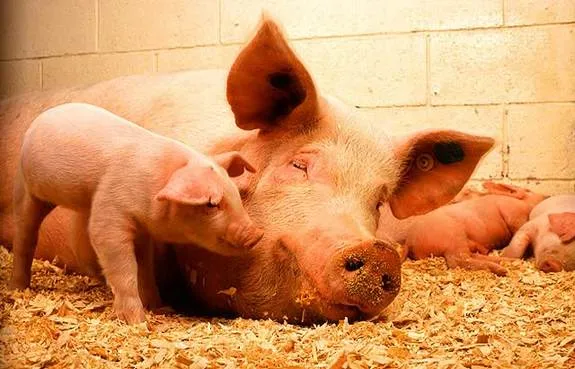
Swine Flu at County Fairs Is Back
Get the world’s most fascinating discoveries delivered straight to your inbox.
You are now subscribed
Your newsletter sign-up was successful
Want to add more newsletters?
Delivered Daily
Daily Newsletter
Sign up for the latest discoveries, groundbreaking research and fascinating breakthroughs that impact you and the wider world direct to your inbox.
Once a week
Life's Little Mysteries
Feed your curiosity with an exclusive mystery every week, solved with science and delivered direct to your inbox before it's seen anywhere else.
Once a week
How It Works
Sign up to our free science & technology newsletter for your weekly fix of fascinating articles, quick quizzes, amazing images, and more
Delivered daily
Space.com Newsletter
Breaking space news, the latest updates on rocket launches, skywatching events and more!
Once a month
Watch This Space
Sign up to our monthly entertainment newsletter to keep up with all our coverage of the latest sci-fi and space movies, tv shows, games and books.
Once a week
Night Sky This Week
Discover this week's must-see night sky events, moon phases, and stunning astrophotos. Sign up for our skywatching newsletter and explore the universe with us!
Join the club
Get full access to premium articles, exclusive features and a growing list of member rewards.
A relatively new strain of the swine flu virus that sickened more than 300 people last year is back again this summer, according to the Centers for Disease Control and Prevention.
The strain, called H3N2 variant virus, infected four people who visited a county agricultural fair in Indiana this month. None of the infected individuals were hospitalized, and none died.
Because this virus is typically transmitted from pigs to people, the CDC officials are urging people at high risk for flu complications — such as young children, the elderly and those with underlying health conditions — to avoid pigs at county fairs.
The first cases of people sick with the H3N2 variant virus were reported in 2011. In 2012, the virus caused 309 infections in 12 states, and 16 people were hospitalized. Because the 2013 strain is very similar to the 2012 strain, more cases of H3N2 variant virus could be detected this summer, the CDC said. Seasonal flu vaccines do not protect against H3N2 variant viruses.
Follow Rachael Rettner @RachaelRettner. Follow LiveScience @livescience, Facebook & Google+.
Get the world’s most fascinating discoveries delivered straight to your inbox.

Rachael is a Live Science contributor, and was a former channel editor and senior writer for Live Science between 2010 and 2022. She has a master's degree in journalism from New York University's Science, Health and Environmental Reporting Program. She also holds a B.S. in molecular biology and an M.S. in biology from the University of California, San Diego. Her work has appeared in Scienceline, The Washington Post and Scientific American.