The Good Thing About Herpes

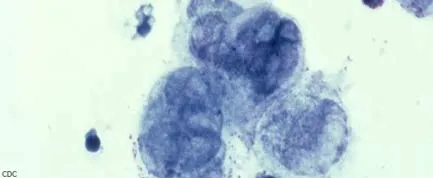
The herpes family of viruses can have a surprising upside--it can protect against the bubonic plague and other bacterial contagions, at least in mice. Research into whether a similar mechanism applies to humans and other mammalian hosts should be conducted, said viral immunologist Skip Virgin at Washington University School of Medicine in St. Louis. "There may be symbiotic advantages to chronic infections with these viruses." These new results do not mean people should go out and get infected with herpes, Virgin stressed. They probably already are. Nearly all humans become infected with multiple herpes virus family members during childhood. These germs not only include the herpes simplex viruses, which lead to cold sores and possibly genital herpes, but also the diseases responsible for chickenpox and "mono," as well as several less well-known ailments. Herpes infections have bedeviled animals for more than 100 million years. After the initial period of infection, these viruses enter a dormant state known as latency. Many lurk for the lifetime of their hosts "as permanent passengers" without causing overt symptoms, Virgin said. Virgin and his colleagues experimented with viruses highly similar genetically to ones that cause mono and other diseases in humans. These germs normally cause fatigue and ruffled fur in mice, although the researchers used dose levels too low to cause symptoms. The scientists discovered latent infections with these viruses could protect mice from bacterial infections, including Yersinia pestis, which causes bubonic plague, and Listeria monocytogenes, which causes one kind of food poisoning, findings detailed in the May 17 issue of the journal Nature. The herpes viruses spur the immune system to boost levels of a protein hormone called interferon gamma "that in effect puts some immune system soldiers on yellow alert, causing them to patrol for invaders with their eyes wide open and defense weapons ready," Virgin said. As a result, the bacteria grew more slowly and were less likely to kill the mice. Future research can investigate whether these latent infections protect against other viruses. Still, while people might benefit from symbiotic relationships with the herpes family of viruses, they can also have serious consequences, such as deafness, blindness, encephalitis and cancer. "The presence of these viruses seems to be a two-edged sword," Virgin told LiveScience. "I am quite concerned that we be sensitive to these true human tragedies while recognizing the potential of a new way to view these infections." Uncovering any potential benefits of these viruses in humans will prove hard, Virgin cautioned, "since nearly all humans are infected with these viruses at a young age, so it will be hard to find people without them for comparison."
Get the world’s most fascinating discoveries delivered straight to your inbox.