
 Live Science Plus


New coronavirus may spread as an airborne aerosol, like SARS
Aerosols likely pose the greatest danger in health care settings, but may also spread in some everyday scenarios.

Editor's note: This article was updated on April 1 to reflect new evidence that aerosols may drive COVID-19 transmission beyond the context of heath care settings.
The study described in this article was published in The New England Journal of Medicine on March 17. This article was originally published on March 13.
The novel coronavirus SARS-CoV-2 can survive in the air for several hours in fine particles known as aerosols, according to preliminary research.
The coronavirus, which causes the respiratory infection COVID-19, can be detected up to 3 hours after aerosolization and can infect cells throughout that time period, the study authors found. However, the study, first posted March 10 on the preprint database medRxiv, is still preliminary, because it has not undergone extensive peer-review. The authors did receive comments from one prospective scientific journal, and posted an updated version of the study on March 13 reflecting the revisions.
Assuming these initial results hold up to scrutiny, aerosol transmission of SARS-CoV-2 appears "plausible," the authors wrote — but several key questions remain unanswered.
"We still don't know how high a concentration of viable SARS-CoV-2 is needed in practice to infect a human being, though this is something we are looking to model in the future," co-author Dylan Morris, a graduate student in the Department of Ecology and Evolutionary Biology at Princeton University, told Live Science in an email. Morris and his colleagues tested whether viral particles from aerosols could infect cells grown in the lab, not actual human beings. More important, even if aerosol transmission can occur, it's unlikely to be the primary force driving the current pandemic, Morris added.
At the time the study was published, the scientific consensus was "that most transmission via respiratory secretions happens in the form of large respiratory droplets ... rather than small aerosols," Morris said. "Droplets, fortunately, are heavy enough that they don't travel very far" and instead fall from the air after traveling only a few feet.
Get the world’s most fascinating discoveries delivered straight to your inbox.
Aerosols, by contrast, can potentially travel across far greater distances; the virus that causes chickenpox, for example, can travel tens of yards from an infected person and incite secondary infections elsewhere in the environment, and can remain in an area even after the person who emitted them has left. However, in the current study, the researchers did not examine how far SARS-CoV-2 could conceivably travel through the air.
Based on research on other respiratory viruses, Morris and his co-authors originally stated that aerosolized SARS-CoV-2 likely isn't the primary driver of transmission in "everyday settings," but could pose a danger in health care settings where specialized equipment is used. However, a recent account of members in a large choir group who tested positive for COVID-19 after rehearsal raises the possibility that aerosols may drive transmission beyond the bounds of a hospital.
"It's now clear that aerosol risks are not negligible for everyday people, particularly in poorly-ventilated indoor areas," Morris wrote in a tweet posted March 31. That said, hospital settings still carry a "particularly elevated risk for aerosol transmission" of SARS-CoV-2, he noted.
Related: 10 deadly diseases that hopped across species
All About Coronavirus
Viral survival
To see how long SARS-CoV-2 survives as an aerosol, the researchers fed samples of the virus through a nebulizer and sprayed the aerosolized particles into a drum-like structure. They then took periodic samples from the drum and analyzed each one for viral genetic material, known as RNA.
The team was able to detect viral RNA throughout the course of their 3-hour experiment, but that alone does not guarantee that the remaining virus was viable.
"You find an RNA on a surface, that doesn't mean that the virus … could infect somebody," said Aubree Gordon, an associate professor of epidemiology at the University of Michigan School of Public Health, who was not involved in the study. To determine whether the virus was truly viable, the researchers grew the germ in cultured cells. These critical tests rendered the study "much stronger" than if the researchers had only looked for RNA, Gordon said.
The team also tracked how levels of the virus decayed over time by noting how its concentration declined from sample to sample. Using these measurements, they calculated the "half-life" of a virus in different environments, or how long it takes for the viral concentration to decrease by half.
"A basic principle of [viral] decay is that if you start out with more virus, you'll have detectable virus for longer," Morris said. "The estimated half-lives give us a sense of how long things would last if we started with different initial concentrations." In other words, knowing the half-life of a virus allows scientists to determine how long a particular virus can survive in different environments, regardless of how much virus happens to be present at the time of sampling.
Aerosolized virus showed a median half-life of about 1.1-1.2 hours, similar to the related coronavirus that causes SARS, the authors noted.
The team also examined how long the virus remains viable on copper, stainless steel, plastic and cardboard. Viable virus could not be detected on copper after 4 hours, or after 24 hours on cardboard. The germ survived best on plastic and stainless steel, remaining viable for up to 72 hours, although its overall concentration fell significantly by that time. The half-life of the virus varied on each surface, as well; the virus showed a half-life of about 0.8 hours on copper, 3.46 hours on cardboard, 5.6 hours on steel and 6.8 hours on plastic.
The cardboard measures might raise eyebrows because many packages shipped through the mail are made of cardboard. But, while 24 hours sounds like a long time, Morris said that the authors "advise caution" in interpreting these results. "Our cardboard data were notably noisier than our data from other surfaces," meaning the results differed noticeably when they repeated the experiment, he said.
Additionally, "we do not know how much virus is actually needed to infect a human being with high probability, nor how easily the virus is transferred from the cardboard to one's hand when touching a package," he added.
What would aerosol transmission really mean for spread?
The notion of viral particles hanging in the air, ready to infect passersby, may seem scary, but to become an aerosol, droplets containing viral particles must first be transformed into a light mist, thin enough to be supported by the air. By definition, aerosols are less than 0.0002 inches (5 microns) in diameter, while typical respiratory droplets exceed this size.
During the SARS outbreak in 2002-2003, aerosols drove severe bouts of viral spread in health care settings, Gordon said.
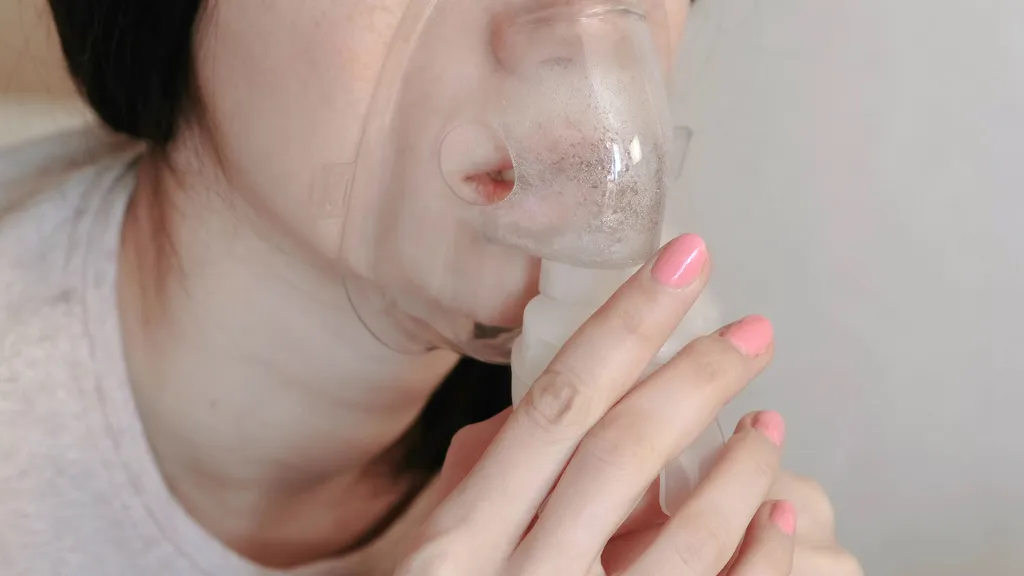
Specifically, the use of intubation — where a tube is inserted into a patient's windpipe — and nebulizers — which transform medicines into an inhalable mist — generated aerosols and increased the risk of viral transmission to health care providers, she said. Additionally, aerosols released in stool likely drove two SARS superspreader events in non-health care settings, one in an apartment complex and the other in a hotel, she said.
If inhaled, fine aerosols often travel deeper into the body than heavy respiratory droplets, and spark severe infection in the lungs, she added.
She and other experts already assumed that aerosol transmission of SARS-CoV-2 "may be a concern, because we had seen that with SARS," Gordon said. While the new study supports their speculations, she said that scientists should be "cautious" about how they interpret the results.
"We want to see if we do see virus in the air in health care settings," she said. In other words, samples of actual hospital air must be taken to determine if SARS-CoV-2 aerosols are present at significant levels, and what that means for health care providers and their patients.
- Going viral: 6 new findings about viruses
- The 12 deadliest viruses on Earth
- Top 10 mysterious diseases
Originally published on Live Science.

OFFER: Save at least 53% with our latest magazine deal!
With impressive cutaway illustrations that show how things function, and mindblowing photography of the world’s most inspiring spectacles, How It Works represents the pinnacle of engaging, factual fun for a mainstream audience keen to keep up with the latest tech and the most impressive phenomena on the planet and beyond. Written and presented in a style that makes even the most complex subjects interesting and easy to understand, How It Works is enjoyed by readers of all ages.

Nicoletta Lanese is the health channel editor at Live Science and was previously a news editor and staff writer at the site. She is a recipient of the 2026 AHCJ International Health Study Fellowship, with a project focused on antibiotic stewardship practices in Japan and the U.S. They hold a graduate certificate in science communication from UC Santa Cruz and degrees in neuroscience and dance from the University of Florida. Beyond Live Science, Lanese's work has appeared in The Scientist, Science News, the Mercury News, Mongabay and Stanford Medicine Magazine, among other outlets. Based in NYC, she also remains involved in dance and performs in local choreographers' work.