Scientists Erase Memories in Rat Brains

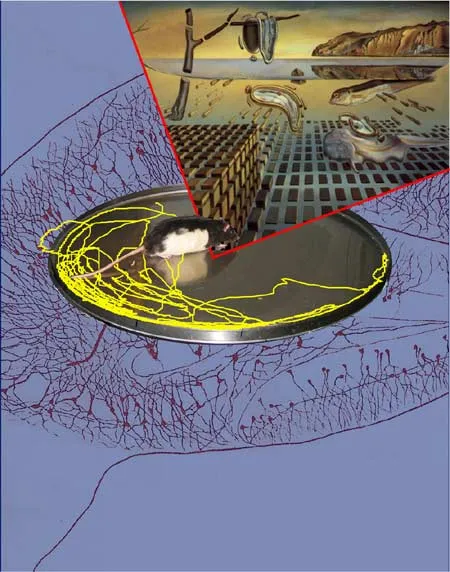
Scientists have for the first time erased long-term memories in rats and also directly seen how the brain is changed by learning.
The research points to potential human benefits.
These findings could prove key "to understanding how memories can be augmented, for example in diseases that affect memory, like Alzheimer's," said neuroscientist Mark Bear at the Picower Institute for Learning and Memory at MIT.
The research could also help treat pain that does not go away, "like neuropathic pain, where people have a moderately severe injury, typically to the hands or feet, and instead of going away in a couple of hours just perpetuates," neurologist and molecular biologist Todd Sacktor at the State University of New York Downstate Medical Center in Brooklyn said in a phone interview.
The investigators separately examined the hippocampus, a structure critical for memory. Three decades ago, scientists discovered the existence of persistent increases in the strength of the connections, or synapses, linking brain cells in the hippocampus. This mechanism is largely believed to help in memory formation.
Remarkably, however, until now there was no evidence confirming a link between learning and this synaptic strengthening. One major problem was that these changes in the hippocampus during learning are few and far between.
"It was getting fairly embarrassing to the field that it had yet to be directly observed," Bear told LiveScience.
Get the world’s most fascinating discoveries delivered straight to your inbox.
Sacktor and his colleagues found they could erase long-term memories in rats by suppressing this synaptic strengthening.
"This is the first time we can show you can erase long-term memories this way," Sacktor said.
Sacktor and his collaborators worked on rats trained to avoid a shock zone on a rotating platform. If they received an injection of a chemical dubbed ZIP into the hippocampus one day to one month after they learned to keep away from the shock zone, they no longer shunned it.
"It doesn't have an effect on short-term memory, and afterward they can continue to store long-term memories," Sacktor said.
Bear and his colleagues experimented in rats trained to avoid a shock zone in a darkened area of a box. Using an electrode array that enabled Bear and his collaborators to listen in on many places in the hippocampus at the same time, they eavesdropped on the hard-to-detect synaptic strengthening take place.
"This same process might be hijacked in psychiatric diseases, such as anxiety disorders and even depression," Bear said. "What is cool is that we know how to reverse some of the changes we measure after learning, which suggests the possibility of new treatments."
Both research teams reported their findings in the Aug. 25 issue of the journal Science.