















The 10 biggest explosions in history
Explosions, both natural and man-made, have caused awe and terror for centuries. Here are 10 of the biggest recorded blasts.


Explosions, both natural and man-made, have caused awe and terror for centuries. From tragic munitions accidents, to intentional acts of wartime destruction, to spontaneous cosmic cataclysms, here are 10 of the most powerful explosions in recorded history... with a surprise honorable mention at the end.
Trinity blast - the first atom bomb in history

The first atom bomb in history, dubbed "the gadget," was detonated at the Trinity Site near Alamogordo, N.M., in 1945, exploding with a force of roughly 20 kilotons of TNT. Project leader J. Robert Oppenheimer later said that while he watched the test, he thought of a line from the Hindu scripture the Bhagavad Gita: "I am become Death, the destroyer of worlds." Nuclear weapons later ended World War II and ushered in decades of fear of nuclear annihilation. Scientists recently found that civilians in New Mexico may have been exposed to thousands of times the recommended level of public radiation.
Jack Aeby took the only known well-exposed color photograph of the detonation (shown here).
The Chernobyl nuclear disaster

The Chernobyl reactor after the explosion on April 26, 1986.
In 1986, a nuclear reactor exploded at Chernobyl in Ukraine, then part of the Soviet Union. It was the worst nuclear accident in history. The blast, which blew the 2,000-ton lid off the reactor, sent out 400 times more radioactive fallout than the Hiroshima bomb, contaminating more than 77,000 square miles (200,000 square km) of Europe. Roughly 600,000 people were exposed to high doses of radiation, and more than 350,000 people had to be evacuated from contaminated areas.
Following the accident, authorities established the 1,040 square mile (2,700 square kilometer) Chernobyl Exclusion Zone around the radius of the plant, which remains off-limits to people today (though some individuals have returned to settle there illegally). It is still considered one of the world's most radioactive places.
Texas City Disaster

A fire onboard the cargo ship SS Grandcamp docked at Texas City in 1947 detonated 2,300 tons of ammonium nitrate, a compound used in fertilizers and high explosives. The explosion blew two planes out of the sky and triggered a chain reaction that detonated nearby refineries as well as a neighboring cargo ship carrying another 1,000 tons of ammonium nitrate. The disaster killed roughly 600 people and injured roughly 3,500, and is generally considered the worst industrial accident in U.S. history.
Get the world’s most fascinating discoveries delivered straight to your inbox.
Halifax Explosion

In 1917, a French cargo ship fully loaded with explosives for World War I accidentally collided with a Belgian vessel in the harbor of Halifax, Canada. It exploded with more force than any man-made explosion before it, equivalent to roughly 3 kilotons of TNT. The blast sent a white plume billowing 20,000 feet (6,100 meters) above the city and provoked a tsunami that washed up as high as 60 feet (18 meters). For nearly 1.2 miles (2 km) surrounding the blast center, there was total devastation, and roughly 2,000 people were killed and 9,000 injured. It remains the world's largest artificial accidental explosion.
Tunguska Explosion

The mysterious explosion near the Podkamennaya Tunguska River in 1908 flattened some 500,000 acres (2,000 square kilometers) of Siberian forest, an area nearly the size of Tokyo. Scientists think the blast was caused by a cosmic impact from an asteroid or comet perhaps 65 feet (20 meters) in diameter and 185,000 metric tons in mass — more than seven times that of the Titanic. The resulting explosion could have been roughly as strong as four megatons of TNT — 250 times more powerful than the atom bomb dropped on Hiroshima.
Mount Tambora
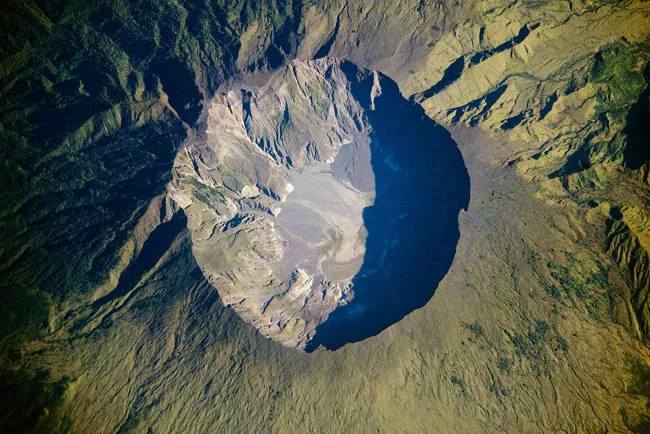
In 1815, Mount Tambora in Indonesia exploded with the force of roughly 1,000 megatons of TNT, the largest volcanic eruption in recorded history. The blast hurled out roughly 140 billion tons of magma and not only killed more than 71,000 people on the island of Sumbawa and nearby Lombok, but the ash it released created global climate anomalies. The following year, 1816, became known as the Year Without a Summer, with snow falling in June in Albany, N.Y., river ice seen in July in Pennsylvania, and hundreds of thousands of people dying of famine worldwide.
K-T Extinction Impact Event
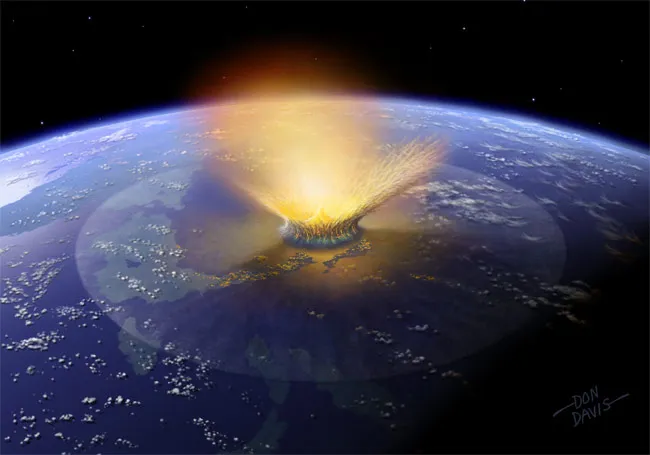
The Age of Dinosaurs ended in a cataclysm roughly 65 million years ago that killed off roughly half of all species on the planet. Although research suggests the planet was on the verge of an environmental crisis before the Cretaceous-Tertiary or K-T extinction, the straw that broke the dinosaur's back is widely thought to have been a cosmic impact with an asteroid or comet some six miles (10 km) wide, exploding with the force of roughly 10,000 gigatons of TNT, or some 1,000 times the size of the world's nuclear arsenal. The collision would have blanketed the world with dust, ignited global firestorms and triggered tsunamis thousands of feet high. A vast crater roughly 110 miles (180 km) wide at Chicxulub on the coast of Mexico may be the blast site.
Comet Shoemaker-Levy 9

The precise age of the Shoemaker Impact Structure in Australia is unknown, but it is estimated between 1000 and 600 million years ago.
The comet Shoemaker-Levy 9 collided spectacularly with Jupiter in 1994. The giant planet's gravitational pull ripped the comet apart into fragments up to 1.8 miles (3 km) wide, and they struck at 37 miles (60 km) per second, resulting in 21 visible impacts. The largest collision created a fireball that rose about 1,800 miles (3,000 km) above the Jovian cloudtops as well as a giant dark spot more than 7,460 miles (12,000 km) across — about the size of the Earth — and was estimated to have exploded with the force of 6,000 gigatons of TNT.
Shadow-casting Supernova

Supernovas are exploding stars that often briefly outshine entire galaxies. The brightest recorded supernova in history was sighted in the constellation Lupus (Latin for wolf) in the spring of 1006. The extraordinary golden explosion now known as SN 1006 took place roughly 7,100 light years away in a fairly nearby part of the galaxy, and was bright enough to cast shadows and read by at night, remaining visible for months in the daytime.
This blast has some recent competition. In 2016, astronomers detected another ultrabright supernova, named SN2016aps, which emitted more light than any supernova ever recorded. However, because this blast occurred 3.6 billion light-years from Earth, only the best scientific telescopes observed it.
The biggest explosion since the Big Bang
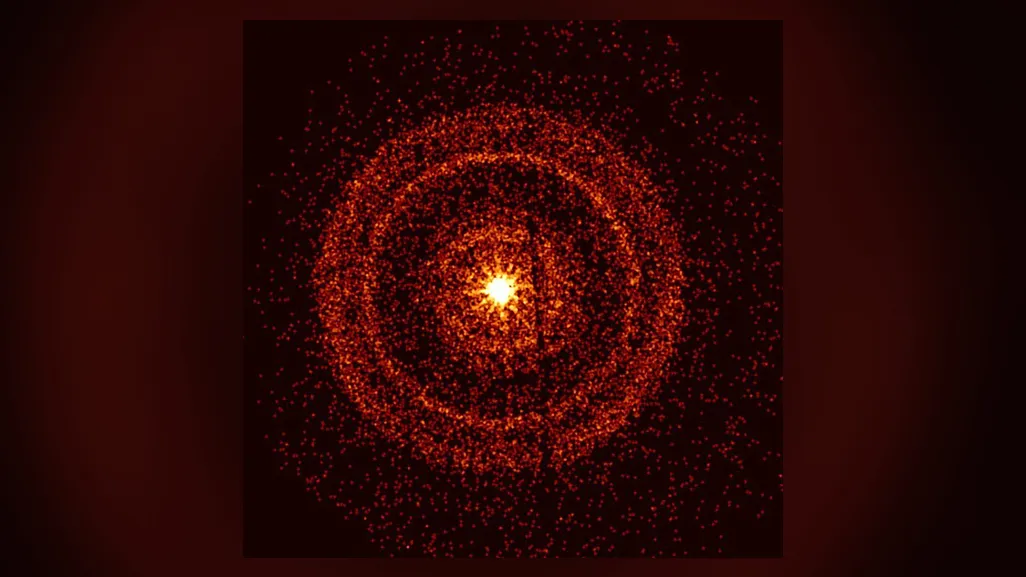
Gamma-ray bursts (GRBs) are the most powerful explosions known in the universe. On October 9, 2022, astronomers spotted the brightest GRB ever recorded, launched across space when a massive star located around 2.4 billion light-years from Earth collapsed, birthing a black hole. The GRB, officially designated GRB 221009A but nicknamed the BOAT, or the brightest of all time, is thought to be brighter than other highly energetic GRBs by a factor of at least 10. Scientists have dubbed it the biggest explosion in the universe since the Big Bang.
Oh, and speaking of which ...
Honorable mention: The Big Bang

The universe was born in the Big Bang, theorists say. Although it is often thought of as an explosion — perhaps because of its very name — it actually wasn't. In the very beginning, the universe was super-hot and extraordinarily dense. The common misconception is that the universe then exploded out from a single, central point into space. The reality appears to be much stranger — instead, the fabric of space itself seems to have stretched, and as it expanded it carried galaxies along with it like raisins in a rising loaf of bread.

- Brandon Specktor Editor