In 2014, 139 new species of plants and animals were discovered in parts of Cambodia, Laos, Myanmar, Thailand and Vietnam, an area collectively known as the Greater Mekong region. This list of new species was recently published by the World Wildlife Fund (WWF), which seeks to preserve the Greater Mekong as one of the most biologically diverse regions on Earth. Here are some of the most incredible creatures and plants that researchers uncovered last year. [Read full story about the newly discovered species]
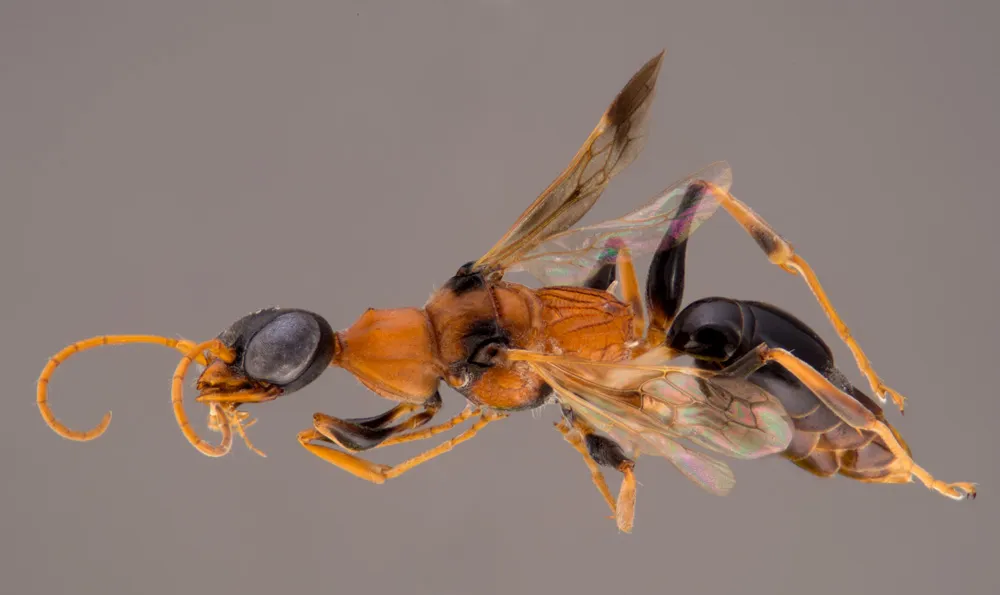
Harry Potter-inspired wasp
The Ampulex dementor, also known as the soul-sucking dementor wasp, instills fear with its appearance alone. Also scary: its venom turns the wasp's favorite prey, cockroaches, into passive, immobilized zombies. (Credit: Michael Ohl/Museum fur Naturkunde)
Garnering the wild title of 10,000th known reptile species, the Cyrtodactylus vilaphongi bears a skin pattern reminiscent of zebras. (Credit: Truong Nguyen)
Chameleon, wait, frog?
This talented little amphibian, the Gracixalus lumarius, can change colors to protect itself. It's also distinguishable from other tree frogs because of the sandpaperlike skin, or spikes, that line its back. (Credit: Jodi Rowley/Australian Museum)
Sign up for the Live Science daily newsletter now
Get the world’s most fascinating discoveries delivered straight to your inbox.
Change in action
A close-up of this skilled amphibian, the Gracixalus lumarius, in action. At dusk, the frog typically turns from yellow to dull brown. (Credit: Jodi Rowley/Australian Museum)
What large teeth you have...
If ever there were a vampire bat, the Hypsugo dolichodon would be it. The bat's favorite prey, hard-shelled insects, don't stand a chance against these massive canines. (Credit: Judith L. Eger)
Sneaky snake
This wolf snake, the Lycodon zoosvictoriae, is stealthy thanks to its "flying bat" pattern, which enables it to melt into the background on trees and mosses in its home in Cambodia. (Credit: Neang Thy MoE/FFI)
Names have been changed to protect the innocent
These orchids are so rare that the scientists credited with discovering them considered not publishing their findings, lest they draw the attention of rare plant collectors. The researchers ultimately decided to make their findings public in order to better protect these beautiful plants. (Credit: Jacob Phelps)
A long way from home
The closest relative to this feathered coral, Ovabunda andamanensis, resides far from the Greater Mekong region in the waters off the coast of Africa. (Credit: Michael Janes)
It was THIS big
The new species list also boasts the world's second-largest insect, a 21-inch (54 centimeters) Phryganistria Heusii Yentuensis, or stick insect. (Credit: Jerome Constant)
Royalty in our presence
Four new species of stunning Thai "Princess" moths were also discovered in 2014. Here, the elegant coloring of the Sirindhornia spp, is pictured. (Credit: Nantasak Pinkaew)
Up close and personal
One of three new species of stunning Thai "Princess" moths, the Sirindhornia spp, is pictured here. (Credit: Nantasak Pinkaew)
I'm big like my cousin
From Myanmar, a new crocodile newt, the Tylototriton shanorum, reared its tiny head. (Credit: Tim Johnson)
For the science geek in everyone, Live Science offers a fascinating window into the natural and technological world, delivering comprehensive and compelling news and analysis on everything from dinosaur discoveries, archaeological finds and amazing animals to health, innovation and wearable technology. We aim to empower and inspire our readers with the tools needed to understand the world and appreciate its everyday awe.