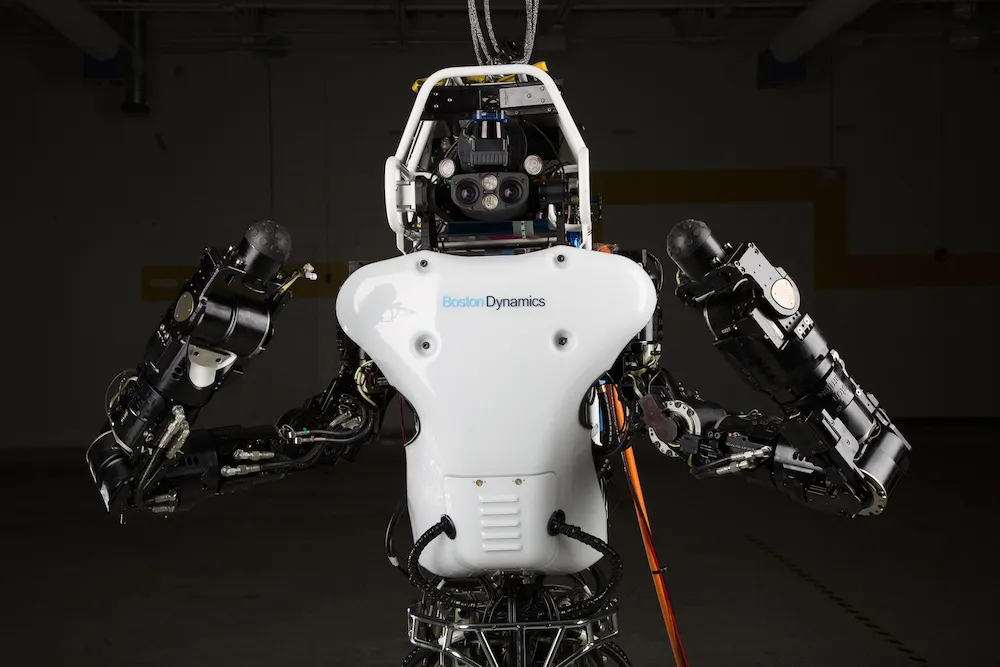
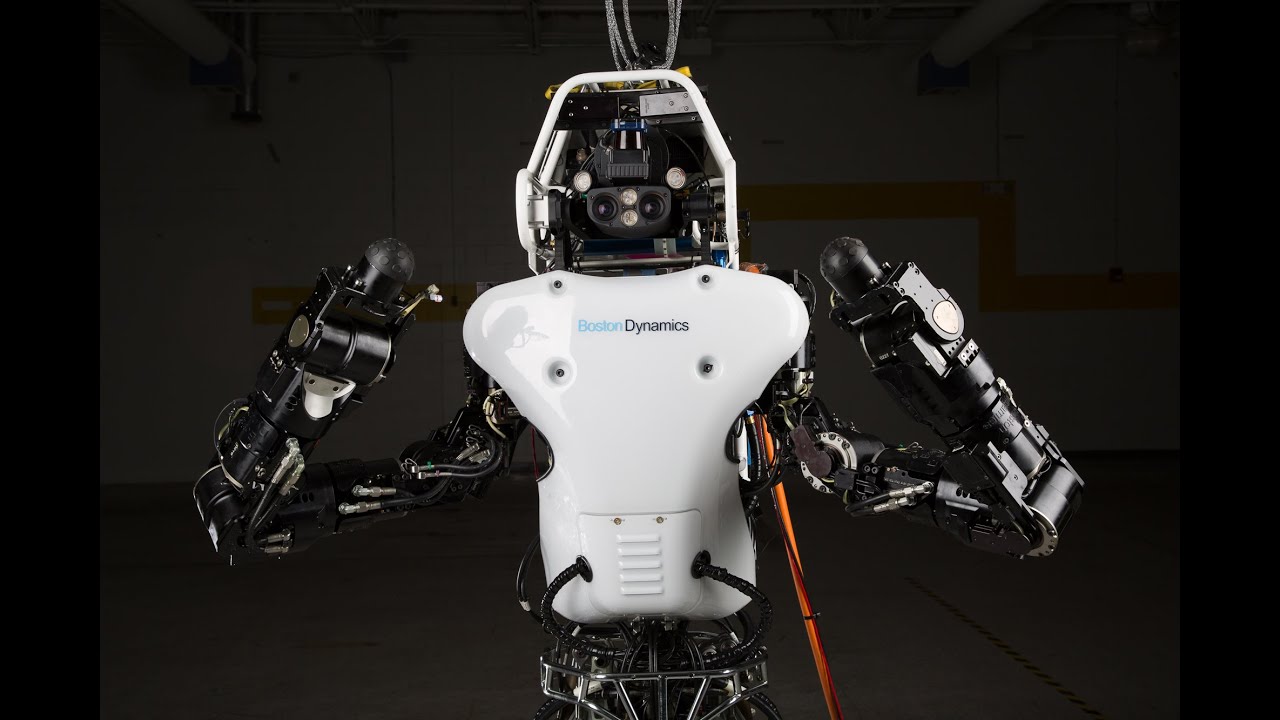
What do you call a robot that can drive a car, break down walls and scale buildings? Hint: It's not "The Terminator." This super-capable bot's name is Atlas, and it was created to save lives, not destroy them.
The Defense Advanced Research Projects Agency (DARPA), the branch of the U.S. Department of Defense charged with developing new technologies for the military, recently upgraded its Atlas robot in preparation for the final round of the DARPA Robotics Challenge (DRC). The design and development competition began in 2012, and the last round is set to take place June 5-6 in California.
Approximately 20 teams will be competing in the challenge and are tasked with designing and testing a robot that can save human lives after a natural disaster, such as an earthquake or a tsunami. [Images: DARPA Robotics Challenge]
Latest Videos From
Seven of the teams that made it to the final round of the DRC will be using the DARPA-developed Atlas robot, which has been significantly upgraded for this final test of its abilities. The bot's lower legs and feet are all that remain from the original design of this humanoid robot. The rest of the bot has been totally revamped, according to DARPA officials.
The most significant changes to Atlas' design have to do with the robot's power supply and hydraulic pump (the mechanism that allows the bot to stand, walk, use tools and perform a variety of other movements). Unlike in previous rounds, the engineers who control the robots will not be permitted to attach their bots to any kind of wires or tethers, which is why Atlas now needs a lithium-ion battery pack.
In fact, balance will be of the utmost importance to all teams participating in the final round of the DRC. The untethered bots won't be getting assistance from robotics teams if they fall over or get stuck during any stage of the competition, according to DARPA officials. In keeping with the new "no wires" clause, fall arrestors — cables that help the robot right itself if it falls over or becomes unstable — will not be permitted. The wired communications tethers that previously helped teams control their bots will also be prohibited.
The first physical tests of the robots took place in December 2013 at the Homestead Miami Speedway in Florida. The bots had to drive a vehicle through a designated course, make their way through uneven terrain littered with rubble, clear debris from a doorway and climb up a ladder. To further test their dexterity, each team's robot had to connect a hose to a spigot, open different kinds of doors, close a series of valves and cut through drywall using power tools.
The bots will likely face similar challenges at this year's final in Pomona, California, but this time around each team will have to run their robot through the course much faster — in one hour instead of four, according to DARPA officials.
And in case all of these new regulations aren't enough, DARPA announced that it will intentionally "degrade communications between the robots and human operators working at a distance" in order to replicate conditions that these robots would likely face in a real-life disaster zone.
But the robots left standing after this brutal competition will be well rewarded. The winning team will secure $2 million. DARPA also recently announced that the runner-up in the contest will be awarded $1 million and the third-place team will walk away with $500,000.
Follow Elizabeth Palermo @techEpalermo. Follow Live Science @livescience, Facebook & Google+. Original article on Live Science.

 Live Science Plus