
 Live Science Plus


The Maya: History, civilization & gods
The Maya civilization stretched throughout Central America and reached its peak during the first millennium A.D.



The term "Maya" refers to both a modern-day group of people who live across the globe and their ancestors who built an ancient civilization that stretched across much of Central America. The Maya civilization reached its peak during the first millennium A.D., and Maya ruins can still be seen across Central America.
The Maya civilization was never unified; instead it consisted of numerous small states, each centered on a city ruled by a king. Sometimes, a stronger Maya state would dominate a weaker state and demand tribute and labor from it.
Mayan origins
Nomadic hunter-gatherers had a presence in Central America for thousands of years. However, permanent village really took off when these people began cultivating maize in what archaeologists call the Preclassic period (1800 B.C. to A.D. 250). This lead to the creation of early Maya cities.
"Effective farming, as expressed by densely inhabited villages, was an innovation of the Preclassic period," wrote Michael Coe, the late emeritus professor of anthropology at Yale University, in his book "The Maya" (Thames and Hudson, 2015).
According to Coe, farming became more effective during this period, likely because of the breeding of more productive forms of maize, and perhaps more importantly, the introduction of the "nixtamal" process. In this process, maize was soaked in lime, or something similar, and cooked, which "enormously increased the nutritional value of corn," Coe wrote. Maize complemented squash, bean, chili pepper and manioc (or cassava), which were already being used by the Maya, researchers reported in 2014 in the Journal of Archaeological Science.
During this time, the Maya were likely influenced by the Olmecs, a civilization to the west of them in the modern-day Mexican states of Veracruz and Tabasco. The Olmec people may have initially devised the long-count calendar that the Maya would become famous for, Coe wrote. However, the discovery of a ceremonial site dated to 1000 B.C. at Ceibal, an ancient Maya site, implies that the relationship between the Maya and Olmecs was more complicated than previously thought. The ceremonial compound dates back 200 years before similar structures that were built by the Olmecs, suggesting that they did not inspire the Maya.
Archaeologists have found that early Maya cities were sometimes carefully planned. Nixtun-Ch'ich, in modern-day Petén, Guatemala, had pyramids, temples and other structures arranged using a grid system, which demonstrates urban planning. The city flourished between 600 B.C. and 300 B.C.
Get the world’s most fascinating discoveries delivered straight to your inbox.
Maya calendar

A system of writing that used symbols called glyphs to represent words or sounds was developed and frequently inscribed on buildings, steles, artifacts and books called codices.
The Maya calendar system was complicated. "1,700 years ago, speakers of proto-Ch'olan, the ancestor for three Maya languages still in use, had developed a calendar of 18 20-day months plus a set of five days," wrote Weldon Lamb, a retired adjunct professor of anthropology at New Mexico State University, in his book "The Maya Calendar: A Book of Months" (University of Oklahoma Press, 2017).
This system also included what scholars call a "long-count" calendar that kept track of time by using different units, ranging in length from a single day to millions of years.
The b’ak’tun is a cycle of the calendar that is 144,000 days or nearly 400 years long, and the Maya believed 13 b’ak’tuns represented a full cycle of creation. The 13th b’ak’tun ended on December 21 2012, giving rise to the popular belief that the world would end on that day. However, the long-count calendar did not predict the end of the world in 2012. “The Maya had several rarely used units that were even larger than b'ak'tuns, giving them the capacity to count millions of years into the future,” said Walter Witschey, a retired archaeologist and Maya expert at Longwood University. The unit in millions of years provides evidence that the Maya did not believe the world was ending at the end of the 13th b’ak’tun.
The Maya calendar system shares many similarities with modern calendars, according to Meaghan Peuramaki-Brown, an archaeologist and associate professor at Athabasca University, an online university in Canada. "The combination of multiple cyclical calendars (e.g., our lunar months and solar years) and a linear year count (e.g., 2020, 2021, 2022), would have been familiar to the ancient Maya. When you understand the logic and mechanics behind these systems, their similarities aren't surprising, as they are both based on common observable natural phenomena," Peuramaki-Brown told All About History magazine.
Maya civilization at its peak
The ancient Maya reached a peak between A.D. 250 and 900, Coe wrote. During this time which archaeologists call the Classic period, numerous Maya cities thrived throughout Central America.
The civilization "reached intellectual and artistic heights which no other in the New World, and few in Europe, could match at the time," Coe wrote. "Large populations, a flourishing economy, and widespread trade were typical of the Classic [period]," he wrote, noting that warfare was also quite common.
The Maya civilization was influenced by Teotihuacán, the largest city in the Western Hemisphere before the 15th century, which was located about 30 miles (50 kilometers) northeast of modern-day Mexico City. Evidence of Teotihuacán's influence comes from inscriptions found in the Maya city of Tikal, in modern-day Guatemala.
According to the inscriptions, an early Maya ruler named Siyaj K'ak, who may have come from Tikal, ascended the throne on Sept. 13, A.D. 379, and is depicted wearing feathers and shells and holding an atlatl (spear-thrower), which are features associated with Teotihuacán, wrote art historian John Montgomery in his book "Tikal: An Illustrated History of the Mayan Capital" (Hippocrene Books, 2001). A stele discovered at El Achiotal, a Maya site near Tikal, also supports the idea that Teotihuacán controlled or heavily influenced Tikal for a time, with the king of Teotihuacán overthrowing the leader of Tikal and replacing them with one of his own vassals.
The numerous cities found throughout the Maya world each had their own wonders that made them unique. Tikal, for instance, is known for its multiple pyramids. Starting at least as early as A.D. 672, the city's rulers constructed a twin pyramid complex at the end of every K'atun, or 20-year period. Each of these pyramids was flat-topped, built adjacent to its twin and contained a staircase on each of its four sides. Between the twin pyramids was a plaza that had structures laid out to the north and south.
Another example of a unique city is Copán, a Maya city in modern-day Honduras known for its "Temple of the Hieroglyphic Stairway." This pyramid-like structure has more than 2,000 glyphs embellishing a flight of 63 steps — the longest ancient Maya inscription known to exist. The glyphs appear to tell the history of the city's rulers.
Palenque, a Maya city in modern-day Mexico, is known for its soft limestone sculpture and the incredible burial of Pakal, one of its kings, deep inside a pyramid. When Pakal died at about age 80, he was buried along with five or six human sacrifices in a jade-filled tomb (including a jade funerary mask that he wore). His sarcophagus shows scenes of the king's rebirth and depictions of his ancestors in the form of plants. The tomb was rediscovered in 1952 and is "the American equivalent, if there is one, to King Tut's tomb," said archaeologist David Stuart in an online lecture for National Geographic.
Not all Maya settlements were controlled by a king or elite member of society. At the site of Cerén, a Maya village in El Salvador that was buried by a volcanic eruption 1,400 years ago, archaeologists found evidence that there was no elite class in control and that the village seems to have been managed communally, perhaps by local elders, Live Science previously reported.

A photograph of the Pyramid of the Moon in Teotihuacan, Mexico
End of the Maya?
Contrary to popular belief, the Maya civilization did not vanish. It's true that many southern cities, including Tikal, Copán and Palenque, were abandoned around 1,100 years ago. Drought, deforestation, war and climate change have all been suggested as potential causes of this. Drought may have played a particularly important role, and a study on minerals from an underwater cave in Belize shows that a drought ravaged parts of Central America between A.D. 800 and 900, Live Science previously reported.
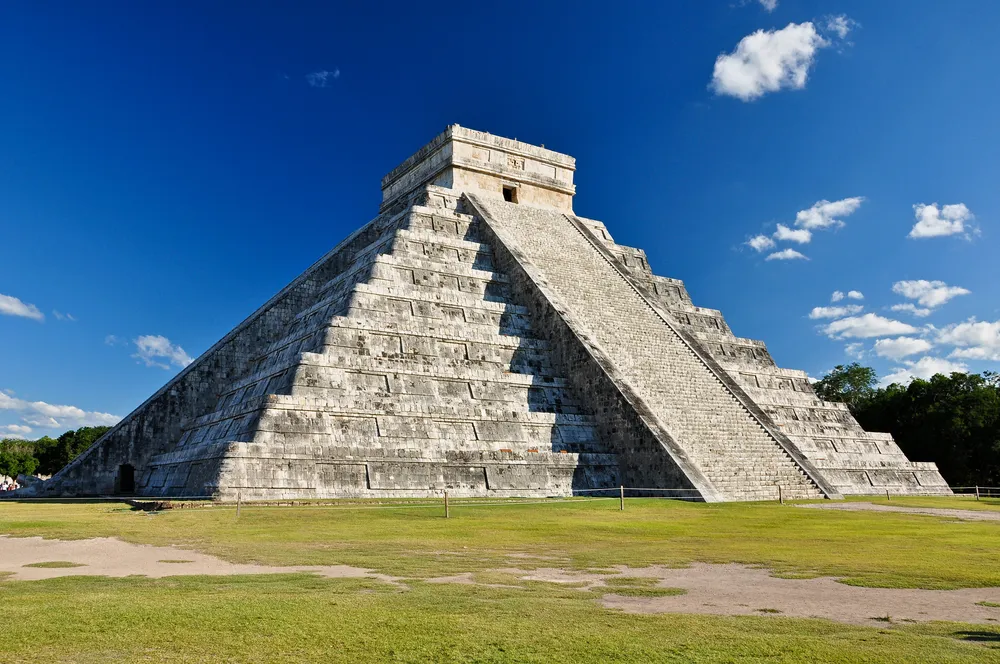
However, it is important to note that other Maya cities, such as Chichén Itzá, grew during and after the ninth century, at least for a time. Chichén Itzá was founded around the fifth century, but it grew to become one of the most important cities in the Maya world when power shifted from the southern lowlands to the Yucatan peninsula in the north during the tenth century.
Chichén Itzá features several ball courts, including the largest example in the Americas that is longer than a modern-day football field. The court's rings, through which competing teams tried to score, rose about 20 feet (6 meters) off the ground, about twice the height of a modern-day NBA net. The rules for the Maya ball game are not well understood, but the increase in ballcourts during the Classic period indicates that the Maya continued to thrive.
Council houses, which were gathering places for people in a community, played an important role in some of the Maya towns and cities that flourished after the ninth century.
When the Spanish arrived in Central America in the 16th century, the diseases they brought devastated the Maya. Additionally, the Spanish forced many of the Maya to convert to Christianity, going so far as to burn their religious books. This is the reason why so few Maya codices survive today.
However, Maya people live on today and can be found all over the world. "Millions of Maya people live in Central America and throughout the world. The Maya are not a single entity, a single community, or a single ethnic group. They speak many languages, including Mayan languages (Yucatec, Quiche, Kekchi and Mopan), Spanish and English. However, the Maya are an indigenous group tied both to their distant past as well as to events of the last several hundred years," wrote Richard Leventhal, Carlos Chan Espinosa and Cristina Coc in the April 2012 edition of Expedition magazine, a peer-reviewed magazine from the Penn Museum in Philadelphia.

Stone relief carvings at Chichén Itzá.
Mythical origins
The ancient Maya had a lengthy and complicated mythical origin story that was recorded by the Quiché, or K'iche Maya (who lived in what is now Guatemala) in the Popol Vuh, the "Book of Counsel," Coe wrote in his book. The Popol Vuh was written between 1554 and 1558, according to Britannica, during the protracted conquest of the region by Spanish forces. The stories in the Popol Vuh tell how the forefather gods Tepew and Q'ukumatz "brought forth the earth from a watery void, and endowed it with animals and plants."
Creating sentient beings proved more difficult, but eventually humans were created, including the hero twins, Hunahpu and Xbalanque, who embarked on a series of adventures, which included defeating the lords of the underworld. Their journey climaxed with the resurrection of their father, the maize god. "It seems clear that this whole mythic cycle was closely related to maize fertility," Coe wrote.
The Maya gods
The late Robert Sharer, who was a professor of anthropology at the University of Pennsylvania, noted in his book "Daily Life in Maya Civilization" (Greenwood Press, 2009) that the ancient Maya believed everything "was imbued in different degrees with an unseen power or sacred quality," called k'uh, which meant "divine or sacredness."
"The universe of the ancient Maya was composed of kab, or Earth (the visible domain of the Maya people), kan, or the sky above (the invisible realm of celestial deities), and xibalba, or the watery underworld below (the invisible realm of the underworld deities)," Sharer wrote.
Caves played a special role in Maya religion, as they were seen as entranceways to the underworld. "These were especially sacred and dangerous places where the dead were buried and special rituals for the ancestors conducted," Sharer wrote.
Sharer noted that the ancient Maya followed a number of deities, the most important of which was Itzamnaaj. "In his various aspects, Itzamnaaj was the lord over the most fundamental opposing forces in the universe — life and death, day and night, sky and earth," Sharer wrote, noting that "as lord of the celestial realm" Itzamnaaj was the Milky Way and was often depicted as a serpent or two-headed reptile.
Other ancient Maya deities included the sun god K'inich Ajaw, the rain and storm god Chaak and the lightning deity K'awiil, among many others. The Maya believed that each person had a "life force," and that draining a person's blood in a temple could give some of this life force to a god. In 2015, archaeologists identified an arrowhead containing the blood of a person who may have participated in a blood-letting ceremony.
In times when water was scarce, Maya kings and priests would hold incense-scattering ceremonies that they believed could provide wind and rain. In 2017, archaeologists in Belize discovered a Maya pendant inscribed with 30 hieroglyphs that researchers believe was used in these ceremonies, Live Science previously reported. Hallucinogenic substances were also used in religious ceremonies to help the Maya try to contact spirits and seek advice on how to deal with problems or situations.
Ancient Maya religion also included stories of dangerous creatures such as the sea monster Sipak. Fossilized teeth from the extinct sharks Carcharodon megalodon were used as sacred offerings at several Maya sites, and research suggests that stories involving Sipak were inspired by the fossilized remains of these massive, extinct sharks.
Human sacrifice
According to Sharer, human sacrifices were made on special occasions. "Among the Maya, human sacrifice was not an everyday event but was essential to sanctify certain rituals, such as the inauguration of a new ruler, the designation of a new heir to the throne, or the dedication of an important new temple or ball court," Sharer wrote. The victims were often prisoners of war, he noted.
At Chichén Itzá, victims would be painted blue, a color that is believed to have honored the god Chaak, and cast into a well. Additionally, near the site's ball court, there is a panel that shows a person being sacrificed. This may depict a ball-player from either the winning or losing team being killed after a game.
Writing & astronomy
Sharer noted that record keeping was an important part of the Maya world and was essential for agriculture, astronomy and prophecy. "By keeping records of the rainy and dry seasons, the Maya could determine the best times to plant and harvest their crops," Sharer wrote.
Additionally, by "recording the movements of the sky deities (sun, moon, planets, and stars), they developed accurate calendars that could be used for prophecy," Sharer wrote.
"With long-term records, the Maya were able to predict planetary cycles — the phases of the moon and Venus, even eclipses," he wrote. "This knowledge was used to determine when these deities would be in favorable positions for a variety of activities such as holding ceremonies, inaugurating kings, starting trading expeditions, or conducting wars."
The movements of the planet Venus appear to have played a particularly important role in ancient Maya religion. Two Maya books, called the Dresden and Grolier codices, contain detailed records of the movements of the planet. The ancient Maya "were probably doing large-scale ritual activity connected to the different phases of Venus," said Gerardo Aldana, a science historian in the Department of Chicana and Chicano Studies at the University of California, Santa Barbara.
Research reveals that at least some of the writers of Maya codices were part of "a specific cohort of ritual specialists called taaj," a team of researchers wrote in a 2015 article for the journal American Anthropologist. The team studied a room containing murals with inscriptions on them at the Maya site of Xultan, Guatemala, and found that the writing of codices took place in the room and that the "taaj" wrote them.
Scribes were trained by Maya priests, and they were most likely members of the elite, as commoners could not read or write. The Maya writing system is logosyllabic, combining the use of logograms (signs representing words) and syllabograms (signs representing syllables). There are over 1,000 different Maya signs, although scribes only used up to 500 at any one time. Today, there are still many signs that remain undeciphered or not well understood.

A relief depicting Maya writing
Economy & power
The Maya civilization was made up of several well-connected city-states. "At an elite and royal level, this connection appeared in the form of official visits, occasional over-lordship, marriages, warfare, and general ideological affiliations," Peuramaki-Brown said.
In terms of the economy, Sharer wrote that while agriculture and food-gathering were a central part of daily life, the Maya had a sophisticated economy capable of supporting specialists, and a system of merchants and trade routes. While the Maya did not develop minted currency, at different times they used various objects as a form of money. These included greenstone beads, cacao beans and copper bells.
"Ultimately, the power of kings depended on their ability to control resources," Sharer wrote. "Maya rulers managed the production and distribution of status goods used to enhance their prestige and power. They also controlled some critical (non-local) commodities that included critical everyday resources each family needed, like salt," he said, noting that over time Maya rulers managed ever-larger portions of the economy. The Maya rulers did not rule alone but were served by attendants and advisers, who occasionally appear in Maya art.
Sharer also notes that ancient Maya laborers were subject to a labor tax to build palaces, temples and public works. A ruler who was successful in war could control more laborers and exact tribute on defeated enemies, further increasing their economic might.
Additional resources

Owen Jarus is a regular contributor to Live Science who writes about archaeology and humans' past. He has also written for The Independent (UK), The Canadian Press (CP) and The Associated Press (AP), among others. Owen has a bachelor of arts degree from the University of Toronto and a journalism degree from Ryerson University.