

-
 Bronze ring with Lighthouse of Alexandria engraving discovered at palace on submerged island in Egypt
A bronze ring that depicts the Lighthouse of Alexandria has been discovered underwater in the remains of an ancient palace.
ancient-egyptians -
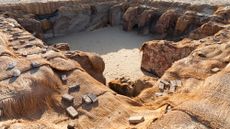 Ancient Egyptians sacrificed pharaohs' servants so they could continue to serve their king in the afterlife, new study finds
The ancient Egyptians practiced human sacrifice around 5,000 years ago, a new study finds.
ancient-egyptians -
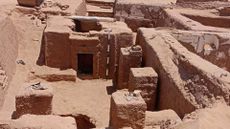 'Listen, father!': 1,700-year-old tomb discovered in Egypt contains a poem in ancient Greek and spells to protect the dead
A tomb dating back to the time the Romans controlled Egypt contains a funerary poem in ancient Greek.
ancient-egyptians -
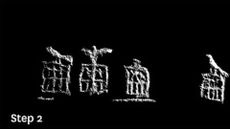 A 72-year-old photo is revealing new clues about 'Meretneith,' a powerful woman who may have ruled Egypt 5,000 years ago
An ancient Egyptian woman named Meretneith had a lavish tomb, and on it her name was written the same way as a pharaoh.
ancient-egyptians -
 3,000-year-old burial of ancient Egyptian horse found — and a nearby stone carving depicts a captured prisoner
Archaeologists unearthed a horse burial dating back more than three millennia in an ancient Egyptian fortress.
2 Commentsancient-egyptians -
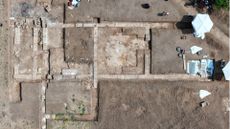 Nearly 2,400-year-old school where Aristotle taught Alexander the Great discovered in Greece
A school where Aristotle taught Alexander the Great has been found in northern Greece.
archaeology -
 Did the Vikings really shoot fiery arrows at funeral boats?
Life's Little Mysteries The idea of Vikings using fire arrows to set funeral boats ablaze is seen frequently in popular culture. But did it really happen?
Life's Little Mysteries -
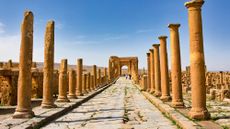 Did 'all roads lead to Rome'? New study finds other cities in the empire were better connected.
Rome was the Roman Empire's capital, but other cities in the empire were better connected by road.
romans -
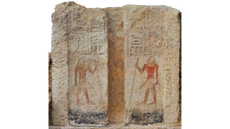 Ancient Egyptian tomb holding the king's 'keeper of secrets' unearthed at Saqqara
The tomb of a pyramid-age official has been found at Saqqara in Egypt.
ancient-egyptians -
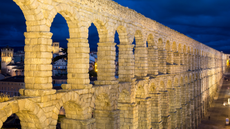 How did the Romans build their towering aqueducts?
Life's Little Mysteries The ancient Romans are well known for their aqueducts. But how did they build these impressive structures?
4 CommentsLife's Little Mysteries -
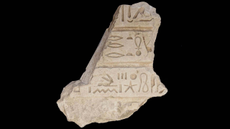 3,200-year-old inscription may point to a long-lost ancient Egyptian city from the time of Ramesses II
An inscription written in the time of Ramesses II may indicate the location of a lost ancient Egyptian city.
ancient-egyptians -
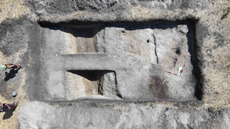 Ritual solstice structure 1,000 years older than Stonehenge unearthed in Czech Republic
Archaeologists have discovered a prehistoric ritual structure oriented to the sun and moon in the Czech Republic.
archaeology -
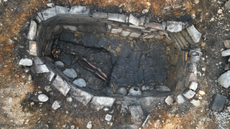 Body found at bottom of Scottish well may be from rare ritual burial performed centuries ago
An Iron Age grave has been discovered in the Scottish Highlands. The person was buried within what may have been a ritual well.
archaeology -
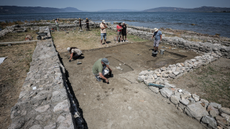 1,700-year-old church discovered under a lake in Turkey may be the location of the First Council of Nicaea — but other experts disagree
A small church discovered beneath a larger one may have hosted one of the most important meetings in the history of Christianity, but some scholars not involved with the excavation disagree.
middle-east -
 Did Celtic women fight in battle?
Life's Little Mysteries The Celts were highly regarded as warriors in the ancient world, but were all fighters men, or did Celtic women also fight in battle?
4 CommentsLife's Little Mysteries -
 Thousands of liberated Africans died on a remote island after the British Navy freed them. We now know where they came from.
Thousands of enslaved Africans were liberated from slave ships and died on the island of St. Helena around 200 years ago. A new chemical analysis has revealed their tragic stories.
archaeology -
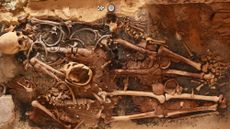 18 ancient Egyptian tombs with dozens of gold 'tongues' discovered along the Mediterranean coast
Archaeologists have found 18 tombs at an ancient Egyptian site by the Mediterranean coast of Egypt.
ancient-egyptians -
 How did the Romans build such straight roads?
Life's Little Mysteries The Romans have a reputation for building straight roads — but how did they do it?
9 CommentsLife's Little Mysteries -
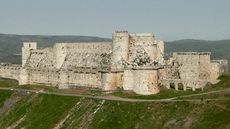 Catapult the cow! 6 medieval castles that were never conquered
Many medieval castles were formidable stone fortifications. Live Science takes a look at six that were never conquered.
archaeology -
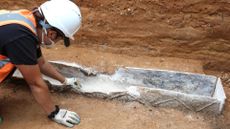 High-status Roman woman was buried in a lead coffin with jet hairpins and exotic resins, archaeologists find
A burial of an elite Roman-era woman who appears to have been buried with exotic resins has been discovered in Colchester.
2 Commentsromans -
 If humans are getting smarter, why are our brains shrinking?
Human brains have been shrinking since prehistoric times, some studies suggest. Whether this is true and why it has happened are debated.
11 Commentshuman-evolution -
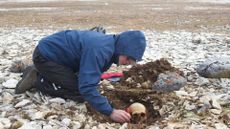 More doomed Franklin expedition sailors identified, revealing clues about how they tried to find safety
DNA from living descendants of relatives have allowed four members of the ill-fated Franklin expedition to be identified.
archaeology -
 Did Japan have female samurai?
Life's Little Mysteries The samurai are renowned as skilled warriors, but were any of them women?
Life's Little Mysteries -
 'Lifelong monogamy' and 'half orphans': DNA analysis reveals clues about life on the Roman frontier after the fall of Rome
Burials from over a millennia ago are revealing how people lived in part of the Roman Empire after it fell.
archaeology


