-
 Thymus: Facts, Function & Diseases
The thymus is the source of T-cells. The body uses T-cells to help destroy infected or cancerous cells.
anatomy -
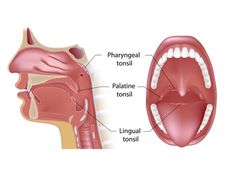 Adenoids: Facts, Function & Treatment
The adenoids are one type of tonsils. They are found only in children, and shrink over time until they disappear by adulthood.
anatomy -
 Rachel Carson: Life, Discoveries and Legacy
Rachel Carson challenged the use of pesticides and sparked an environmental revolution.
planet-earth -
 Lise Meitner: Life, Findings and Legacy
Lise Meitner was a pioneering physicist who discovered nuclear fission. Her contributions have often been overlooked.
physics-mathematics -
 Facts About Rhinos
Their horns are made of the same stuff as human fingernails!
land-mammals -
 Facts About the JFK Assassinationhuman-behavior
 -
 Chinese New Year: celebrate the coming of spring
The Lunar New Year is one of the world's most celebrated festivals.
human-behavior -
 Niacin (Vitamin B3): Benefits & Side Effects
Niacin is an essential vitamin that helps the digestive system, skin and nervous system to function.
food-drink -
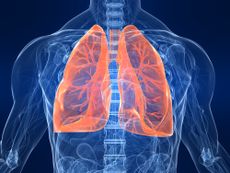 Lungs: Facts, Function and Diseases
Lungs are an important part of the respiratory system. Adults take 15 to 20 breaths a minute, which comes to around 20,000 breaths a day.
anatomy -
 Russian Culture: Facts, Customs & Traditions
Russian culture has a long and rich history, steeped in literature, ballet, painting and classical music. Here is a brief overview of Russian customs & traditions.
human-behavior -
 Facts About Alpacas
Alpacas are domesticated versions of a South American ruminant called the vicuña. There are no alpacas in the wild.
land-mammals -
 What Is Synesthesia?
Synesthesia is a neurological condition that causes the brain to process data in the form of several senses at once; for example, hearing sounds while also seeing them as colorful swirls.
health -
 What Is a Polymer?
Polymers are materials made of long, repeating chains of molecules. There are natural and synthetic polymers, including proteins and rubber, and glass and epoxies.
chemistry -
 Sprains: Causes, Treatment & Prevention
A sprain happens when a ligament gets stretched or torn. The most common type is an ankle sprain.
health -
 Rams: Facts About Male Bighorn Sheep
Rams are male bighorn sheep. They have long, curved horns that they use to fight for dominance.
land-mammals -
 Facts About Deer
There are 47 species of deer, including caribou, elk, moose and wapiti.
land-mammals -
 Jaguar Facts: Biggest Cat in Americas
Jaguars are large cats that can be found in North, Central and South America. They are identified by their yellow or orange coats, dark spots and short legs.
cats -
 Foxes: Facts & Pictures
Foxes are found all over the world. In folklore, foxes are typically characterized as cunning creatures sometimes having magical powers.
land-mammals -
 Giraffe Facts & Photos
They're the tallest animal on Earth with necks that are 6 feet tall!
land-mammals -
 Thyroid Cancer: Symptoms, Diagnosis & Treatment
The number of thyroid cancer cases has more than tripled in the past 40 years.
cancer -
 Facts About Geckos
There are about 1,500 species of geckos, a type of lizard found all over the world.
lizards -
 Facts About Bison
The American bison is the official mammal of the United States and is the largest mammal in North America.
land-mammals -
 Causes of Global Warming
Since the late 1700s, the world's climate has been changing rapidly, mostly due to human causes.
climate-change -
 Scabies: Causes, Symptoms & Treatment
Scabies is a skin condition caused by a microscopic mite. Symptoms include itching and red bumps or blisters.
viruses-infections-disease