













Study: Dogs Can Detect Prostate Cancer

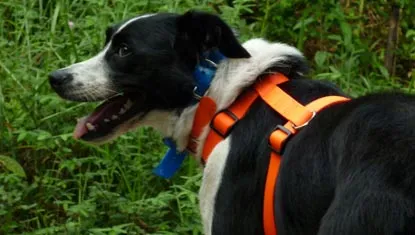
A study presented earlier this month at a meeting of the American Urological Association by a team of French researchers found that a particular dog breed, Belgian Malinois shepherd dogs, can be trained to detect prostate cancer.
Doctors at Paris's Hospital Tenon trained the dogs to distinguish between the smell of urine from men with prostate cancer and those without it. At the end of the training and study the dogs correctly identified 63 out of 66 samples.
It sounds bizarre, but there might be something to it. Many animals have far keener senses than humans; cats can see in near darkness, elephants' sensitive feet can detect the footsteps of other elephants miles away, and so on. Dogs are of course known for their remarkable sense of smell, which is why they are used by law enforcement to sniff out drugs, explosives and escaped prisoners.
Canine sense of smell is said to be 100,000 times more acute than ours, and prostate cancer cells may release distinct odors. Lead researcher Jean-Nicolas Cornu concluded that the dogs "are certainly recognizing the odor of a molecule that is produced by cancer cells." While the new research is promising, the real value would be in identifying the specific molecules the dogs are detecting.
Some scientists are cautiously optimistic, noting that the study is a small one, and must be replicated by other researchers to prove there is a real effect. There is also the potential study design problem that the dogs might have been able to pick up subconscious cues from the researchers about which samples were cancerous and which were not. In research this influence is called the "Clever Hans effect," after a horse named Hans that, in early 1900s Germany, was claimed to be able to solve math problems, read and understand German, and other amazing abilities. Careful skeptical investigation revealed that Hans merely gave the illusion of being able to do these tasks; he was instead reacting to subtle (and unconscious) cues from his trainer.
If the study can be replicated, the dog-sniffing prostate cancer screening would be more accurate than the blood test currently used, which detects elevated levels of a prostate-specific antigen (PSA) protein and has a high rate of false positives.
- Top 10 Mysterious Diseases
- Thanks Fido! Cancer Drugs Tested on Pets
- 7 Solid Health Tips That No Longer Apply
Benjamin Radford is managing editor of the Skeptical Inquirer science magazine. His new book is Scientific Paranormal Investigation; this and his other books and projects can be found on his website. His Bad Science column appears regularly on LiveScience.
Get the world’s most fascinating discoveries delivered straight to your inbox.
