













Morality Altered by Brain Stimulation

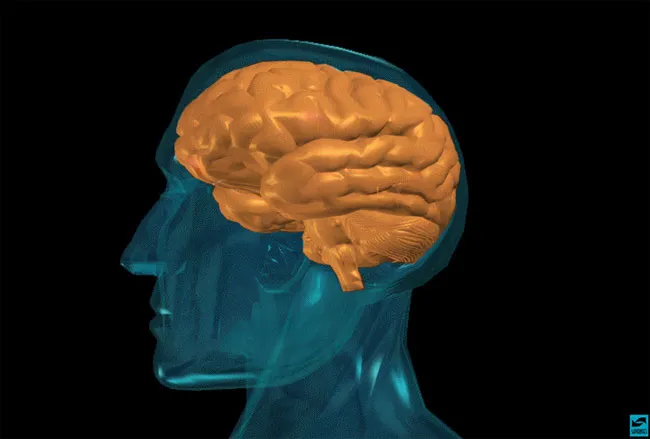
By stimulating a certain region of the brain, scientists can alter a person's ability to make moral judgments.
When people hear news of a crime like a shooting, they likely need more information before they can judge the offender's actions as right or wrong — was the crime accidental or intentional? If it was an accident or if the shooter was defending him or herself, people are likely to see the act as much more morally acceptable than if it was deliberate and unwarranted.
The study results show that stimulating a specific brain region interfered with the participants' ability to consider this mental state information when assessing hypothetical situations dealing with morality.
For instance, participants who received this brain stimulation were more likely to judge as morally acceptable scenarios involving attempted harms — where a person intends, but fails to carry out a crime, like an attempted poisoning.
Even though the researchers went into the study suspecting they might see such a pattern, they were quite surprised by the results.
"It was still surprising to us that we were able to actually change people's moral judgments by disrupting activity in this specific brain region, just because moral judgment is obviously really complicated and depends on a number of factors," said study author Liane Young, a postdoctoral researcher at the Massachusetts Institute of Technology. "So the kind of precise deficit that we found was really striking."
Previous work had suggested that a brain region known as the right temporoparietal junction (TPJ), located on the brain's outer layer near the right ear, was involved in making moral judgments. These studies, however, were based on fMRI brain imaging experiments, which cannot directly test whether a certain brain area is involved in a specific function.
Get the world’s most fascinating discoveries delivered straight to your inbox.
Instead, Young and her colleagues used a technique called transcranial magnetic stimulation to directly disrupt activity in the right TPJ. The method applies a magnetic field to a small area of the head, which interferes with the brain cells' ability to work properly. However, the effect is only temporary, and the technique is not invasive.
In one experiment, eight participants first received brain stimulations, then read through several scenarios and were asked to judge the characters' actions on a morality scale, ranging from 1 (absolutely forbidden) to 7 (absolutely permissible).
In another experiment, 12 participants rated the moral scenarios, but this time the stimulation was given precisely when the subjects were making their moral judgments.
In both tests, stimulation to the TPJ caused subjects to have trouble judging scenarios in which the characters' intention and the ultimate conclusion of the situation didn't match up.
"They judged failed attempts to harm, where no harm was actually done, as more permissible, and accidents, where harm was actually done in spite of a good intention, as [more] morally forbidden," Young said.
The stimulation might have caused subjects to have trouble interpreting intentions, and so they used other information, like the situation outcome, to make their judgments.
The results were published this week in the journal Proceedings of the National Academy of Sciences.
- Top 10 Mysteries of the Mind
- 7 Thoughts That Are Bad For You
- Why We're All Moral Hypocrites

Rachael is a Live Science contributor, and was a former channel editor and senior writer for Live Science between 2010 and 2022. She has a master's degree in journalism from New York University's Science, Health and Environmental Reporting Program. She also holds a B.S. in molecular biology and an M.S. in biology from the University of California, San Diego. Her work has appeared in Scienceline, The Washington Post and Scientific American.