















Zika Virus: Microcephaly May Be 'Tip of the Iceberg' for Infant Problems


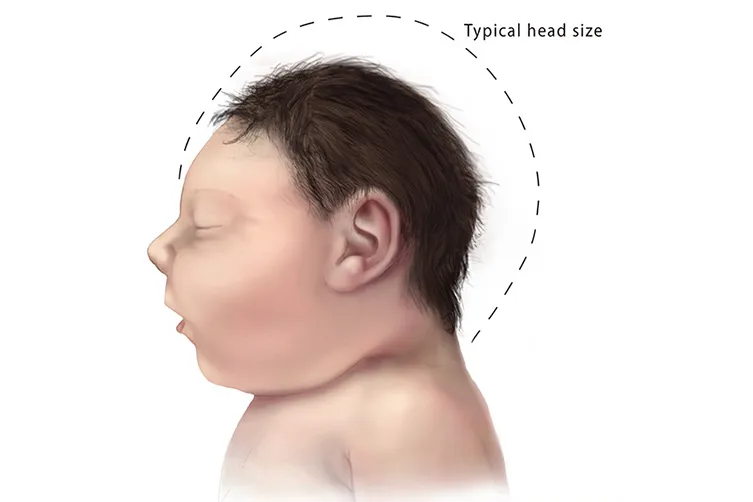
Pregnant women who become infected with Zika virus may be at risk for not only having a child with microcephaly, but also having a fetus with other serious health issues, including problems with the nervous system and even fetal death, according to a new study from Brazil.
The study — which provides some of the strongest evidence that Zika virus causes microcephaly — found that nearly one-third of women who had Zika infections during their pregnancy had an ultrasound that showed fetal abnormalities. These abnormalities included problems with growth, such as microcephaly (meaning an abnormally small head); problems with the placenta; and lesions in the brain or spine.
"Zika definitely causes the problems. We think microcephaly is only the tip of the iceberg," said study co-author Dr. Karin Nielsen-Saines, a professor of clinical pediatrics at the David Geffen School of Medicine at UCLA. [Zika Virus FAQs: Top Questions Answered]
Infants and fetuses in the study showed a variety of problems, including calcification (or hardening) of brain tissues, problems with the amniotic fluid and an abnormally small body size. There were two stillbirths in the study. Usually, viral infections don't cause only one problem, and because of the array of problems now linked with Zika, the researchers suggest using the term congenitial Zika virus syndrome, Nielsen-Saines said. The new study provided a stronger type of evidence than previous studies of the effects of Zika during pregnancy because it was prospective, meaning that women who went to the clinic in Brazil were tested for Zika and were then followed over time (regardless of whether they tested positive for the virus).
In addition, the researchers tested the women for Zika by looking for the virus's genetic material — which is more reliable than looking for antibodies, or proteins produced by the immune system in response to a Zika infection, Nielsen-Saines said.
The new study is "what people have been waiting for," in terms of the type of evidence needed to prove that Zika infection in pregnancy causes microcephaly, said Dr. Amesh Adalja, an infectious disease specialist and a senior associate at the University of Pittsburgh Medical Center's Center for Health Security, who was not involved in the study. That's because the researchers compared pregnant women infected with the Zika virus with pregnant women who were not infected with Zika virus and lived in the same area — a so-called "case control" study.
"This is the closest we've gotten to [proving] causation," Adalja said. Although more studies are still needed to solidify the link, "for all intents and purposes, this justifies the concern raised early on," that at least a proportion of the microcephaly cases in Brazil were caused by Zika virus, Adalja said.
Get the world’s most fascinating discoveries delivered straight to your inbox.
The Zika virus is currently spreading rapidly in Central and South America. Health officials became concerned about a link between the virus and microcephaly after there was a dramatic rise in cases of this birth defect in Brazil last year.
The study involved 88 pregnant women in Rio de Janeiro who were tested for Zika virus because they had recently developed a rash — one of the symptoms of the infection. Of these women, 72 tested positive for Zika virus, and they were at various stages of pregnancy — anywhere from five to 38 weeks pregnant.
The researchers performed ultrasounds on 42 women who had a Zika infection and 16 women who did not have a Zika infection. (A number of women in the study who tested positive for Zika did not agree to have ultrasounds, Nielsen-Saines said and, in some of those cases, were due to women not wanting to know whether the fetuses they were carrying potentially had health problems.)
About 30 percent of the Zika-infected women showed a fetal abnormality on their ultrasound, compared to none of the women without a Zika infection. The Zika-infected women were all previously healthy and did not have other risk factors for adverse pregnancy outcomes, the researchers said. [Zika Virus News: Complete Coverage Of The Outbreak]
Five of the Zika-infected women (12 percent) had fetuses with microcephaly, but in most of these cases, the fetus also had a condition called intrauterine growth restriction, meaning the whole fetus, and not just the head, was abnormally small.
Seven women (16 percent) had fetuses with lesions on the brain or spinal cord, or other central nervous system problems, and seven women appeared to have placental insufficiency, when the placenta doesn't work as it should so that the fetus does not receive a sufficient amount of oxygen and other nutrients.
Two women infected with Zika had stillbirths at 36 and 38 weeks of pregnancy, respectively. In previous studies, there was some speculation that Zika infections may be more damaging if they strike earlier in pregnancy. But in the new findings, the both stillbirths happened in women who were infected late in their pregnancies, Nielsen-Saines said. And in another case, a baby had to be "urgently delivered" from a woman with a later Zika infection, because the baby would have died otherwise, she said.
None of those three cases involved microcephaly or other problems with the central nervous system, but rather these cases had other problems such as placenta or amniotic fluid abnormalities, she said. There "may be a high risk of fetal demise with infections in the last trimester," she said.
The finding that nearly 30 percent of Zika-infected women had an abnormality on their ultrasound is "worrisome," the researchers said. They noted that the rate of fetal death in women with Zika was 4.8 percent, which is about twice the rate of fetal death among women infected with HIV living in the same area.
However, Adalja said that because the new study was small and in a single area, more studies are needed before researchers know the true rate of Zika-related pregnancy complications. In addition, there were 30 women in the study who were infected with Zika but did not have an ultrasound. It will be important for future studies to perform ultrasounds on all Zika-infected women in order to generalize the findings, Adalja said. [The 9 Deadliest Viruses on Earth]
In Brazil, fears about Zika are running very high, Nielsen-Saines said. "People are very worried; there is a lot of fear and concern," she said. Some pregnant women who become infected with the virus are coming to doctors and requesting to have their labor induced right away – some in the third trimester, but also some still in their second trimester -- in hopes of minimizing the damage to their fetus, she said.
The study is published today (March 4) in The New England Journal of Medicine.
Follow Rachael Rettner @RachaelRettner. Follow Live Science @livescience, Facebook & Google+. Original article on Live Science.

Rachael is a Live Science contributor, and was a former channel editor and senior writer for Live Science between 2010 and 2022. She has a master's degree in journalism from New York University's Science, Health and Environmental Reporting Program. She also holds a B.S. in molecular biology and an M.S. in biology from the University of California, San Diego. Her work has appeared in Scienceline, The Washington Post and Scientific American.