Add up all the time and money that you've spent this month on food — shopping for groceries, cooking, cleaning up, paying your grocery and restaurant bills — and you might be surprised at how much of your life is eaten by food.
One San Francisco Bay-area man has decided it's just not worth it. For the past month, Rob Rhinehart, a 24-year-old software engineer, has avoided all solid food. Instead, he's subsisting exclusively on a chemical concoction he brews in his kitchen.
The name of his potion? "Soylent."
Latest Videos From
Comparisons to the 1973 classic sci-fi film "Soylent Green"— in which people survived on crackers made from human flesh — are inevitable, but off-base. "My Soylent is human free," Rhinehart told Vice.
"In my own life, I resented the time, money and effort the purchase, preparation, consumption and clean-up of food was consuming," Rhinehart explains on his blog.
"I hypothesized that the body doesn't need food itself, merely the chemicals and elements it contains. So, I resolved to embark on an experiment," Rhinehart wrote. "What if I consumed only the raw ingredients the body uses for energy?" [The 7 Perfect Survival Foods]
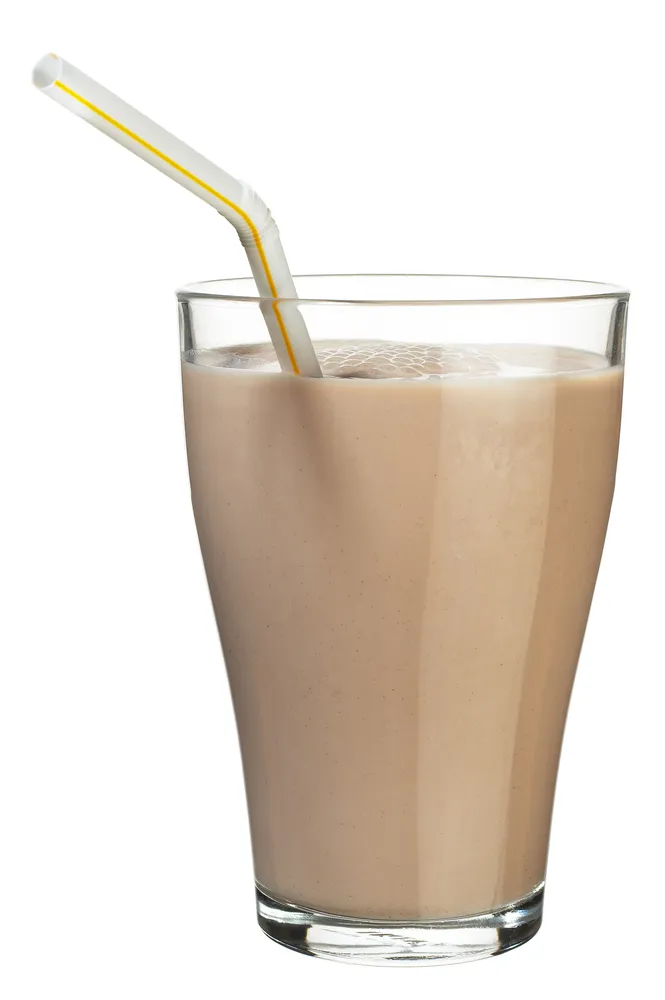
To do so, Rhinehart turned his kitchen into a chemistry lab and whipped up his first batch of Soylent, a "thick, odorless, beige liquid" that included protein, carbohydrates, fats, fiber, vitamins and minerals such as potassium, iron and calcium.
The nearly 40 ingredients used to make Soylent aren't readily available at your corner market. Rhinehart adds nutrients including folate, lycopene and alpha-carotene, some of which he procured at laboratory supply stores.
But is Soylent a healthy replacement for a balanced, varied diet?
No, said Joy Dubost, a registered dietitian and spokeswoman for the Academy of Nutrition and Dietetics. "I don't think it's sustainable," Dubost told LiveScience. "You need a healthy eating plan for life."
A fundamental flaw in Rhinehart's plan is his assumption that the human body needs only chemicals and elements to survive. "He doesn't get into whole grains at all," Dubost said, adding that Soylent's fiber count (5 grams) may be inadequate. "Not all fibers are the same."
Aside from Soylent being too high in sodium (2.4 g) and too low in potassium (3.5 g), Dubost said it's important to remember that foods like fruits and vegetables have nutrients in proportions and amounts that work in synergy, making proper digestion and intake of critical nutrients easy.
More importantly, the sheer monotony of drinking something like Soylent several times a day, for months on end, would turn off most people. Even healthy diets that are monotonous are difficult to adhere to, Dubost said.
"We have to remember food isn't just about nutrition. We do have a sensory experience with it," Dubost said, noting that there are feelings of satiety and pleasure that only come from a good meal.
Like most meal replacements, Soylent — if consumed at all — should only be used for a short time under the guidance of a doctor or nutritionist, Dubost said. But Soylent, like most fad diets and extreme eating plans, won't work for the long haul, she said: "If it sounds too good to be true, it probably is."
Email Marc Lallanilla or follow him @MarcLallanilla. Follow LiveScience on Twitter @livescience. We're also on Facebook & Google+. Original article on LiveScience.com.