















Chinese pottery discovered in Great Zimbabwe reveals medieval African empire's vast connections spanning thousands of miles
Archaeologists excavating a medieval African kingdom have discovered pottery from eastern China, revealing connections across continents.

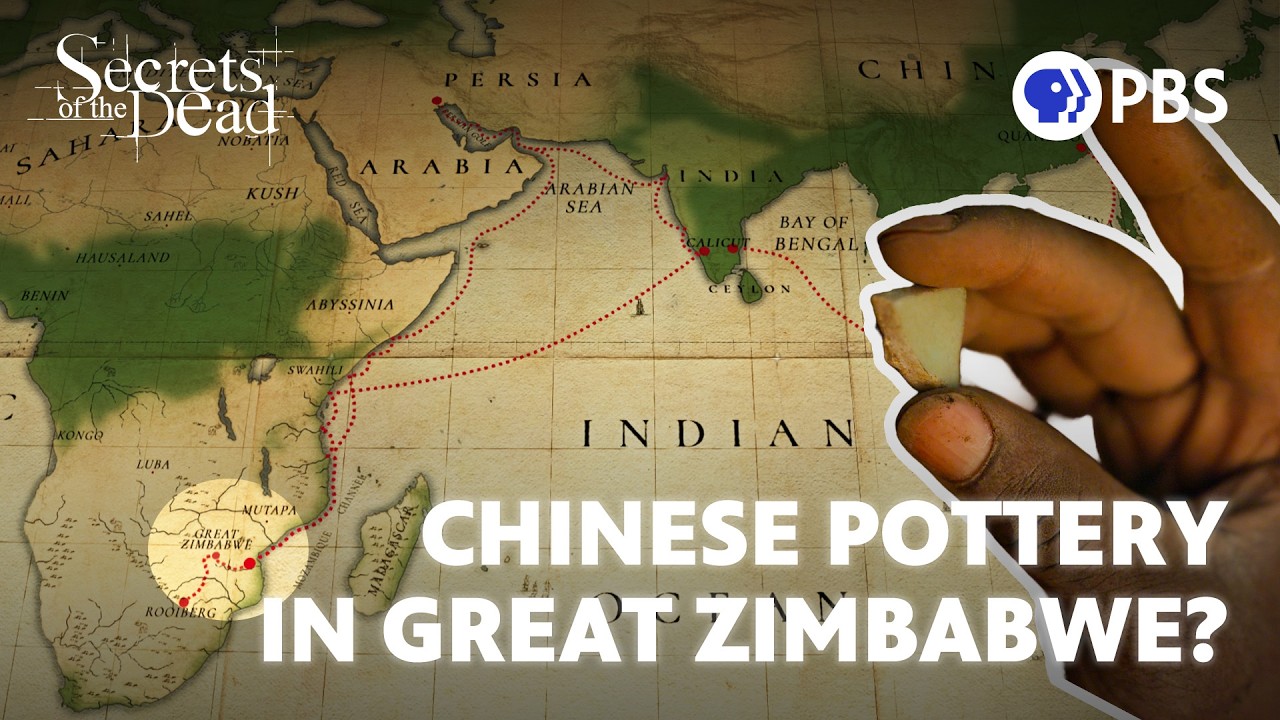
Archaeologists digging in the medieval city of Great Zimbabwe have discovered pieces of jade-green Chinese pottery, suggesting that the enigmatic empire had long-distance connections with East Asia more than 1,000 years ago.
Great Zimbabwe, located in the southeastern part of modern-day Zimbabwe, was the capital of an ancient empire that arose in southeastern Africa in around A.D. 1000. Little is known about this precolonial empire because its people did not leave a written history, but new archaeological excavations are shining a light on the enormous scale of the centuries-old civilization known for its intricate metalworking and ritual stone carvings.
In the new PBS documentary "Secrets of the Dead: Africa's Golden City," filmmakers followed a team of archaeologists from the field to the laboratory to try to answer questions surrounding the origins of the understudied civilization, its ritual and trade activities and why it disappeared after 500 years.
"When I was growing up, I was surrounded by symbols of Great Zimbabwe," University of Oxford archaeologist Shadreck Chirikure, who is leading the new excavations at the site, said in the documentary. "It was only when I started studying archaeology at university that I started realizing that there was this very big debate around who built Great Zimbabwe."
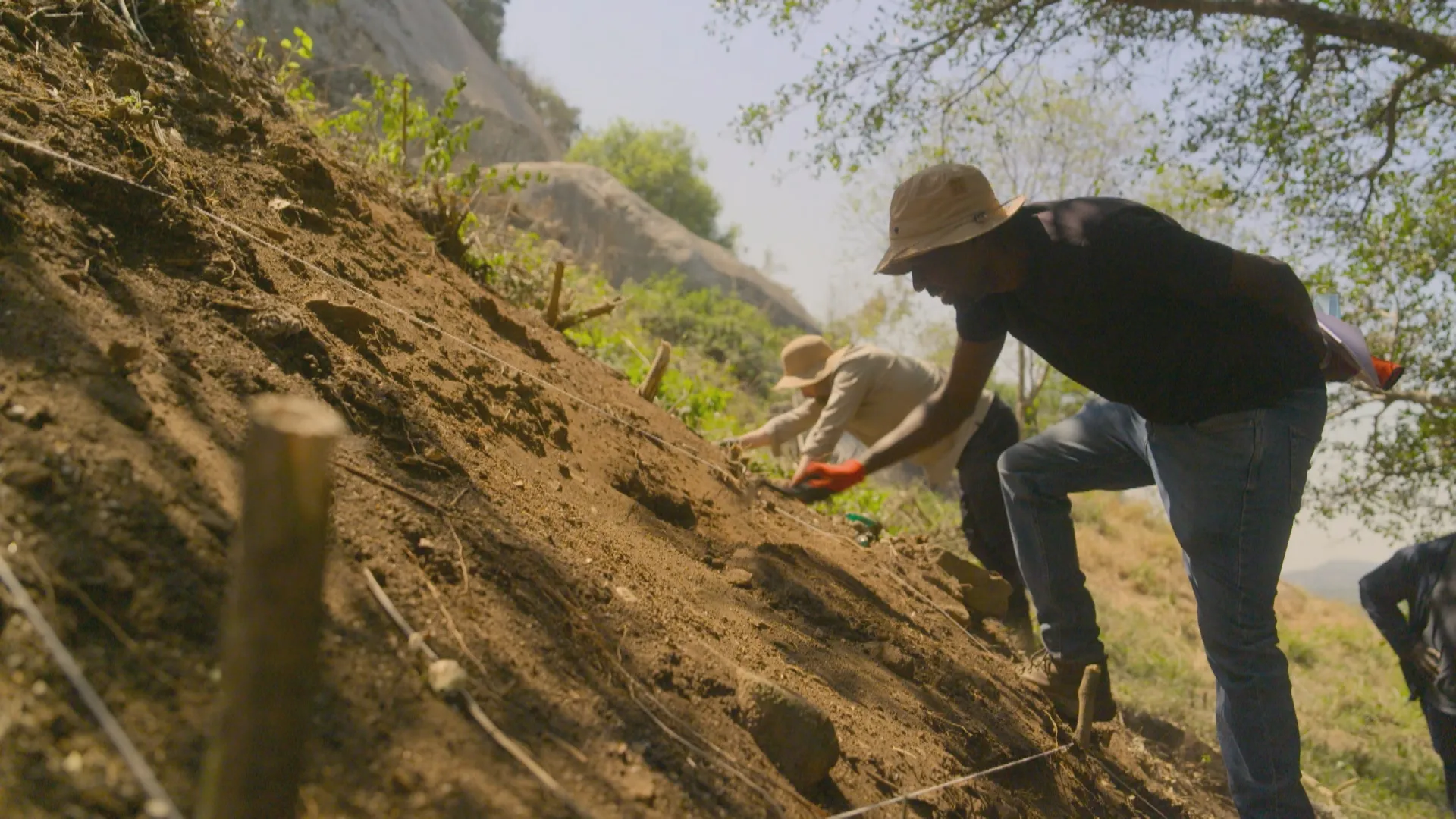
Archaeologist Shadreck Chirikure excavates the hillside at Great Zimbabwe.
The site was first excavated in the late 19th century and quickly looted by British colonists for its ivory, metal and gold artifacts. These colonists insisted that Africans hadn't built Great Zimbabwe, instead claiming it arose from the Phoenicians, a people originally from the Mediterranean; they used that inaccuracy to justify taking all the artifacts to England, according to the documentary. Today, many Great Zimbabwean artifacts are held in the collection of the Pitt Rivers Museum at the University of Oxford.
But excavations are showing that Great Zimbabwe was a highly connected African kingdom that flourished from the 11th century until at least the 15th century, when the population may have gotten too large for the dry, over-farmed land to feed. Archaeologists have already discovered glass artifacts at Great Zimbabwe that came from Southeast Asia, India and the Middle East via boat.
"From India or Sri Lanka to Great Zimbabwe, it's at least 8,000 kilometers [5,000 miles]," Chirikure told Live Science. Merchants sailed the Indian Ocean using winds kicked up by monsoon cycles.
Get the world’s most fascinating discoveries delivered straight to your inbox.
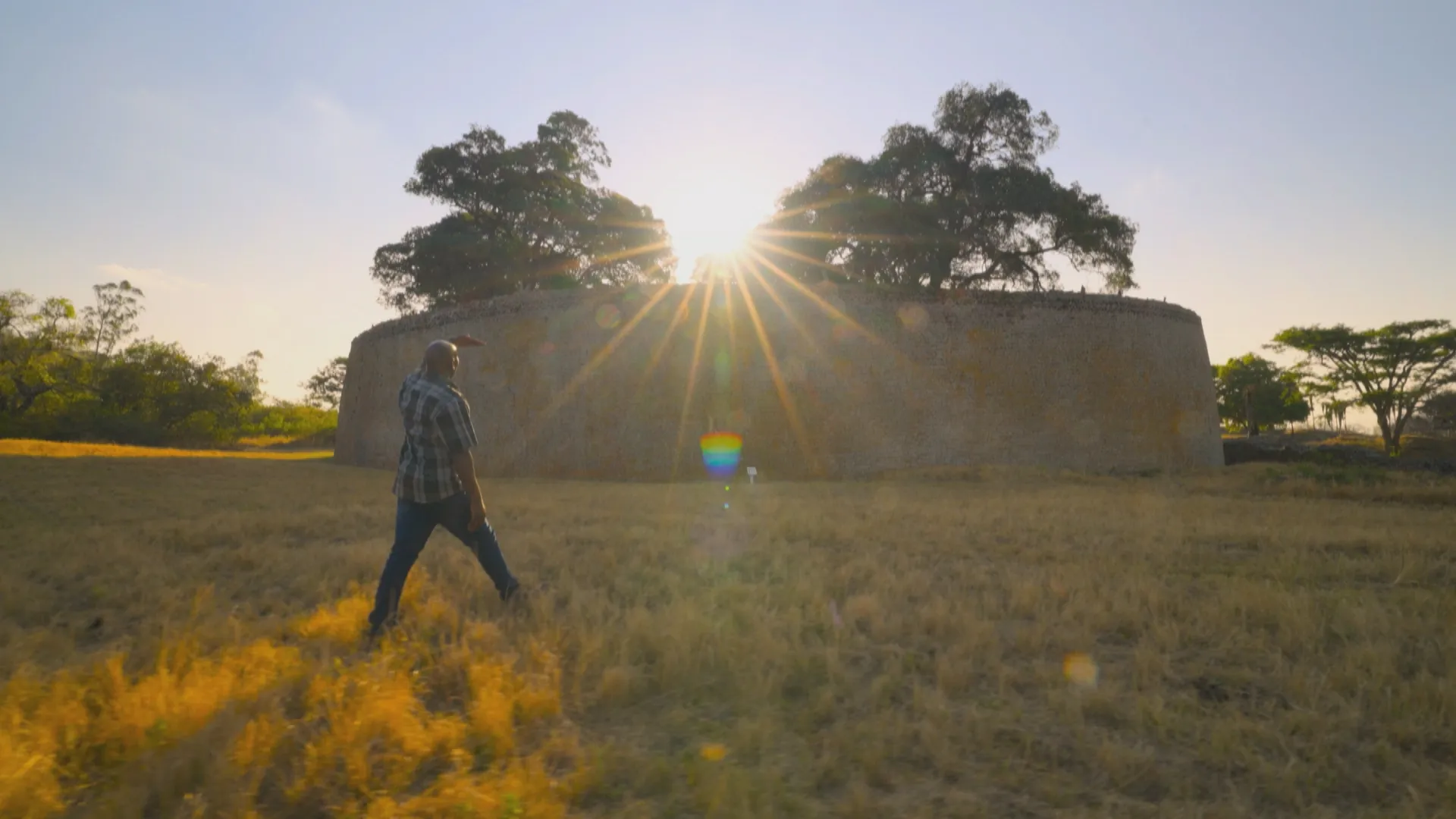
Archaeologist Munyaradzi Manyanga walks toward the Great Zimbabwe National Monument.
"It's time we try to understand a bit more about trade and exchange," Chirikure said, "particularly by comparing the communities in places like Sri Lanka and southern Africa. Because it's the water that separated people, but it was also the water that connected people."
In this exclusive clip from the documentary, Chirikure and archaeologist Muchen Zhou, a doctoral student at the University of Oxford, examine a jade-green piece of pottery unearthed from the hillside at Great Zimbabwe. The glossy sheen on the sherd suggests the pot was fired at an extremely high temperature, a technological achievement that had only been accomplished in China at that early date. This style of pottery, called Longquan celadon, was made in eastern China starting around A.D. 950.
"We find it across the site of Great Zimbabwe," Chirikure said, but in small quantities. "This means the Chinese ceramics are a rarity. Perhaps they were used by the elites. They would have been quite a significant or highly valued exotic ware."
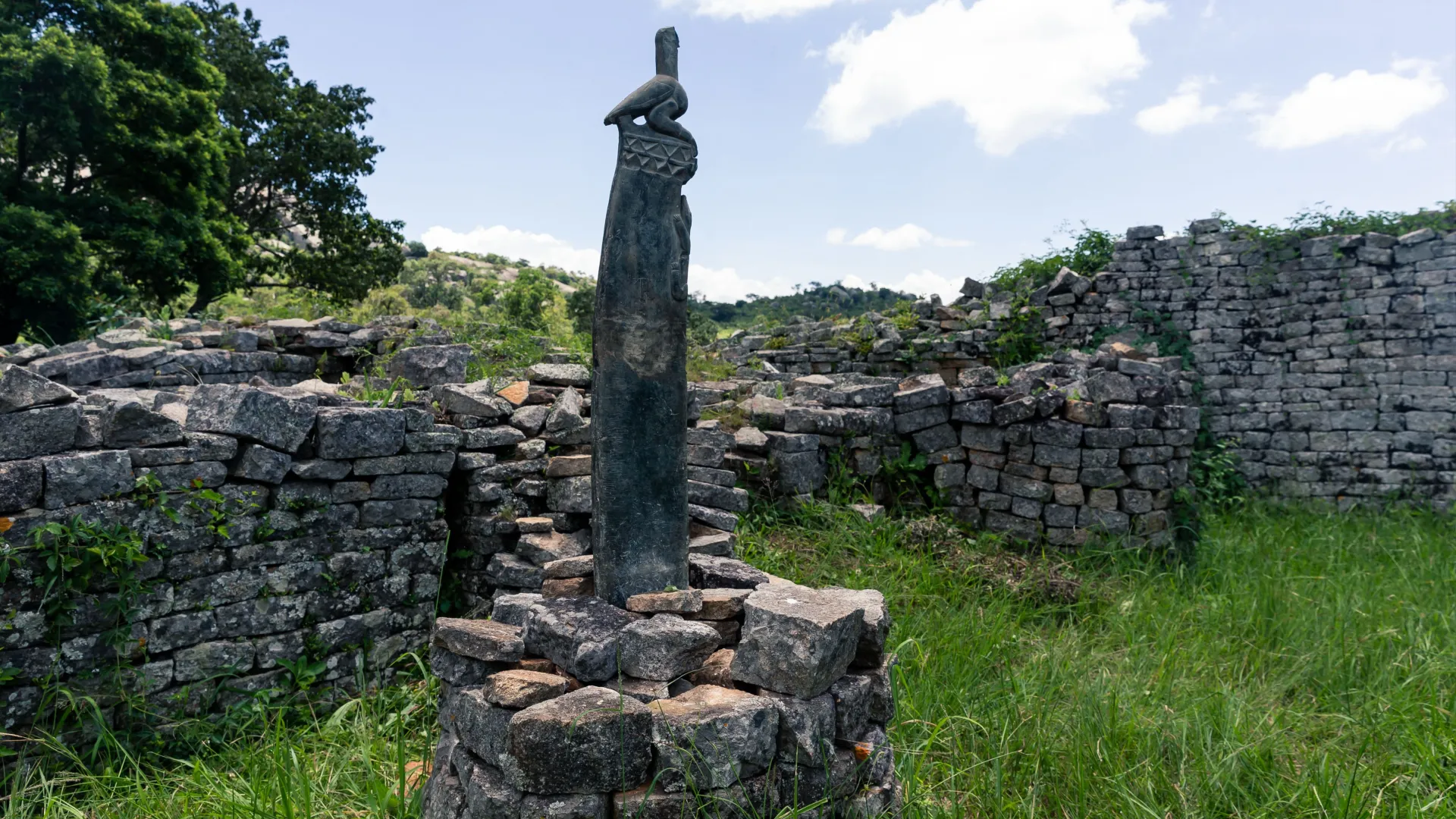
Great Zimbabwe is famous for its soapstone bird carvings.
Other evidence of long-distance trade has been discovered at Great Zimbabwe, Chirikure said, including metal objects from what is today the Democratic Republic of Congo, around 1,250 miles (2,000 kilometers) away. The people of Great Zimbabwe were also sourcing copper and tin from modern-day South Africa, more than 300 miles (500 km) away. And chemical analysis of cattle bones has shown that some of the animals were being traded across an 87-mile (140 km) area.
RELATED STORIES
- Medieval Swahilis and Persians paired up 1,000 years ago in East Africa, ancient DNA reveals
- 'We do not know of a similar case': 4,000-year-old burial in little-known African kingdom mystifies archaeologists
- Ancient DNA from South Africa rock shelter reveals the same human population stayed there for 9,000 years
For his next project, Chirikure hopes to investigate local resources, such as soapstone, that hold a lot of meaning for the local Shona people, Zimbabwe's largest Indigenous group; and for Zimbabweans.
"Soapstone birds are an important part of Great Zimbabwe," he said, "but no one really knows where they got their soapstone from."
The Zimbabwe Bird, designed based on a series of birds carved from soapstone that were found at the archaeological site, is the national emblem and appears prominently on the country's flag.
"There are a number of soapstone outcrops around Great Zimbabwe," Chirikure said. Next time in the field, that's one of the things I want to do — just go out there and try and find the geological sources of that soapstone."
The PBS documentary "Secrets of the Dead: Africa's Golden City" premieres Wednesday, Oct. 14, at 10 p.m. U.S. Eastern time.

Kristina Killgrove is a staff writer at Live Science with a focus on archaeology and paleoanthropology news. Her articles have also appeared in venues such as Forbes, Smithsonian, and Mental Floss. Kristina holds a Ph.D. in biological anthropology and an M.A. in classical archaeology from the University of North Carolina, as well as a B.A. in Latin from the University of Virginia, and she was formerly a university professor and researcher. She has received awards from the Society for American Archaeology and the American Anthropological Association for her science writing.
You must confirm your public display name before commenting
Please logout and then login again, you will then be prompted to enter your display name.