













Pam Mitchell knew the maggots were working when her foot started bleeding.
Four years ago, a small cut on Mitchell's left heel turned into an diabetes-related infection two inches wide and down to the bone. Another wound developed in her right foot, owing to dry, cracked skin. Doctors tried everything--creams, antibiotics--but nothing worked.
"My doctor told me to give it up, see a psychologist, and have my foot amputated," she recalls.
Mitchell, now 52, had to make a decision soon because the powerful antibiotic that doctors prescribed for her infection was also wreaking havoc on her bones. Mitchell was preparing to undergo a dangerous bone marrow transplant when a friend remembered watching a TV show about European doctors using maggots to treat wounds like Mitchell's. With nothing to lose, she tried it.
Mitchell found a dermatologist willing to perform the procedure, and soon had 600 live maggots wriggling inside the wound on her left foot, 400 in her right, where they were sealed in gauze and left for two days.
Grudging acceptance
When it came time to remove the maggots, Mitchell's doctor was more than a little repulsed. "He had never dealt with them before and he said it was like watching a Wes Craven movie," Mitchell remembers. He was also impressed, because the maggot treatment seemed to be working.
Get the world’s most fascinating discoveries delivered straight to your inbox.
Over the course of 10 such treatments, wounds that months of expensive procedures could not mend began to heal.
Today, Mitchell walks normally and both wounds are completely healed. She is now a member of the board for the Biotherapeutics Education and Research Foundation, a non-profit organization that promotes the medical use of maggots.
"They didn't just save my feet, they saved my life," Mitchell told LiveScience. "They're better than anything man can come up with because I've tried everything."
A growing number of doctors are starting to agree. Maggots are useful because they help remove dead tissue and expose healthy tissue, a process called debridement. Maggot debridement therapy was popular in the early part of the last century but went out of vogue when antibiotic use became widespread.
But maggots are now making a comeback, and they are increasingly being used to treat ulcers, gangrene, skin cancer, and burns. Research also suggests maggots may help decrease the risks of infections after surgery.
Leeches, too
Maggot therapy is just one example of a medical approach called biotherapy -- the use of living animals to aid in medical diagnosis or treatment. Leeches are another example.
In ancient times, leeches were used to treat everything from headaches to ear infections to hemorrhoids. Historians think Egyptians used leech therapy 3,500 years ago. The treatments were back in vogue during the Middle Ages, and again in the 1800s.
Nowadays, leeches are routinely used to drain blood from swollen faces, limbs and digits after reconstructive surgery.
They are especially useful when reattaching small parts that contain many blood vessels, like ears, where blood clots can easily form in veins that normally drain blood from tissues. If the clots are severe, the tissues can die -- drowned in the body's own fluid -- because they are deprived of oxygen and other vital nutrients.
Scientists are also looking at using leeches to treat other ailments. Studies led by Andreas Michalsen, a researcher at the University of Duisburg-Essen in Germany, suggests leech therapy may lessen the pain and inflammation associated with osteoarthritis, a debilitating disease where bones can grind against one another because the cartilage has been worn down.
The gross factor
Maggots and leeches are so effective that the FDA last year classified them as the first live medical devices. The treatments can be relatively inexpensive, according to the National Institutes of Health. A container of 500-1,000 disinfected maggots last year cost $70.
Scientists have not figured out exactly how either critter works, but quite a bit is known. Maggots eat dead and infected tissue and other infectious organisms, which are later killed in maggots' guts. They secrete enzymes that break down dead tissue, turning it into a mush they can then slurp up.
Leech saliva is made up of a potent cocktail of more than 30 different proteins that, among other things, helps to numb pain, reduce swelling and keep blood flowing.
Michalsen said his patients are rarely repulsed by the leeches and instead take a morbid interest in the creatures. "They feel sympathy for the leeches," he said.
Pam Mitchell expressed a similar sentiment about the maggots that saved her life. "When I first saw them, I didn't want anything to do with them." But they sort of grew on her. Maybe those that roam household garbage are gross, she concedes. "Otherwise, I just see them as being different."
- Storing Frozen Maggots
- Creepy Pets: Huge Beetles Sell for $130
- World's Ugliest Animals
((ImgTag||right|null|null|null|false)) Pam Mitchell in happier times, post-treatment.
What a Leech!
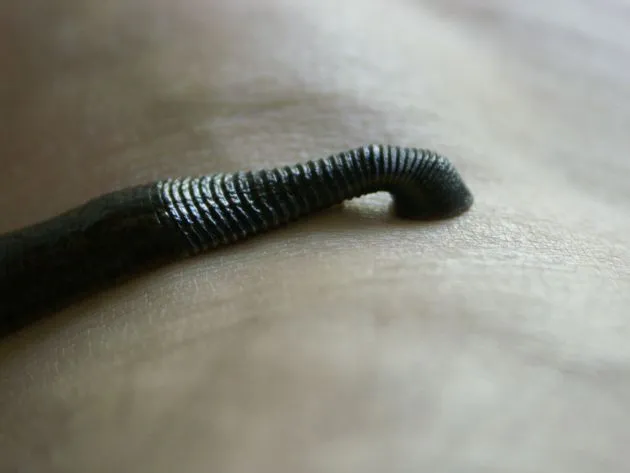
The medicinal leech is a segmented worm related to the earthworm. A rear suction cup helps it move and cling to a host. The front suction cup has three sharp jaws that make a Y-shaped bite.
It can feed for 30 minutes to 6 hours or more, taking in several times its body weight.
Leech saliva contains chemicals that prevent blood clotting, so a wound might bleed for hours after the leech is removed. Depending on wound size, a doctor might apply anywhere from one to six leeches. Medical-grade leeches are sold by Leeches U.S.A. Ltd. and Biopharm Leeches.
SOURCE: Biotherapeutics Education and Research Foundation
Uplink Your Views