













Depressed People Really Do See a Gray World
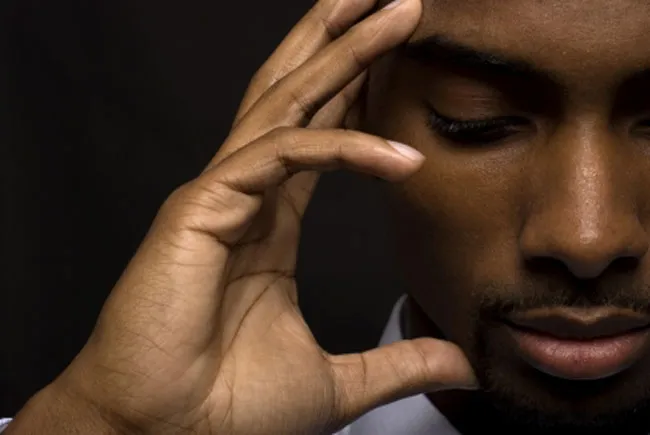
The world really does look gray to depressed people, at least on a subconscious level, new research suggests.
Researchers at the University of Freiburg in Germany had previously shown that people with depression have difficulty detecting black-and-white contrast differences. But the scientists had used a somewhat subjective measure — psychophysical tests — and others in the field had suggested perhaps depressed individuals had a harder time holding their attention and that explained the results.
The new study, published in the journal Biological Psychiatry, relies on an objective measure of the retina, suggesting depressed people may see the world in a different way from the non-depressed.
"These data highlight the profound ways that depression alters one's experience of the world," said Dr. John Krystal, editor of the journal. "The poet William Cowper said that 'variety's the very spice of life,' yet when people are depressed, they are less able to perceive contrasts in the visual world. This loss would seem to make the world a less pleasurable place."
Vision test
The research team had 40 patients with major depression and 40 healthy individuals view a sequence of five black-and-white checkerboards of different contrasts. Each checkerboard flickered (with a black square turning white and white turning black) 12 times per second on a computer screen.
Meanwhile, the researchers used an objective measure called the pattern electroretinogram, which is similar to an electrocardiogram (ECG) of the retina of the eye. The retina ECG shows the response of neurons inside the retinal cells. "That's not conscious vision, it's much earlier than you conscioulsy perceive something, within milliseconds," said lead researcher Dr. Ludger Tebartz van Elst.
Get the world’s most fascinating discoveries delivered straight to your inbox.
The depressed patients had dramatically lower retinal responses to the varying black-and-white contrasts than healthy individuals. The results held regardless of whether patients were taking antidepressants.
Since conscious vision wasn't measured, the researchers can't say for certain whether the patients would be aware of the visual "impairment" in the real world, though they suspect that would be the case.
How the depressed eye works
While the researchers aren't sure exactly why depressed people might sort of "see the world as gray," they have a strong hypothesis. Here's how they figure it works: Contrast vision relies on so-called amacrine cells within the retina, which horizontally connect the retina's neurons called ganglion cells with each other. These cells rely on dopamine, a substance known to be important for drive and attention – when lacking, two main symptoms of depression.
"We think the retina is some sort of outpost marker of the integrity of the dopaminergic system in the whole brain," van Elst said. So the dopamine is linked with both the vision and the depression.
The finding has plenty of practical implications, van Elst said, including acting as an indicator of whether anti-depression drugs are working. In addition, the test could provide an objective measure of depression, as clinical tests are not always reliable.
"It's really amazing that we are able to distinguish healthy controls from depressed patients. That means we have an objective marker for essentially the subjective state of being depressed," van Elst told LiveScience.
The study scientists noted that although these findings are strong, they still need to be replicated in further studies.
- 7 Thoughts That Are Bad for You
- Different Colors Describe Happiness vs. Depression
- Top 10 Mysteries of the Mind
Jeanna Bryner is managing editor of Scientific American. Previously she was editor in chief of Live Science and, prior to that, an editor at Scholastic's Science World magazine. Bryner has an English degree from Salisbury University, a master's degree in biogeochemistry and environmental sciences from the University of Maryland and a graduate science journalism degree from New York University. She has worked as a biologist in Florida, where she monitored wetlands and did field surveys for endangered species, including the gorgeous Florida Scrub Jay. She also received an ocean sciences journalism fellowship from the Woods Hole Oceanographic Institution. She is a firm believer that science is for everyone and that just about everything can be viewed through the lens of science.