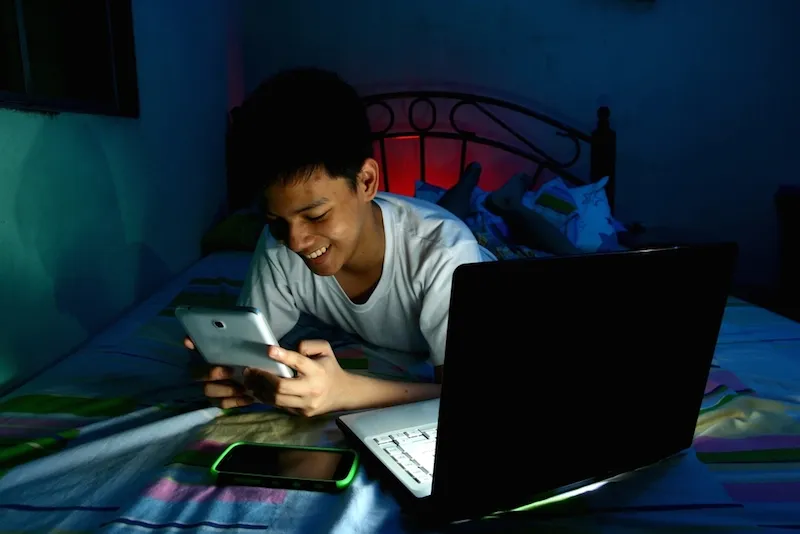
Teenagers who while away the hours on an electronic device — whether it's a computer, cell phone, tablet or TV — tend to have more problems with sleeping at night, a new study finds.
The cumulative amount of screen time a teen gets throughout the day — not just before bedtime — affects how long they sleep, according to the study, published today (Feb. 2) in the journal BMJ Open.
"One of the surprising aspects was the very clear dose-response associations," said the study's lead researcher Mari Hysing, a researcher and a psychologist at Uni Research Health, a research company based in Norway. "The longer their screen time, the shorter their sleep duration." [7 Tips to Sleep Soundly Tonight]
Latest Videos From
For the study, the researchers collected data from more than 9,800 teenagers ages 16 to 19 who participated in a survey on their use of electronics and their sleep habits, including bedtime, sleep duration and how long it took for them to fall asleep.
The researchers found that boys and girls tended to use different types of devices. Boys reported spending more time with game consoles, whereas girls favored smartphones and MP3 music players.
Nearly all teens in the study said they used their devices within an hour of going to bed, and those who used electronics before bedtime were more likely to need more than 1 hour to fall asleep, the researchers found.
And at every level of electronics use, the teens who used their devices more took longer to fall asleep than the teens who used their devices less: Those who used electronics for more than 4 hours were 49 percent more likely to take longer than an hour to fall asleep compared with those who used their devices less than 4 hours, the researchers said. The teens who used any device for more than 2 hours daily were 20 percent more likely to need more than an hour to fall asleep than those who used devices less than 2 hours.
The teens' use of devices was also linked with the total amount of time they spent sleeping. For instance, teenagers who spent more than 2 hours emailing or chatting online were more than three times as likely to sleep less than 5 hours compared with students who had less screen time, the researchers said.
The teens typically reported needing 8 to 9 hours of sleep to feel well rested.
Disruptive technology
It's unclear why screen time may disrupt sleep, but it's possible that the light from electronic devices interferes with the body's internal clock, which controls the circadian rhythm, the researchers said. The devices could also stimulate the nervous system, making it difficult to fall asleep, the researchers said.
The findings may help researchers write new guidelines for screen time use among teenagers, they added.
"Use of electronics is an integral part of teenage life," Hysing told Live Science. "However, teenagers can be aware of how much time [they] spend on screens, and try to log off at night to ensure a good night's sleep."
"Parents could start with being good role models and restrict their media use both during day and nighttime," she added. "Helping the teenagers get good media and sleep routines is an important part of parenthood."
Follow Laura Geggel on Twitter @LauraGeggel. Follow Live Science @livescience, Facebook & Google+. Original article on Live Science.

 Live Science Plus