 Live Science Plus





You are now subscribed
Your newsletter sign-up was successful
Want to add more newsletters?

Delivered Daily
Daily Newsletter
Sign up for the latest discoveries, groundbreaking research and fascinating breakthroughs that impact you and the wider world direct to your inbox.

Once a week
Life's Little Mysteries
Feed your curiosity with an exclusive mystery every week, solved with science and delivered direct to your inbox before it's seen anywhere else.

Once a week
How It Works
Sign up to our free science & technology newsletter for your weekly fix of fascinating articles, quick quizzes, amazing images, and more

Delivered daily
Space.com Newsletter
Breaking space news, the latest updates on rocket launches, skywatching events and more!

Once a month
Watch This Space
Sign up to our monthly entertainment newsletter to keep up with all our coverage of the latest sci-fi and space movies, tv shows, games and books.

Once a week
Night Sky This Week
Discover this week's must-see night sky events, moon phases, and stunning astrophotos. Sign up for our skywatching newsletter and explore the universe with us!
Join the club
Get full access to premium articles, exclusive features and a growing list of member rewards.
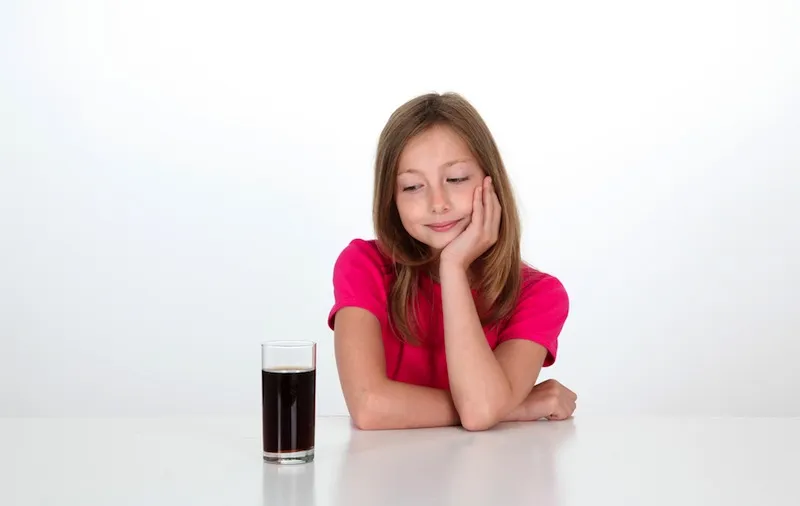
Girls who drink a lot of soda and other sugary drinks may get their first menstrual periods earlier than girls who don't often consume these drinks, a new study suggests.
The research involved more than 5,500 U.S. girls ages 9 to 14 who had not yet had their first periods at the study's start. Researchers asked the girls questions about their diets, including how frequently they consumed soda and other sugar-sweetened beverages (such as fruit drinks and iced tea), and tracked the girls for five years (from 1996 to 2001).
"Our study adds to increasing concern about the widespread consumption of sugar-sweetened drinks among children and adolescents in the USA and elsewhere," study author Karin Michels, an associate professor at Harvard Medical School, said in a statement. The results are important because researchers have observed that girls in developed countries may be entering puberty at younger ages, but the reason for this change remains unclear, she said.
The findings held even after the researchers took into account other factors that may affect a girl's age of first menstruation, including the girl's height, body mass index, ethnicity, activity level and total food intake. [Wonder Woman: 10 Interesting Facts About the Female Body]
When the researchers looked at the effect of specific beverages, they found that those drinks with added sugar (such as soda) were linked with earlier periods, but those without added sugar (such as some fruit juices) were not.Consuming sugar-sweetened beverages has been linked to weight gain. And obesity, in turn, has been shown to increase the risk for early onset of menstruation. But the study found that BMI had only a small effect on the link between sugary drinks and early periods, meaning that other factors may be the driving force behind the findings.
For example, the researchers noted that eating foods (such as soda) that quickly raise a person's blood sugar levels result in an increase in levels of the hormone insulin. This may, in turn, affect levels of sex hormones, which would influence menstruation.
Still, the study found only an association, and cannot prove there is a cause-and-effect relationship between sugary drinks and earlier periods.
It could be that girls who have started to mature early also tend to drink more sugary drinks because they are more mature, the researchers said. (For example, these girls may have different tastes, or may be treated differently by their parents, than girls who mature later.)
In addition, it's not clear whether a three-month difference in when a girl starts getting her period would have a meaningful impact on her health. Dr. Joshua Yang, a pediatric endocrinologist at the Arnold Palmer Hospital for Children in Orlando, Florida, said that at an individual level, "three months really isn't that big a deal" in terms of its impact on health.
The researchers said that a one-year decrease in the age at which a girl starts her period is linked with a 5 percent increase in the individual's risk of breast cancer, and so a three-month decrease in age of first period could have a "modest impact" on breast cancer risk. Yang said he did not know of any studies that looked at whether a three-month decrease in age of first period would affect a woman's breast cancer risk.
Still, the impact of sugar-sweetened beverage consumption on age of first period, and possible breast cancer risk, should not be overlooked, because unlike most other predictors of a girl's age at her first period, sugar-sweetened beverage consumption is something people can change, the researchers said.
The study will be published online today (Jan. 27) in the journal Human Reproduction.
Follow Rachael Rettner @RachaelRettner. Follow Live Science @livescience, Facebook & Google+. Original article on Live Science.

