













New Photos Show Another Troubling Contact with Isolated Tribe

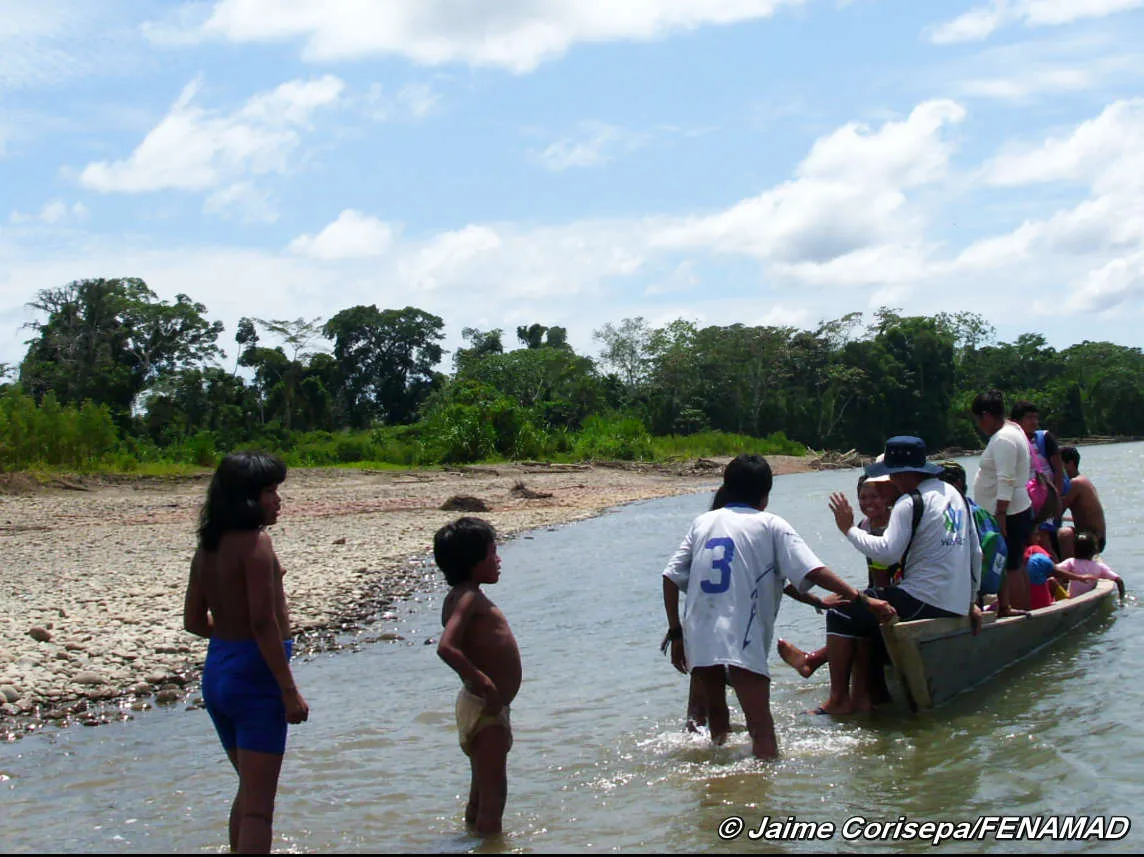
Advocates for tribal people in Peru published new photos this week that show a troubling scene: An apparent missionary and other outsiders in a tourist boat idling along the bank of a river to give clothes and other gifts to children from an isolated indigenous tribe.
Though their actions might seem benign, outsiders can easily transmit diseases to so-called "uncontacted" tribes — such as the Mashco-Piro people in these photos, who have long lived in voluntary isolation in Peru's Madre de Dios region.
"We've been trying to prevent this exact situation from happening," said Rebecca Spooner, a Peru campaigner for Survival International, which advocates for tribal people's rights.
Earlier this month, Spooner told Live Science that her organization had been receiving more and more emails from tourists who had encounters with Mashco-Piro people during a trip to the Amazon. At the same time, representatives from FENAMAD in Peru issued a statement calling for a ban on tourists filming and photographing people from the tribe and leaving items like clothing on the riverbanks. (FENAMAD stands for Native Federation of the Madre de Dios River and Tributaries.)
Now, FENAMAD has shared images of people handing over items to the uncontacted Mashco-Piro on the border with Peru's Manu National Park on Sept. 6.
Even if the Mashco-Piro are beckoning tourists and accepting gifts, it doesn't mean they are trying to initiate permanent contact, Spooner explained. She added that it doesn't seem like the tribespeople are abandoning their way of life, and they don't seem to be crying for help.
"We would never try to stop uncontacted indigenous people from trying to make contact," Spooner said. "But it's important to give them time and space for when they want to make contact."
Get the world’s most fascinating discoveries delivered straight to your inbox.
And in cases of voluntary contact, appropriate health precautions are crucial. Uncontacted people don't have immunity against common diseases like the flu and they can develop fatal infections through contact with outsiders and items like clothing.
The Madre de Dios River in southeastern Peru tends to be a major draw for tourists who want to experience the Amazon basin and nature reserves rich in biodiversity like Manu National Park.
"To your average person it's very remote, but in terms of the Amazon, it's not difficult to get to," Spooner said.
The identities of the people on the boat in the latest incident are not clear, but FENAMAD had identified at least one woman as a Christian missionary.
Survival International and FENAMAD have called on the Peruvian government to boost the presence of authorities and better equip guard posts in the region. They have also urged the government to expand the Madre de Dios Reserve (which was set aside for indigenous people) and develop a contingency plan in cases of contact.
Follow Megan Gannon on Twitter and Google+. Follow us @livescience, Facebook & Google+. Original article on Live Science.
