













How Science Can Help You Cook a Better Thanksgiving Feast

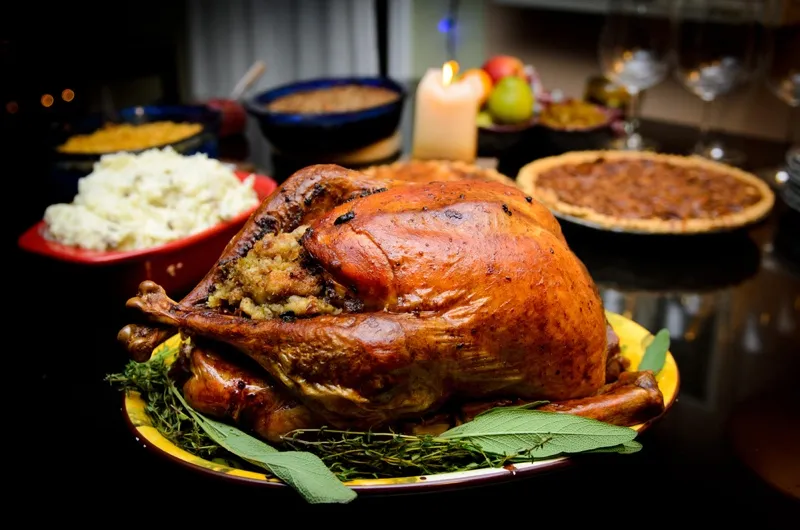
Preparing a Thanksgiving feast can seem like a daunting task, but understanding a bit about the science behind the cooking may cut down some of the stress in the kitchen this holiday season.
In Brookline, Mass., chefs at America's Test Kitchen dissect recipes down to their most basic scientific reactions, and meticulously test each step of the cooking process. It's exacting work, but it helps the chefs figure out the most effective ways to prepare some of the most popular meals. And with only days to go before turkeys hit dinner tables across the country, the Test Kitchen chefs have been busy, said Jack Bishop, chef, TV personality and editorial director of America's Test Kitchen.
"From a cooking perspective, Thanksgiving is the most important week of the year," Bishop told LiveScience. "For most people, the holidays are all about the food. But the line between cooking a good turkey and awful turkey is relatively small. It's not hard to cook a turkey well, but it's pretty easy to cook one poorly." [Thanksgiving Gallery: 8 Fascinating Turkey Facts]
Still, the prospect of cooking a whole turkey should not intimidate chefs, Bishop added. By avoiding some of the most common mistakes, and injecting a bit of science into the process, even a novice can ensure the end result is a meal to be thankful for, he said.
Brining your turkey
If possible, Bishop suggests purchasing a fresh turkey, rather than a frozen one. "If you're willing to make the investment in time and planning, that's the best route," he said.
To prepare a fresh turkey, Test Kitchen chefs recommend brining the bird overnight, which involves soaking the turkey in a container of salty water for at least 12 hours. This brining process helps keep the turkey moist and juicy.
Get the world’s most fascinating discoveries delivered straight to your inbox.
"The salt will change the protein structure within the muscle fibers, so the turkey will hold onto more moisture in the cooking process," Bishop explained. "You'll end up with a better-seasoned and juicier bird."
Still, Bishop cautions that more is not necessarily better, and it's important to avoid making the brining solution too salty. As a general rule, he recommends using a half-cup of table salt for every gallon of water.
After six to 12 hours of brining, the turkey can be patted dry and left on a baking sheet in the refrigerator. Before placing the turkey in the oven, Bishop suggests brushing the raw bird with butter.
Cooks who opt for a frozen turkey do not need to worry about brining it in advance. Most frozen turkeys are already injected with brine, and kosher varieties are processed with salt, Bishop said. The most important tip for using frozen turkeys is to let the birds thaw in the refrigerator before cooking them, he added. [5 Myth-Busting Facts for a Safe Turkey]
Turkey temperature
This year alone, the Test Kitchen chefs experimented with more than 100 turkeys to determine the optimal cooking method and temperature, Bishop said. (In the last 20 years, Bishop estimates the Test Kitchen has cooked thousands of turkeys.) The tests' results indicated that roasting a turkey at 400 degrees Fahrenheit (roughly 200 degrees Celsius) works best.
But, there are some challenging aspects to cooking a turkey, Bishop said. For one, the shape of the bird — complete with a huge cavity in the center — means it heats unevenly in the oven. Plus, the turkey's white meat and dark meat should ideally be cooked to different temperatures.
"You don't want white meat to be overcooked, because it begins to dry out," Bishop said. "Dark meat, on the other hand, shouldn't be undercooked, because it'll be chewy."
The easiest, and most reliable, way to ensure parts of the turkey are not under- or overcooked is to use a meat thermometer. Before taking the turkey out of the oven, the white meat in the breast should be 160 degrees F (71 degrees C), and the dark meat in the thighs and legs should be 165 degrees (74 degrees Celsius).
And there's no need to fuss around with the turkey too much while it's in the oven, Bishop said. The Test Kitchen chefs found that basting the bird does not actually improve the juiciness of the turkey. Instead, to brown and crisp up the skin, Bishop recommends placing the turkey on a rack that sits inside a roasting pan. This will allow air to circulate evenly, and the skin will not get soggy from sitting in the drippings.
"If you're willing to do a bit more work, it's good to start the turkey breast side down, which will shield the breast from the direct heat of the oven, and the juices will run into the breast," Bishop said. "At the one-hour mark, take two wads of paper towel and flip the bird by hand so it's breast-side-up. We've found that really helps get juicier breast meat, and rather than basting the bird, this is one thing worth doing."
Finally, before carving and serving the turkey, Bishop recommends letting the finished product rest for 30 to 40 minutes. This will help ensure the turkey is still juicy and moist when served.

"When a turkey is heated, the muscle fibers tighten up and physically contract," Bishop explained. "If you start cutting when it's hot from the oven, the muscle fibers will expel juices, and all the juices will run onto the carving board. But if you let the meat rest, the muscle fibers will hold onto their internal moisture as you carve."
But there's more to a Thanksgiving meal than just a turkey. Here are other tips from Bishop and the Test Kitchen team:
For perfect pie dough, just add vodka:
The secret to baking a flaky pie crust is to add vodka to the mix, Bishop said.
"Usually, ice water is what brings pie dough together to make it workable, but if you skimp on water, you end up with a dough that's cracked and hard to work with," Bishop said. "So, most cooks add extra water, which makes the dough easier to work with, but the extra water activates the glutens in the flour." (And too much gluten makes the dough tough instead of flaky.)
Test Kitchen chefs discovered that the ethanol in vodka helps moisten the dough, but it does not activate gluten development. As such, Bishop recommends using half-ice water and half-vodka when making pie dough.
And there's no need to worry about boozing up your pie dough. "The alcohol bakes off in the oven, so you can't taste it," Bishop explained.
Use a ricer for lump-free mashed potatoes:
For fluffy, lump-free mashed potatoes, Test Kitchen chefs found that a potato ricer is the best tool to use.
"It's basically a big garlic press, but you get very fine shreds, so it's easier to work with the cooked potatoes," Bishop said. "It's pretty cheap, but if you can't get one, then a regular masher can make light and fluffy potatoes, too."
And which variety of potato is best for mashing? Russets are ideal, but Yukon Gold potatoes can also be used, Bishop said.
Cook stuffing separately, not inside the turkey:
Cooking stuffing inside the turkey's cavity may be a nice tradition, but it slows down the entire cooking process, Bishop said.
"Stuffing has eggs in it, so it has to heat up to 165 degrees [Fahrenheit] to be at a safe temperature. But in order to get up to that temperature, you end up overcooking the bird," Bishop said. "You don't want to be waiting for the stuffing, and meanwhile the breast meat is drying out."
If you don't want to cook the stuffing separately, however, Bishop recommends warming it up before the stuffing goes inside the bird.
"Warming stuffing in the microwave so it's not ice cold will at least give it a head start," he said.
Follow Denise Chow on Twitter @denisechow. Follow LiveScience @livescience, Facebook & Google+. Original article on LiveScience.

Denise Chow was the assistant managing editor at Live Science before moving to NBC News as a science reporter, where she focuses on general science and climate change. Before joining the Live Science team in 2013, she spent two years as a staff writer for Space.com, writing about rocket launches and covering NASA's final three space shuttle missions. A Canadian transplant, Denise has a bachelor's degree from the University of Toronto, and a master's degree in journalism from New York University.