














Shrinking Sky! Cloud Tops Dropping Closer to Earth, NASA Satellite Finds

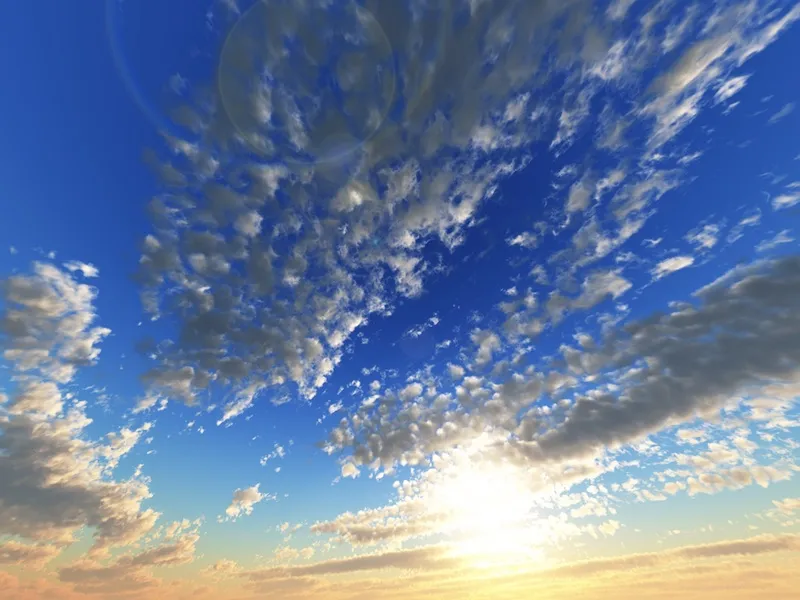
The sky is falling… sort of. Over the last 10 years, the height of clouds has been shrinking, according to new research.
The time frame is short, but if future observations show that clouds are truly getting lower, it could have an important effect on global climate change. Clouds that are lower in the atmosphere would allow Earth to cool more efficiently, potentially offsetting some of the warming caused by greenhouse gases.
"We don't know exactly what causes the cloud heights to lower," study researcher Roger Davies of the University of Auckland in New Zealand said in a statement. "But it must be due to a change in the circulation patterns that give rise to cloud formation at high altitude."
[10 Best Crank Radios: They Work in Any Weather!]
Clouds are a wildcard in understanding Earth's climate. Ephemeral as they are, they're difficult to track over time, and factors such as height and location make a big difference in whether clouds will slow the effects of global warming or exacerbate them. And no one fully understands how clouds will respond to a warming climate. [Album: Reading the Clouds]
For a decade, however, the Multi-angle Imaging SpectroRadiometer on NASA's Terra spacecraft has been watching Earth's clouds. Now, Davies and his colleagues have analyzed the device's first 10 years of cloud-top height measurements from March 2000 to February 2010. They found that global average cloud height decreased by around 1 percent over the decade, a distance of 100 to 130 feet (30 to 40 meters). Most of the reduction stemmed from fewer clouds forming at very high altitudes.
The researchers reported their results in the journal Geophysical Research Letters. The Terra satellite is set to continue collecting data through the rest of this decade, which will help determine whether or not the cloud lowering is a consistent trend.
Get the world’s most fascinating discoveries delivered straight to your inbox.
You can follow LiveScience senior writer Stephanie Pappas on Twitter @sipappas. Follow LiveScience for the latest in science news and discoveries on Twitter @livescience and on Facebook.

Stephanie Pappas is a contributing writer for Live Science, covering topics ranging from geoscience to archaeology to the human brain and behavior. She was previously a senior writer for Live Science but is now a freelancer based in Denver, Colorado, and regularly contributes to Scientific American and The Monitor, the monthly magazine of the American Psychological Association. Stephanie received a bachelor's degree in psychology from the University of South Carolina and a graduate certificate in science communication from the University of California, Santa Cruz.