













Blue Moon 2026: An extremely rare micromoon rises tonight
A rare Blue Moon, the second full moon in May, will also be a "micromoon" near its farthest point from Earth.

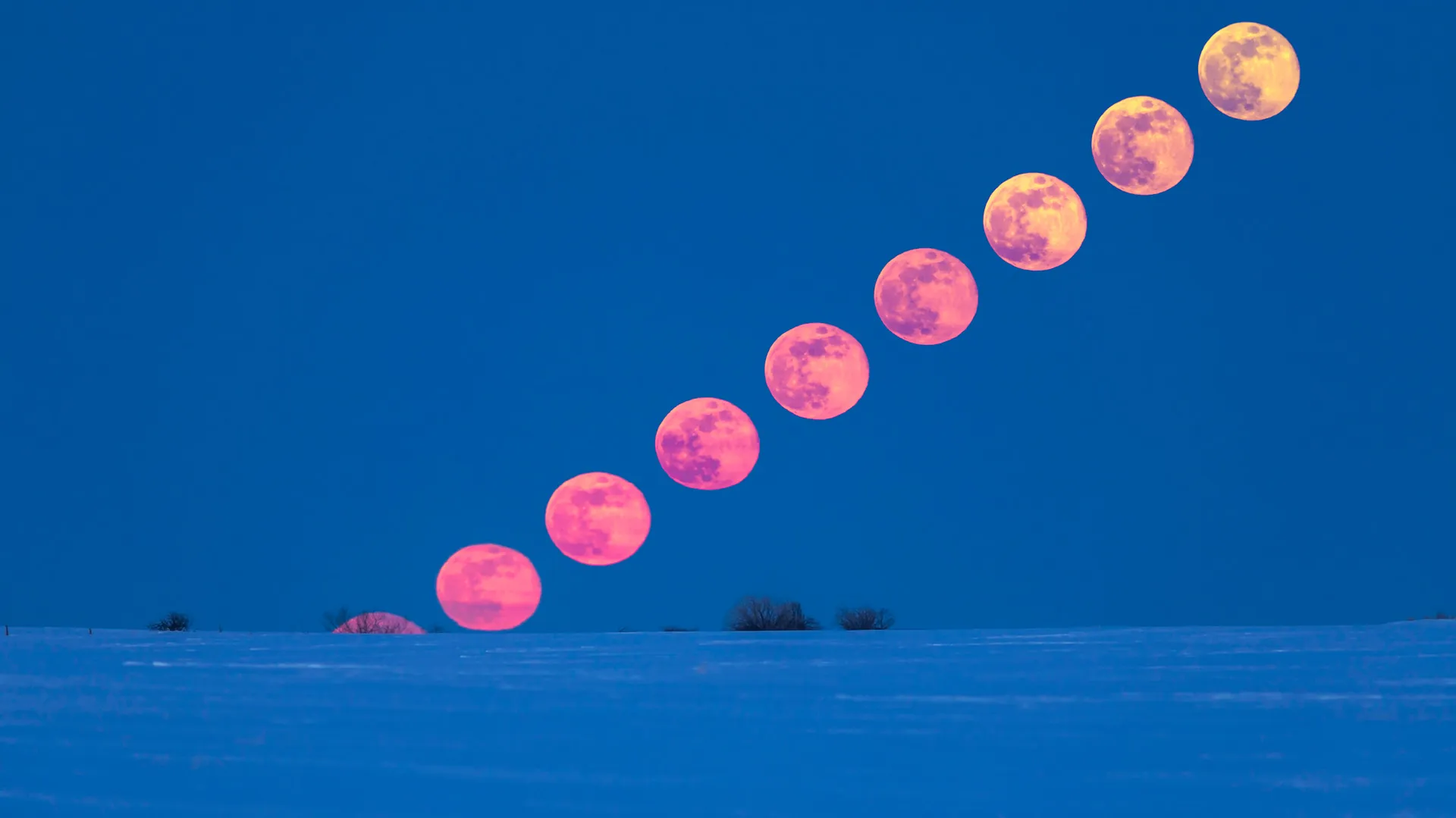
Skywatchers will be treated to a rare sight this month: a Blue Moon that is also a "micromoon." It marks the first time since August 2023 that there have been two full moons in the same calendar month. Rising in the early morning hours of May 31, 29.5 days after May 1's full Flower Moon, it will also be the smallest full moon of the year.
May's rare Blue Moon will officially turn full at 4:45 a.m. on May 31. However, the best time to see it rise will be at dusk on May 30. The name has nothing to do with the moon's color; from North America, it will appear in the southeast as a warm orange, not blue, thanks to a phenomenon called Rayleigh scattering.
Instead, the term "Blue Moon" refers to two types of full moons. Astronomers define a seasonal Blue Moon as the third full moon of four in the same astronomical season. However, the other, more popular definition of a Blue Moon is when two full moons occur in a single calendar month — exactly what's happening this month.
According to Time and Date.com, the next monthly Blue Moon will occur Dec. 31 2028, and the next seasonal Blue Moon will rise on May 20, 2027. Each type of Blue Moon happens roughly every two-and-a-half years.
May's Blue Moon will also be a "micromoon," when the moon is at its farthest point in its orbit of Earth. The moon has a slightly elliptical orbit around our planet, so it reaches two points every month when it's closest (perigee) and farthest (apogee) to us. The moon will reach apogee at 12:32 a.m. EDT on June 1, less than 24 hours after turning full, according to AstroPixels.
At 252,506 miles (406,369 kilometers) from Earth, it will be the most distant full moon of the year. May 1's Flower Moon and June 29's Strawberry Moon are also considered micromoons, which look about 7% smaller than the average full moon.
The opposite of a micromoon is a supermoon, which occurs when a full moon is near perigee. In 2026, supermoons will occur on Nov. 24 and Dec. 23, according to NASA.
Get the world’s most fascinating discoveries delivered straight to your inbox.
As the Blue Moon rises into a darkening sky on May 30, observers will see a bright star beneath it. The red supergiant, known as Antares, is about 550 light-years away and the brightest star in the constellation Scorpius.
How much do you know about the moon? Test your lunar smarts with our moon quiz!

Jamie Carter is a Cardiff, U.K.-based freelance science journalist and a regular contributor to Live Science. He is the author of A Stargazing Program For Beginners and co-author of The Eclipse Effect, and leads international stargazing and eclipse-chasing tours. His work appears regularly in Space.com, Forbes, New Scientist, BBC Sky at Night, Sky & Telescope, and other major science and astronomy publications. He is also the editor of WhenIsTheNextEclipse.com.
You must confirm your public display name before commenting
Please logout and then login again, you will then be prompted to enter your display name.